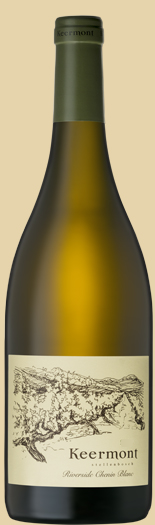
" We don't sell the wine without touching the vine "
| Country: | South Africa |
| Region: | Stellenbosch |
| Winery: | Keermont Vineyards |
| Grape Type: | Chenin Blanc |
| Organic: | Yes |
| Vintage: | 2017 |
| Bottle Size: | 750 ml |

Babylons Peak Chenin Blanc is made from 100 percent Chenin Blanc.
Babylon's Peak winery, situated on the highest weathered granite slopes of the Paardeberg Mountain, is privately owned by the Basson family who has passed down the tradition, passion and art of winemaking over four generations. Predominantly low-yield dryland bushvines are selected to produce these excellent wines with distinctive character.
The Chenin Blanc grapes were picked from very old dryland bushvine vineyards. The vineyard grows on weathered granite soils, contributing to the flavor of the grapes and mineral character of the wine. Production is limited to 5 tons/ha.
The grapes were harvest by hand at 22.1°B. The grapes were destalked and lightly crushed. Only the first 450 litres free-run juice per ton were fermented in stainless steel tanks at a cold temperature (10-12°C) for 21 days. The wines was left on the fermentation lees until bottling.
A crisp, fresh and fruity Chenin Blanc from low-yield dryland bushvines.
Pairs with salads, seafood, chicken and other light dishes. The perfect wine for every occasion.

Kasteelberg Chenin Blanc is made from 100 percent Chenin Blanc.
The Kasteelberg range of wines celebrates the discovery of the Riebeek Valley and the Kasteelberg mountains in 1661. Kasteelberg stands sentinel over the fertile valley below. From the slopes of the mountains, hand-selected grapes are expertly crafted with care to produce rare and expressive wines.
Limited release, single-vineyard Chenin Blanc from hand-selected grapes from the foothills of the majestic Kasteelberg Mountain, Kasteelberg Chenin Blanc embodies excellent craftsmanship that transforms the harsh Swartland terroir into the pinnacle of our winemakers’ art.
Together with the age-old tradition of Dry Land viticulture, it resulted in an elegant, aromatic and richly textured wine, with characteristics typical to Chenin Blanc grown under these conditions. Citrus, lemon zest, ripe apple and tropical flavors are only some of the flavors that charm the nose. The palate follows through with flavors of melon, a touch of spice and well-integrated wood for exceptional balance and a luxurious, lingering finish.
Once harvested, the grapes are hand-sorted, de-stemmed & crushed into temperature-controlled gravitational drainers. Only the free-run juice is chilled and settled overnight. The juice is then racked off into new, 300 L, oak barrels (50% French oak, 50% Hungarian oak) and wild yeast fermented in the barrels. Fermentation is temperature controlled and lasted around 22 days. The wine is then matured in the oak barrel on the gross lees for 12 months before being racked off, filtered and bottled. After bottling the wine is further bottle-matured for at least 6 months before release.

Riebeek Chenin Blanc is made from 100 percent Chenin Blanc.
As the unofficial drink of the Riebeek Valley, the Riebeek Chenin Blanc is the perfect every day wine that offers uncomplicated quality for the novice and connoisseur alike.
Packed with upfront tropical fruit, the nose charms with an abundance of guava and gooseberries. The pallets follows through with fruit flavors, balanced by a crisp acid to ensure a fresh and fruity style of wine.
Grapes came from both bosstok and trellised vines with some of the vineyards as old as 46 years. Fermentation was done at lower than usual temperatures to capture the fresh fruit flavors.
Very accessible and suited to almost every occasion, the Riebeek Chenin Blanc never disappoints.

The Royal Chenin Blanc Old Vines Steen is 100 percent Chenin Blanc.
As the unofficial drink of the Riebeek Valley, Chenin Blanc is the perfect every day wine that offers uncomplicated quality for the novice and connoisseur alike. Packed with upfront melon fruit, the nose charms with an abundance of guava and gooseberries as well as the signature hint of honey. The palate follows through with fruit flavors balanced by a crisp acid to ensure a fresh and fruity style of wine.
Enjoy well-chilled as a lovely crisp glass on its own but ideal for al fresco dining and with light summer fare. Beautiful with salads, anti pasti and seafood.

Brulesecaille Blanc Grande Reserve is made from 75% Sauvignon Blanc, 25% Sauvignon Gris.
Average age of the vines is 25 years.
Manual harvest from September 19th-20th 2016.
Direct press at low pressure (whole cluster) with low amount of SO2, settling at 10°C.
Addition of yeast and alcoholic fermentation in casks 400 liters.
Raised on the lees for 6 months with regular batonnage (stirring of the lees).
Bottling in april 2017.
Fish, seafood, white meats, fine goat cheeses.

Alexandre M Mon Chenin Cuvee 23 NV is made from 100% Chenin Blanc.
Mon Chenin means "My Chenin". This is Alexandre Monmousseau's personal view of what the Chenin blanc grape from France is - full of floral and fresh white fruits, a palate of yellow fruits and floral flavors, finishing clean, fresh, and dry.
Serve as Apéritif, seafood, fishes with buttery sauce, Asian cuisine, hard cheeses.
A polished light yellow gold colour, this wine has a bouquet of citrus blossom with hazelnut, lemon grass and butterscotch undertones. The wine has a soft sweet entry with a racy linear acidity. Ripe citrus and stone fruit flavours evolve into a lovely lingering dry earthy finish. This is a textured white wine with layers of flavour.
Review:
"Subtle bouquet of orange blossom, cling peach, and beeswax. Taut and focused, revealing dried orange peel and apricot pit on a dense, mineral like palate. Sourced from the oldest vineyard on the farm, planted in 1971-2, it’s a selection of the best 500L barrels. About 250 cs produced. 13.5% alc."- International Wine Review (January 2019), 93 pts
"From vines planted at 250m next to the Blaauwklippen River back in 1971, this undemonstrative but utterly convincing Chenin needs a little time in the glass to unfold, like a fern in spring. When it does, you’ll find classic wet stone and apple aromas with a lick of honey. The palate is intense, deep and stony, subtle in articulation with a beeswax richness haunting its orchard fruit, while its vinosity brings food-friendliness. It's hard to better this for purity and classicism. Drinking Window 2019 - 2023."- Decanter (February 2019), 93 pts
The Keermont Estate and Vineyards
Located just beyond Stellenbosch, Keermont Vineyards is nestled in farm land in the beautiful valleys of South Africa. Keermont uses their name to honor the former farm, Keerweder, that once occupied their land. The word “keerweder” means a dead end in a valley. The literal translation is “blocked again”, which is in reference to the early settlers being blocked by the terrain when trying to pass through the valley.
The Keermont winery building and vineyards actually lie in the shadow of Guardian Peak, or “Suurberg”. This location is ideal for Keermont, as the fruit on this mountain is often compared to the grapes of Napa Valley’s famous Howell Mountain AVA.
In 1694, Jan Jac Van Dyk founded the land in the Blaawklippen Valley that is the location of present day Keermont. Other wineries such as Waterford, Dornier, and Stellenzicht are also on the land once owned by Van Dyk. The earliest account of a European landowner utilizing the area for agricultural use are Van Dyk’s records. Afterwards, the potential and beauty of the Blaawklippen Valley attracted many other landowners to the area and the land was divided into individual farms.
Mark and Monica Wraith bought into this land by purchasing the Fleurfontein and Keerweder III farms in 2003. They combined the two farms into the Keermont Vineyards Estate. The couple still live on the Keermont land with their family. Alex Starey is the Keermont winemaker. In 2005, Keermont began a major vineyard planting program and it now holds 27 ha under vine. In 2007, Keermont releases its first vintage, from a crop of only 5 barrels or 108 cases. In 2010, the physical Keermont winery building, complete with offices, processing facilities, barrel rooms, and a tasting room, was converted from the former spring water bottling plant that had once resided on the Fleurfontein farm. The total farm acreage for Keermont Vineyards is 157 hectares or 388 acres, with 27 hectares under vine. 18 hectares produce red varietals such as Cabernet Savignon, Merlot, and Syrah. 9 hectares hold the white varietals like Chenin Blanc, Chardonnay, and Viognier. Keermont also boasts Chenin Blanc vines that are over forty years old and used by De Trafford winery. Keermont aims to create wines that reflect their beautiful land and the particular year’s vintage condition. Keermont focuses on using minimal chemical fertilizers, few pesticides, and irrigate as little as possible. No fining or filtration is practiced on the Keermont Estate. Keermont desires a natural, harmonious vineyard that will in the long run produce better quality wines.
The goal of this estate is to make superior blends. The wines to be produced, but not written in stone, are:
Keermont Red – 40 % Cabernet Sauvignon, 40% Merlot, 20% Syrah.
Keermont White – 70% Chenin Blanc, 30% Viognier and Chardonnay
Dessert wine in exceptional vintages
Keermont Syrah – Syrah, Mourvedre, Viognier
Some wines from Keermont Winery:
Any Keermont wines we have in stock are listed below, if you don’t see the wine you are looking for please don’t hesitate to ask for it.

The 2017 was a very different year to 2016 in terms of the viticultural conditions and it was interesting to watch the progression of the wine and scrutinize its quality as it developed over its first two winters. Whereas 2016 had a very mild winter and exceptionally hot summer, this was compensated by abundant winter and spring rainfall. Conversely, 2017 was warm and drythroughout, although summer temperatures were closer to average, whichproved to be a very significant factor allowing for complete, balancedripening.
It is rare to see such tremendous depth and intensity in color as this winedisplays. The freshness of the floral aromas is very attractive with adominance of rockrose, a flower that grows wild around the hills of Senhorada Ribeira. On the palate, it is exceptionally full-bodied, rich andpowerful with black fruit coming to the fore. Gorgeous, ripe fruit isbalanced by the fine tannin structure. On the finish, it is typically Dow,austere and somewhat drier than many other ports. The intense fruit flavors linger long on the palate.
Dow’s Vintage Ports are only produced in years of exceptional quality and represent only a very small part of the total company’s production in that year. On average only two or three times every ten years are the weather conditions sufficiently good to allow for the making of Dow’s Vintage Port.
Throughout the 19th and 20th centuries, Dow’s Vintage Ports have been landmark wines in virtually every great year, consistently setting the standards amongst all Port houses. Vintage Ports such as the remarkable Dow 1896, the 1927, 1945, 1955, 1963, 1966, 1970, 1980 and the Dow 1994 are all legends in the history of this great wine. These Ports are still magnificent today, even when 50 or over 100 years old. Few wines can claim this quality and this pedigree.
Dow's Vintage Ports are drawn from the companies' finest vineyards; Quinta do Bomfim and Quinta de Senhora da Ribeira. Each property contributes to the Dow’s unique and distinctive style. When young, Dow’s Vintage Ports are purple-black, austere, complex and intensely concentrated, full-bodied and balanced with very fine peppery tannins.
Over the centuries, the Dow winemakers have evolved a style that suits the house’s key vineyards; fermentations are a little longer, resulting in a drier Port Wine that has become the hallmark of Dow’s. Abundant fruit flavours with hints of ripe blackberries, give elegance and poise to Dow’s. The nose is deep and powerful with strong overtones of violets when young, these mature into fine cinnamon and rose-tea aromas with age. The very high percentage of Touriga Franca and Touriga Nacional planted on the vineyards result in the powerful structure and aging potential of Dow’s Vintage Ports
Dow’s Ports avoid an over-rich style and requires a very high degree of skill in wine making and great experience in selecting the finest wines of each year and each vineyard. These wines are aged in seasoned oak casks for some 18 months and are bottled without any filtration or fining whatsoever.
Dow Vintage Ports can be enjoyed when vibrant and young or they can be allowed to age for many years in bottle into a soft and delicate wine of velvet-like elegance.
In the 1920’s, the celebrated Oxford Professor George Saintsbury underlined Dow’s outstanding reputation when he wrote in his famous ‘Notes on a Cellarbook’ (first published in 1920), “There is no shipper’s wine that I have found better than the best of Dow’s 1878 and 1890 especially.”
James Suckling, one of today’s leading authorities on Vintage Port was equally impressed by another legendary wine - the Dow’s 1896 - “The ancient {1896} Port still had an amazing ruby colour with a garnet edge, and it smelled of raisins, black pepper and berries. It was full-bodied, with masses of fruit intertwined with layers of velvety tannins. It was superb.” In 1998, when this wine was 102 years old, he awarded this Port an exceptional 98 points.
Review:
Based on fruit from the predominantly south-facing Quinta do Bomfim in the Cima Corgo and Quinta Senhora da Ribeira in the Douro Superior, with Touriga Nacional and Touriga Franca making up 80% of the blend. This is opaque and closed in but powerfully ripe with underlying pure berry fruit. It's seemingly quite introverted compared to some of its peers at this stage, but it's still full, rich and opulent on the palate. It also shows the latent power of the vintage, made as it is in a slightly drier style (3.4 Baumé), with lovely minty fruit and full, ripe sinewy tannins all the way through the finish. Long and lithe, and very fine.
-Decanter 97 Points
A dense, thickly textured version, dripping with warm salted licorice, tar and açaí paste notes, while plum and blueberry pâte de fruit, chai spice and chocolate elements fill in behind. Lots of brambly grip flows underneath. Shows a very sappy feel on the finish. Best from 2035 through 2055. 5,250 cases made, 1,092 cases imported
-Wine Spectator 96 Points
This is a dry while also floral wine, perfumed and enticing with its juicy acidity. At the same time, the structure is very present, showing power and dark black fruits. The balance is coming together with the rich fruits and tannins melding into one. Drink from 2028. ROGER VOSS
-Wine Enthusiast 96 Points
Deep dark ruby garnet, opaque core, violet reflections, delicate brightening of the edges. Black wildberry jam underlaid with delicate herbs and spices, tobacco nuances, hints of blueberry jam and elderberries, schisty notes. Powerful, full-bodied, sweetness present, carrying tannins, dark nougat in the finish, very good length, an imperious style, built for a long life.
Falstaff 98 Points

Matthews Winery Columbia Valley Cuvee is made from 65% Merlot, 27% Cabernet Franc, 8% Malbec.
The 2021 Columbia Valley Cuvée sparkles with purple and deep garnet in the glass. Meadow flowers, fresh red berry, black plum, and cocoa powder aromas exhilarate leading to flavors of morello cherry liqueur, cardamom, mountain blackberry, and licorice snaps. This merlot-dominant blend is plush and weighty on the palate with powdery tannins. Dark stone fruits and dusty minerality coat the palate for a long, seamless finish.
Reviews:
A handsome blend, structured and polished, with expressive black cherry flavors accented by tarragon, mocha espresso and toasty spices that sail toward refined tannins. Merlot, Cabernet Franc and Malbec. Drink now through 2031.
-Wine Spectator 93 Points
This Merlot-based blend is a part of the Matthews tradition. Wildly fruity aromatics with whole berries, destemmed aromas driven by red berries, mountain blueberries, and a touch of green peppercorn and mocha dust. A streak of graphite underlines red berries, early season blackberries and a savoury herbal character that mingles complexity with fresh ripe fruits.
-Decanter 93 Points