
" We don't sell the wine without touching the vine "
| Country: | France |
| Region: | Champagne |
| Winery: | Louis Roederer |
| Grape Type: | Pinot Noir |
| Organic: | Yes |
| Vintage: | 1997 |
| Bottle Size: | 750 ml |
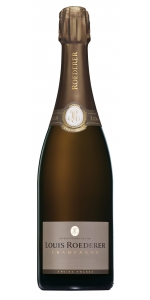
Intense, fresh and fruity bouquet, reminiscent of a tangy red fruit tart (wild strawberry, blueberry), slightly sweet yet underpinned by more concentrated, jammy and citrus notes. The aromatic complexity comes through after a few swirls in the glass giving us a medley of spice, warm cinnamon and peppers. Fleshy attack dominated by ripe, crunchy, plump red fruit that brings depth and creaminess. The fruity structure is gradually elongated by a chalky, mineral freshness that creates a lingering sensation of lightness and harmony on the finish.
Review:
Roederer's 2014 Brut Vintage is beautiful, offering up aromas of pear, mirabelle plum, red berries, warm biscuits and smoke. Full-bodied, layered and elegantly muscular, it's seamless and complete, with terrific mid-palate depth and amplitude. Framed by bright acids and enlivened by a pinpoint mousse, it concludes with a penetrating finish. The blend is 70% Pinot Noir, emphasizing Verzy, and pressure is a touch higher than in its more ethereal Blanc de Blancs counterpart. As I wrote of its 2013 predecessor, this is a wine that puts many prestige cuvées to shame.
95 Points Robert Parker's Wine Advocate
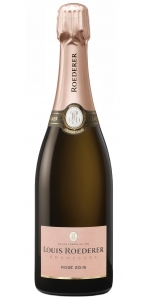
Salmon hue with bright red tints. Fine and energetic bubbles. A ripe, complex and youthful bouquet of slightly tangy red fruit (redcurrants, blackcurrants), ripe citrus (blood orange) and roasted cocoa beans. After some time in the glass, the wine reveals sappier, floral and sweet notes with a saline, almost briny, core. The first impression of the wine is of a generosity, softness and concentration. One has the sensation of biting into juicy, ripe fruit and blood orange, it is a fabulous aromatic explosion with luscious and slightly tangy overtones. The concentrated and dense body takes over and reinforces the impression of substance, of concentrated liqueur on the mid-palate. The finish stretches out, perfectly-honed, gradually revealing umami notes thanks to the precise and crisp mineral freshness.
Reviews:
The 2015 Brut Vintage Rosé is generous and demonstrative, bursting with aromas of peach, orange and pear mingled with hints of red berries, fresh bread and ginger. Full-bodied, layered and vinous, it's rich and enveloping, its textural attack segueing into an ample, fleshy core that's girdled by bright acids and enlivened by a pillowy mousse. Long and expansive, it's more generous and gourmand than its racier 2014 predecessor, but just as good.
-Wine Advocate 94 Points
This shows lots of cotton candy and peach, together with strawberries and cream. But not overpowering. Some cranberry, too. It’s medium-to full-bodied with fine bubbles and a lively finish. Dosage 8g/L. Drink now or hold.
-James Suckling 94 Points
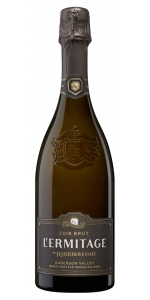
Roederer Estate L'Ermitage Brut is made from 52% Chardonnay, 48% Pinot Noir.
The 2019 features aromas of quince paste and light pastry crust. The entry is bright and textured midpalate. A mouthwatering finish is highlighted by pear skin and an even, creamy texture.
Review:
If sunshine could be bottled it would be this. Aromas of fresh succulent stone fruit, a hint of yeast, citrus blossoms and notes of quince on the nose. The mousse is creamy and light with baked red apples, blood orange zest, white grapefruit, sticky caramel and layered salinity with a mouthwatering finish. It will bring a smile to your lips.
-Wine Enthusiast Cellar Selection 100 Points
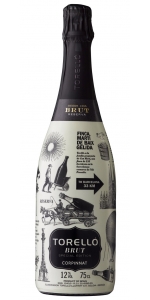
Torello Corpinnat Special Edition Brut Reserve is made from 44% Xarel.lo, 37% Macabeo, 11% Chardonnay, 8% Parellada.
The estate soils have been formed from sediments from the Garraf Massis, deposited thousands of years ago. One of the most characteristic features of the estate’s soils is the presence of accumulations of calcium carbonate. The movement of water through the soil dissolves the carbonates and takes them to a certain depth. The continuous repetition of this process has ended up producing the accumulation of these deposits. When these become massive, after thousands of years, they bind together and form a hard stratum called a petrocalcic horizon. This hard stratum limits the availability of water to the vine and the production, but is a factor that gives the grape quality
The wine offers a straw yellow color, clean, transparent, fine, and persistent bubbles with a rosary formation. In the nose fresh pear aromas stand out along with delicious notes of pastry cream, white flowers, and candied fruits. On the palate, good balance and acidity. Powerful and flavorful with white flowers and notes of brioche, almond and great length.
Special Edition is very versatile and matches with many different kinds of dishes; pasta, pork, chicken, fish, seafood, rice, cold cuts, desserts.
Torello Corpinnat Special Edition Brut Reserve is made from 44% Xarel.lo, 37% Macabeo, 11% Chardonnay, 8% Parellada.
The estate soils have been formed from sediments from the Garraf Massis, deposited thousands of years ago. One of the most characteristic features of the estate’s soils is the presence of accumulations of calcium carbonate. The movement of water through the soil dissolves the carbonates and takes them to a certain depth. The continuous repetition of this process has ended up producing the accumulation of these deposits. When these become massive, after thousands of years, they bind together and form a hard stratum called a petrocalcic horizon. This hard stratum limits the availability of water to the vine and the production, but is a factor that gives the grape quality
The wine offers a straw yellow color, clean, transparent, fine, and persistent bubbles with a rosary formation. In the nose fresh pear aromas stand out along with delicious notes of pastry cream, white flowers, and candied fruits. On the palate, good balance and acidity. Powerful and flavorful with white flowers and notes of brioche, almond and great length.
Special Edition is very versatile and matches with many different kinds of dishes; pasta, pork, chicken, fish, seafood, rice, cold cuts, desserts.
Torello Corpinnat Special Edition Brut Reserve is made from 44% Xarel.lo, 37% Macabeo, 11% Chardonnay, 8% Parellada.
The estate soils have been formed from sediments from the Garraf Massis, deposited thousands of years ago. One of the most characteristic features of the estate’s soils is the presence of accumulations of calcium carbonate. The movement of water through the soil dissolves the carbonates and takes them to a certain depth. The continuous repetition of this process has ended up producing the accumulation of these deposits. When these become massive, after thousands of years, they bind together and form a hard stratum called a petrocalcic horizon. This hard stratum limits the availability of water to the vine and the production, but is a factor that gives the grape quality
The wine offers a straw yellow color, clean, transparent, fine, and persistent bubbles with a rosary formation. In the nose fresh pear aromas stand out along with delicious notes of pastry cream, white flowers, and candied fruits. On the palate, good balance and acidity. Powerful and flavorful with white flowers and notes of brioche, almond and great length.
Special Edition is very versatile and matches with many different kinds of dishes; pasta, pork, chicken, fish, seafood, rice, cold cuts, desserts.
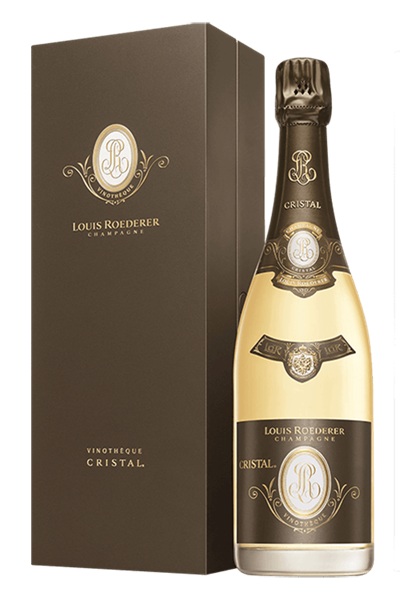
Louis Roederer Cristal Vinotheque Edition Brut Millesime 1997 is made from Pinot noir (62%) and Chardonnay (38%).
Color
A bright and shimmering golden color, animated by an ultra-fine and swirling effervescence.
Nose
The bouquet is pure, precise and complex, mixing aromas of white flowers, almond, honey and nougat. Upon aeration, notes of red fruits and smoke are revealed, followed by warm and caramelized nuances reminiscent of macaroon, baked apples and tarte tatin.
Palate
Indulgent and velvety, the palate is rich while maintaining a great freshness thanks to a delicate effervescence. The flavors of candied Corsican citron stretch out on a finish marked by a chalky, powdery and iodized freshness, offering a dense texture and a serene length.
The property
Founded in 1776 in Reims, the Louis Roederer Champagne House has remained family-owned and independent. After more than 200 years of existence, the Louis Roederer House is still in the hands of the same family. Today led by Frédéric Rouzaud, who represents the seventh generation of the lineage, the Louis Roederer House embodies the excellence of Champagne wines around the world thanks to cuvées crafted like a work of art.
The vineyard
With nearly 241 hectares of vines, the Louis Roederer House draws its strength from its extraordinary vineyard, composed only of Grands and Premiers Crus in the Marne Valley, the Montagne de Reims and the Côte des Blancs. A true mosaic of terroirs, the Louis Roederer House's vineyard is divided into 410 plots that reflect all the diversity of the Champagne soils.
The wine
Cristal Vinothèque 1997 is made from three great vineyards known as "La Rivière", "La Montagne" and "La Côte".
The vintage
The spring of 1997, mild at first, was marked by an early bud break followed by severe frosts in April that damaged the vineyards of Verzenay and Verzy. After an early flowering in June, the rainy and cold weather until August favored the development of mildew and rot. Fortunately, the return of warm and sunny weather in August and September saved the vintage, with harvests taking place under radiant sunshine from September 15 to October 1.
Vinification and aging
Vinification is carried out in wood to the extent of 6%. Malolactic fermentation (16%). The cuvée was aged for 15 years on lees, 5 years on points and benefited from a rest of 4 years after disgorging. The dosage of this 1997 vintage champagne is 8 g/liter.
Review:
Intense nose of preserved lemons, salted yellow plums, walnuts, toast, salted caramel, roasted chestnuts and dried pineapple. Beautiful and complex, from 15 years, 5 years en pointe, before disgorgement in 2018. Delicious, salty toffee character. Soft, silky bubbles. Long and powerful. Thought-provoking. Unique. Will be launched in September 2022. Drink on release or hold.
-James Suckling 99 Points
ONE OF THE LAST GREAT INDEPENDENT AND FAMILY-RUN CHAMPAGNE HOUSES
When he inherited the Champagne House in 1833, the aesthete and entrepreneur Louis Roederer took a visionary approach to enriching his vines, aiming to master every stage of the wine’s creation. He forged the wine’s unique style, character, and taste. In the mid-nineteenth century, Louis Roederer acquired some of Champagne’s grand cru vineyards—an approach that contrasted sharply with contemporary practices..
While other Houses bought their grapes, Louis Roederer nurtured his vineyards, familiarized himself with the specific characteristics of each parcel, and methodically acquired the finest land. Louis Roederer’s guiding principle was that all great wine depends on the quality of the soil, a passion for tradition, and an astute vision of the future; the fame and reputation of the House of Louis Roederer was firmly established. His heir, Louis Roederer II was equally enlightened and adopted his father’s conscientious approach to the production of champagne, patrimonial estate management, and instinctive audacity.
He also drew inspiration from the many books and drawings he collected with great discernment. In the 1870s, the Louis Roederer Champagne House began to export its wines to the United States, and even to Tsar Alexander II of Russia.
A man of great taste and an inveterate researcher, Louis Roederer II fashioned an exclusive champagne for the Tsar and launched a novel concept: the very first Cuvée de Prestige. It was created in 1876 and named ‘Cristal’. Ever since, the subtleness and elegance of Cristal have forged Louis Roederer’s reputation for excellence
In the 1920s, the future heir to the House of Louis Roederer, Léon Olry-Roederer consecrated his efforts to creating a highly balanced wine—a consistent and delicate blend of several vintages, to ensure that the wine would always be of the highest quality. This wine would form the basis for the later Brut Premier. This fine blend greatly contributed to the renaissance of the House of Louis Roederer.
After his death, from 1933 onwards, the winery was managed by his strong-minded widow, Camille, who ran the Champagne House with formidable intelligence and singular dynamism. Camille loved horse racing and owned one of the most famous stables in the world; she was also an enlightened patron and embraced the more festive and pleasurable aspects of champagne. Camille Olry-Roederer held many receptions in the family’s Hôtel Particulier in Reims. These parties had a lasting impact on the history of the House and introduced a whole new generation of wine lovers to the joys of Louis Roederer Champagne.
Her grandson, Jean-Claude Rouzaud, an oenologist and agronomist, took over the running of the entire estate and decided to consolidate the vineyards. Through his passionate commitment to the metier of wine-growing, he cultivated more than ever the inventive qualities that are so representative of the House’s philosophy.
The Louis Roederer House has remained an independent, family-owned company and is now managed by Jean-Claude’s son, Frédéric Rouzaud, who represents the seventh generation of the lineage. With the same patience and unshakeable faith in its creative vocation, the House of Louis Roederer’s annual exports total three million bottles around the world.
Johann Michel Cornas Cuvee Jana is 100% Syrah.
Black raspberry aromas, licorice, sizzled bacon and smoke. Elegant and pure with depth and well-integrated tannins.
Jana is the name of Johann and Emmanuelle's daughter.
Manual harvest, selection of the grapes from the "Chaillot" parcel, full clusters, fermentation in tanks for 3 weeks, daily remontage and pigeage. Malolactic fermentation in oak barrels and aging on the lees for 12-18 months in barrels (new old barrels) The average age of the vines is 11 years. Yield: 25 hl/ha
Review:
"Dark purple. Highly perfumed, oak-spiced black and blue fruits, incense, vanilla and potpourri on the hugely perfumed nose, along with hints of licorice, smoked meat and mocha. Stains the palate with concentrated, spice-laced blueberry, cassis, cherry-vanilla and espresso flavors that turn sweeter as the wine opens up. Broad, polished tannins add shape to a strikingly long, smoke- and spice-driven finish that strongly echoes the floral and blue fruit notes. - Josh Raynolds"
- Antonio Galloni's Vinous (December 2022), 97 pts
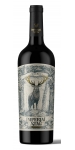
Imperial Stag Malbec is made from 100 percent Malbec.
Intense and bright ruby red color. Aromas of ripe fruit with spicy notes of eucalyptus and licorice. Vanilla and tobacco aromas contributed by the ageing in French oak barrels. Good volume on the palate, balanced, intense with great concentration, sweet flavors, with rotund tannins polished with elegance and sophistication.
Perfect companion for red and game meats, pasta, stews, rice and a variety of winter cuisine dishes.



