" We don't sell the wine without touching the vine "

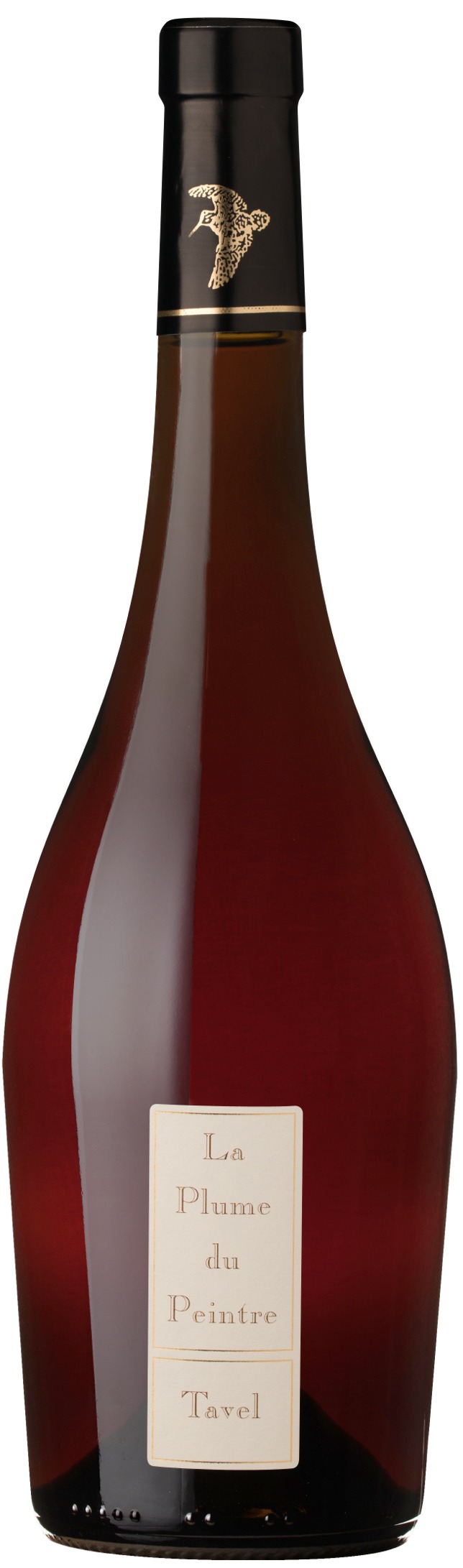
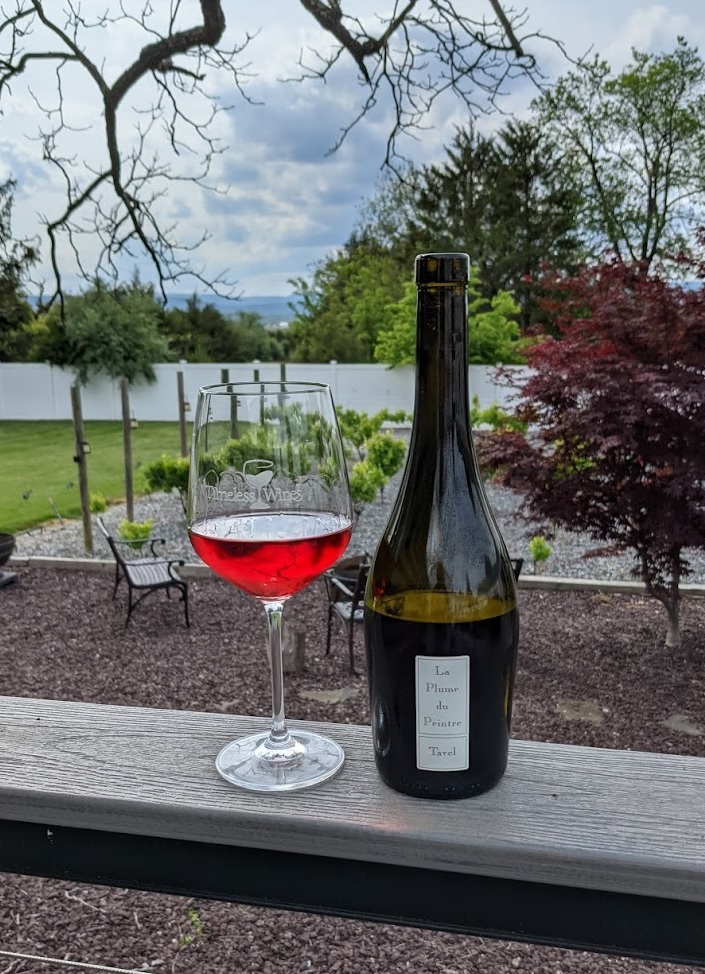
Mordoree Tavel Rose Reine des Bois is made from 60% Grenache, 15% Clairette, 10% Syrah, 10% Cinsault, 5% Bourboulenc (biodynamically farmed on a rocky/sandy plateau over clay).
This wine comes from a parcel planted on a pebbled soil covered with stones, whose geology is typical of the grands crus from the Rhone Valley (a base made of marine molasse from the Miocene period covered with an alpine diluvium from the Villafranchian period). 100 % destemming, cold maceration during 48 h., pneumatic pressing, fermentation at 18° C.
To pair with: roasted and or spicy chicken, duck, goose, fish soup, white meat, seafood and a lot of fishes (tuna, John Dorry, red mulet, etc...).Quite all Asian cuisine. Dishes with garlic, dishes with tomatoes.
In the glass the wine is deeply colored pink, almost orange/salmon. Complex aromas of white flowers, raspberry, pomegranate, strawberry, minerals, and citrus rise from the glass. Palate is full-bodied and voluptuous yet retains elegance while delivering great fruit intensity balanced by minerals and citrus. Light tannins appear mid-palate and carry through to the finish, giving it serious structure. Fresh, complex, and very long on the finish. Overall, powerful, textured, and food-driven — a “serious” Tavel that can age 1–5 years. Best enjoyed from June/July 2026 onward.
Review:
-Robert Parker The Wine Advocate 93 Points

a Plume du Peintre - "feather of the painter" - wines (Lirac, Chateauneuf-du-Pape and Tavel) are only made in select years representing outstanding quality.
Deep ruby red, opaque. Aromas of red fruits, mocha, touches of leather, black truffles and coffee. Fat, very concentrated and full flavored, with an infinitely long liquoriced and fruity finish.
Pairs well with red meats, sauce dishes, game animals (woodcock, wild boar) and semi mature cheeses.
Review:
-Jeb Dunnuck 98 Points
-Matt Walls 97 Points
-Nicolas Greinacher (Vinous) 95 Points

Mordoree Chateauneuf-du-Pape La Reine des Bois is made from Grenache 75 %, Mourvèdre 10%, Syrah 10 % , Counoise 3% & Vaccarese 2%.
This premium cuvee - whose name means "Queen of the Woods" - is from 65-year-old vines, planted on Villafranchian-era terrasses. Yield is 30 hl/ha.
Deep ruby red; opaque. Aromas of red fruits change to wooden touches of leather, black truffles and coffee. Fat, concentrated and full flavored with a very long liquoriced and fruity finish.
Pairs with red meats, sauce dishes, game animals (woodcock, wild boar) and semi mature cheeses.
Review:
"The 2019 Châteauneuf Du Pape Cuvée De La Reine des Bois is a deeper, more masculine wine with gorgeous cassis and blackberry fruits as well as graphite, licorice, crushed stone, violets, and lavender nuances. Rich, full-bodied, and incredibly concentrated, it has a brilliant sense of freshness and purity as well as length on the finish. It's going to require 4-5 years of bottle age, but this straight-up thrilling Châteauneuf du Pape will have 20-25 years of prime drinking."
- Jeb Dunnuck (November 2021), 98+ pts

Mordoree Cotes du Rhone Dame Rousse Rose is made from 40% Grenache, 35% Syrah, 15% Cinsault, 5% Carignan, 5% Mourvèdre
Domaine de La Mordoree Cotes du Rhone Rosé is produced from organically and biodynamically farmed vineyards. This dry, crisp, light, salmon-colored offering exhibits fruity aromas of strawberry and raspberry, citrus fruits and floral notes. It is round, fresh and well-balanced in the mouth, with a long finish.
Food pairing: cold meats and delicatessen, fowl, white meats, grilled lamb with Provence herbs, fish soup, fried fish, pastas, pizzas and all Asian dishes.

Mordoree La Remise Mordoree Rose is made from Marselan 35% (Marselan is a cross between Cabernet Sauvignon and Grenache) , Merlot 35% Syrah 15%, Grenache 15%.
Color : light rose
Aromas : flower : roses, fruits : strawberry, red currant and citrus
Palate : mouthful, rich.
Best to drink 2 years.
Pairs well with white meats, Asian cuisine and excellent as an aperitif.
Review:
-Jeb Dunnuck 90 Points

Delas Freres Cote Rotie La Landonne Rouge is made from 100 percent Syrah.
This very ancient region dates back to the Roman Era and is located on the right bank of the Rhône. It is said that during the Middle Ages, “The Seigneur de Maugiron” gave a hillside to each of his two daughters - one was brunette and the other fair - thus, were born the names of “Côte Brune” and “Côte Blonde.” Wines from the Côte Blonde tend to be more delicate and lighter in character than the fuller wines of the Côte Brune. Together, they make a wine of style and substance. This cuvée is a vineyard plot selection. The grapes come exclusively from a plot within the named slope of “La Landonne.”
This cuvée‘s first vintage was 1997. The wine is only made in the very best years. Its highly limited production never exceeds 2,500 bottles per year.
The steep, terraced hillsides along the river produce wines that are among the "biggest" reds of France. The Delas Côte-Rôtie is primarily Syrah with an addition of up to 10 to 20% of Viognier grapes in the crop. The soils of the northern part of the Côte Brune vineyard consists of extremely steep, terraced slopes of ferruginous mica schists which are covered with schist sand (arzel). The Côte Blonde has a varied geology with gneiss and granite predominating at the most southern side of the appellation. The area has dry, hot summers with regular rainfalls during other seasons. The grapes for the “La Landonne” cuvée are picked by hand at maximum maturity. Fermentation takes place in traditional open-topped concrete tanks, following three days of pre-fermentation cold maceration. Before fermentation, the maceration process continues under controlled temperatures of 82°F to 86°F. Daily cap pushing down and pumping over are carried out for about 10 days with total vatting time of up to 20 days. The wine is aged for 14 to 16 months in new or one year old oak casks. The barrels are topped up regularly.
Food Pairing: This wine pairs wonderfully with fine meats, roasted beef, water games, truffles and spicy stews. The bottle should be opened 1 to 3 hours before drinking. This wine needs at least 3 years cellaring before it can open up its complexity. In such case it is strongly recommended to decant before serving.
Tasting Notes: The wine‘s deep color is underscored by plummy hues. A complex nose shows deep, fruity aromas with hints of licorice and roasted coffee. Endowed with a dense and silky tannic structure, this is a full, fleshy wine that provides an ample and generous palate. Its lasting finish speaks of considerable ageing potential.
Reviews:
This is dark and still a bit reticent, with a cast iron cloak around the core of dark currant, plum and blackberry paste flavors, showing lots of sweet bay leaf, anise and singed apple wood notes in the background. There's serious grip through the finish. For the cellar.
-Wine Spectator 96 Points
Very open, spicy and fresh on the nose, you could almost open this now. Struck flint notes assist in teasing out notes of leaf tea, tobacco, rosemary and rose. Very full-bodied, generous but powerful on the palate, tense and mineral. Mouthcoating ripe, sweet tannin and robust amounts of sweet baking spices, along with more tobacco and black fruit on the palate. Has depth, length, power and impressive balance despite the high alcohol. Drink from now into 2022, or from 2031 to 2040. Lieu-dit La Landonne, from the Brune side (mica schist bedrock). Matured in new and one-year-old barrels for 14 months.
-Decanter 96 Points
The 2019 Côte Rôtie La Landonne comes from one of the greatest sites for Syrah in the world, the La Landonne lieu-dit located close to the center of the appellation, on the Côte Brune side. It reveals a deeper purple hue (it's slightly more opaque than the Seigneur de Maugiron) and offers a brilliant nose of ripe cassis, black raspberries, scorched earth, smoked herbs, and seared meat. Full-bodied and powerful on the palate, this is a deep, spicy, concentrated Côte Rôtie with a plush, layered mouthfeel, sweet tannins, beautiful balance, and a great, great finish. This puppy brings the fruit, opulence, and texture of the vintage yet still has a classic Côte Rôtie character.
-Jeb Dunnuck 96 Points
Fresh aromatic layers of mint sit atop crushed red cherries and wild strawberries, with light clove and thyme on the nose. The palate is rich and enticing with black cherries, plums, rhubarb, pomegranate seeds, black olives and freshly picked rosemary leaves. Tremendous texture, structure, and refreshing acidity carry this wine to a robust finish of orange zest and black tea leaves. Maisons Marques & Domaines USA.
- Wine Enthusiast 96 Points
Tasting Notes
The w/div>
Food Pairing
This /div>
"Immediately this has the darkness and aromatic austerity of La Landonne. Very full-bodied, expansive on the palate with mouthcoating flavour and tannin but not heavy. This is seriously tannic, but it's not tough. Great character, great power and perfect balance. Alcohol is just a little raised, but this is a blockbuster. Around 3,000 bottles made. Fermented in open-top concrete tanks for 20 days, then matured in new and one-year-old barrels for 14 months."
-Decanter World Wine Awards 97 Points
Mordoree Tavel Rose Plume de Peintre is made from 50% Grenache, 20% Syrah, 15% Clairette and 15% Cinsault.
Deep rosé color. Complex and intense aromas of red fruits. The palate is elegant and offers a great balanced acidity. The wine has a long lasting finish.
Risotto with crayfish and asparagus, duck breast roasted with honey, poultry with morels.
The Mordoree Estate
This is arguably the top estate in our Portfolio. Domaine de la Mordoree (woodcock), located in the town of Tavel, in the Southern Rhone Valley, is the most consistent producer of top quality wine in my entire selection. In 1986, the brothers Christophe and Fabrice Delorme decided to dedicate themselves to their passion for wine. They started their own estate with the objective to produce the best wines in each appellation while preserving the environment
The Mordoree Vineyard
The vineyard consists of 55 hectares (135 acres), on 38 different parcels, which provide with a rich, wide range of soils and climates. The soil is a mix of clay, chalk and sand with pebble stones. The improvements at the Domaine have been incredible: new pneumatic presses, new stainless steel vats, new destemmer, new vinification and aging plant, and aging in oak barrels for the top wines. All the grapes are raised by culture raisonnée which is very close to organic viticulture (intervention in the vineyard only when necessary). The yield is reduced in the vineyard by ébourgeonnage (de budding in spring) and vendanges vertes in summer (green harvesting). Oak aging for the top wines in special barrels like “jupille” for 10 months. No expense is spared at this Domaine to achieve quality.

Mordoree Lirac Blanc Reine des Bois is made from Grapes : Grenache 35 % Clairette 25 % Viognier 10 % Roussanne 15 % Marsanne 10 % Picpoul 5%>
Color : green gold
Aromas : white fruits, peach, apricot, pear, violet.
Palate : rounded, long finish, highly flavoured.
Ageing Potential : 4-5 years.
Surface : 4 Ha. Yield : 35 Hl./Ha. Vineyard age : 30 years Terroir : Clay / chalk with pebble stones. Harvest : by hand Vinification : skin maceration and direct pressing with temperature control. Fermentation : oak barrel fermentation for 25% of the total volume
Pairs well with appetizers, fish, seafood.
Review:
-The Somm Journal 94 Points

Familia Zuccardi 'Finca Piedra Infinita' Gravascal is made from 100 Malbec.
WINE DATA:
Grape Composition: 100% Malbec
Appellation: Finca Piedra Infinita, IG Paraje Altamira,Valle de Uco, Mendoze
Vinification: Manually selected grapes, filling of tanks by gravity. Fermentation with native yeasts in concrete vessels without epoxy. Aging in concrete vessels. The 2020 was a very particular vintage, characterized by limited yields and a high speed of maturity, which made it one of the fastest and most challenging on record.
In the search for the purest expression of the identity of Finca Piedra Infinita vineyard, we reached this small plot of 0.73 hectares. Located on its north-east side, it shows the typical facet of Paraje Altamira soil, with large gravels and granite stones covered with calcareous material at a depth of 50 cm.
Altitude: 3,609 feet above sea level
Soil Type: Short alluvial soil covered with calcareous materials
Alcohol: 14% Total Acidity: 5.6g/l
TASTING NOTES:
Color: Bright ruby color
Aroma: Dark berries, black olive tapenade, and iron
Flavor: Rich on the palate, with firm tanins

Antonio Camillo Ciliegiolo 2025 is made from Ciliegiolo. It comes from the Tuscan Maremma, near Capalbio on the southern coast of Tuscany, where Antonio Camillo has built his name as the great champion of Ciliegiolo — the cherry-scented native red of the Maremma. After years making the wines at Poggio Argentiera, he struck out on his own in 2006 to work roughly nine hectares of mostly old vines with a light, low-intervention hand.
This is his benchmark everyday Ciliegiolo: hand-harvested, fermented in steel and left on the skins to draw out color and perfume. Expect bright, juicy red and black cherry, a lift of violets and wild herbs, and soft, supple tannins that make it endlessly drinkable with a chill or a plate of pasta.