
" We don't sell the wine without touching the vine "
| Country: | South Africa |
| Region: | Swartland Region |
| Winery: | Mullineux Family Wines |
| Grape Type: | Chenin Blanc |
| Organic: | Yes |
| Vintage: | 2013 |
| Bottle Size: | 750 ml |

Babylons Peak Chenin Blanc is made from 100 percent Chenin Blanc.
Babylon's Peak winery, situated on the highest weathered granite slopes of the Paardeberg Mountain, is privately owned by the Basson family who has passed down the tradition, passion and art of winemaking over four generations. Predominantly low-yield dryland bushvines are selected to produce these excellent wines with distinctive character.
The Chenin Blanc grapes were picked from very old dryland bushvine vineyards. The vineyard grows on weathered granite soils, contributing to the flavor of the grapes and mineral character of the wine. Production is limited to 5 tons/ha.
The grapes were harvest by hand at 22.1°B. The grapes were destalked and lightly crushed. Only the first 450 litres free-run juice per ton were fermented in stainless steel tanks at a cold temperature (10-12°C) for 21 days. The wines was left on the fermentation lees until bottling.
A crisp, fresh and fruity Chenin Blanc from low-yield dryland bushvines.
Pairs with salads, seafood, chicken and other light dishes. The perfect wine for every occasion.

Kasteelberg Chenin Blanc is made from 100 percent Chenin Blanc.
The Kasteelberg range of wines celebrates the discovery of the Riebeek Valley and the Kasteelberg mountains in 1661. Kasteelberg stands sentinel over the fertile valley below. From the slopes of the mountains, hand-selected grapes are expertly crafted with care to produce rare and expressive wines.
Limited release, single-vineyard Chenin Blanc from hand-selected grapes from the foothills of the majestic Kasteelberg Mountain, Kasteelberg Chenin Blanc embodies excellent craftsmanship that transforms the harsh Swartland terroir into the pinnacle of our winemakers’ art.
Together with the age-old tradition of Dry Land viticulture, it resulted in an elegant, aromatic and richly textured wine, with characteristics typical to Chenin Blanc grown under these conditions. Citrus, lemon zest, ripe apple and tropical flavors are only some of the flavors that charm the nose. The palate follows through with flavors of melon, a touch of spice and well-integrated wood for exceptional balance and a luxurious, lingering finish.
Once harvested, the grapes are hand-sorted, de-stemmed & crushed into temperature-controlled gravitational drainers. Only the free-run juice is chilled and settled overnight. The juice is then racked off into new, 300 L, oak barrels (50% French oak, 50% Hungarian oak) and wild yeast fermented in the barrels. Fermentation is temperature controlled and lasted around 22 days. The wine is then matured in the oak barrel on the gross lees for 12 months before being racked off, filtered and bottled. After bottling the wine is further bottle-matured for at least 6 months before release.

Riebeek Chenin Blanc is made from 100 percent Chenin Blanc.
As the unofficial drink of the Riebeek Valley, the Riebeek Chenin Blanc is the perfect every day wine that offers uncomplicated quality for the novice and connoisseur alike.
Packed with upfront tropical fruit, the nose charms with an abundance of guava and gooseberries. The pallets follows through with fruit flavors, balanced by a crisp acid to ensure a fresh and fruity style of wine.
Grapes came from both bosstok and trellised vines with some of the vineyards as old as 46 years. Fermentation was done at lower than usual temperatures to capture the fresh fruit flavors.
Very accessible and suited to almost every occasion, the Riebeek Chenin Blanc never disappoints.

The Royal Chenin Blanc Old Vines Steen is 100 percent Chenin Blanc.
As the unofficial drink of the Riebeek Valley, Chenin Blanc is the perfect every day wine that offers uncomplicated quality for the novice and connoisseur alike. Packed with upfront melon fruit, the nose charms with an abundance of guava and gooseberries as well as the signature hint of honey. The palate follows through with fruit flavors balanced by a crisp acid to ensure a fresh and fruity style of wine.
Enjoy well-chilled as a lovely crisp glass on its own but ideal for al fresco dining and with light summer fare. Beautiful with salads, anti pasti and seafood.

This is a 9 liter imperial also called a Salmanazar .
Roland Champion Champagne Blanc de Blanc Grand Cru 2014 is made from 100% Grand Cru Chardonnay from the chalky soils of Chouilly.
This Champagne is full of elegance and finesse. Very complex nose, with a bouquet of aromas dominated by honey, brioche and notes of dried fruits, hazelnuts and sweets. Perfectly matured.
Manual harvest; then pressing immediately to avoid oxidation & preserve quality. Free run juice only. Aged six years on the lees.
It matches magnificently with foie gras!
Review:
"Based in Chouilly on the Côte des Blancs, it is obvious this producer will have a Blanc de Blancs Champagne. And very good it is, with some age after six years on lees while still having freshness, crisp acidity and a tight, steely edge. The bottling will benefit from further aging, and it will be at its best from 2022. - ROGER VOSS"
- Wine Enthusiast (December 2020), 92 pt

Alexandre M Mon Chenin Cuvee 23 NV is made from 100% Chenin Blanc.
Mon Chenin means "My Chenin". This is Alexandre Monmousseau's personal view of what the Chenin blanc grape from France is - full of floral and fresh white fruits, a palate of yellow fruits and floral flavors, finishing clean, fresh, and dry.
Serve as Apéritif, seafood, fishes with buttery sauce, Asian cuisine, hard cheeses.
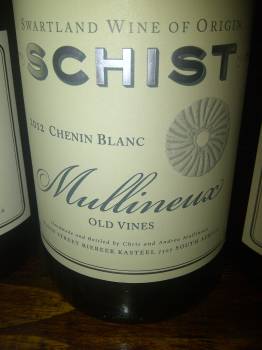
"This is the first release of this old-vine Chenin, sourced from two vineyards in the Swartland. There are only 1,000 bottles to go round, but it's an impressive début, with seamless oak integration, oatmeal, pear and apple flavours and a generous, concentrated finish. Drink: 2014-22"
- Tim Atkin Master Wine (August 2014), 95 pts
The sophomore 2013 Mullineux Schist Chenin comes from two 35-year-old vineyards and has a seductive lemon thyme, dried pineapple and quince-scented bouquet, hints of lemon curd developing with time. The palate is medium-bodied with touches of lime flower, dried apricot, a touch of quince and great precision on the finish. I cannot wait to see how this develops and though approachable now, I would prefer to cellar my bottles for 3-4 years.
Chris and Andre’s Mullineux’s almost meteoric rise to the top of the South Africa tree has been both a pleasure to witness and judging by the quality of wine in the glass…fully justified. Ever since their Straw Wine was served blind against Château Yquem 1986, their portfolio of wines has gone from delivering Swartland at the highest level and with each passing season. While remaining relatively conservative to some of the region’s more “out there” exponents, they have become increasingly terroir-focused, as a cursory glance at their labels will demonstrate. At one end has been the storming success of the entry-level Kloof Street range, while at the top end the “Schist” and “Granite” labels are now joined by “Iron." Their ambitions meant that a change of backer was necessary and so Indian multimillionaire, Analjit Singh has stepped in. The company will be renamed "Mullineux & Leeu Family Wines" with Andrea and Chris retaining control. Mr Singh already owned three adjoining farms in Franschhoek, so doubtless the Mullineux's will be working on improving the wines from there.
Moving back to the wines, I was intrigued to learn that all the Syrah is picked at the same level of Brix and yet the natural yeast converts them to different levels of alcohol. On this visit, I finally had a chance to see the vineyards myself and share a cheeky sandwich before my next appointment. I asked Chris to summarize recent vintages. “The 2011 was our most sophisticated vintage,” he answered, “and 2010 more opulent and voluptuous. I think that 2012 harnesses those two together, but it is much more approachable than the 2010. It has fresh tannins that distinguish the 2012 reds.”
I hear that sales of Mullineux have been strong in the United States as well as here in the UK, where I can vouch for a loyal fan base. If you have not tried when of Mullineux’s wines, then the sooner the better. -Wine Adovcate 93 Points
The Mullineux Family Winery Estate
This is a small, highly focused family winery producing a select family of hand-crafted wines from the granite and shale based terroirs of the Swartland Region of South Africa.
Chris was born in Cape Town, raised in Johannesburg, and introduced to the world of wine while studying accountancy at the University of Stellenbosch. After braving his way through accounting, he enrolled into winemaking for a second degree, and on graduating took a position starting up a boutique organic winery in Tulbagh, where he was in charge of the vineyards and cellar for 5 very enjoyable years. In addition to stints at de Trafford and Rustenberg wineries in South Africa, Chris has also worked harvests at top wineries in Cote Rotie, Bandol, the Languedoc, Roussillon, and California. Over the years Chris has had good exposure to the people, vineyards and wines of the Swartland. This has lead to a growing love for, and firm belief in the region, and he looks forward to many creative and hard working vintages in this region with his family.
Andrea developed her passion for wine at the family dinner table, growing up in San Francisco. After studying Viticulture and Oenology at UC Davis and completing a handful of harvests in the Napa Valley, Andrea decided to broaden her winemaking knowledge overseas. After a harvest in Stellenbosch, she went on to work in Chateauneuf and, on the same trip, met Chris at a wine festival in Champagne! Andrea's love for South African wine (and Chris) brought her back to South Africa where they learnt that their compatibility extended into the vineyards and cellar. When Andrea is not hard at work in the cellar, her creative energies flow into the kitchen where she loves cooking up a storm, glass of wine in hand.
The Mullineux Family Winery Vineyards
Very low summer rainfall coupled with afternoon and evening breezes off the Atlantic Ocean result in low disease pressure. Vineyards are often planted in amongst the natural rhenoster veldt and fynbos, which provide refuge for predators of vineyard pests, and help reduce the spread of disease. Weeds struggle to establish themselves and spread, making it easier to control them without the need of herbicides.
Chris and Andrea have put together a group vineyards in the most interesting parts of the Swartland, which are mostly found around the shale and schist based Riebeek Kasteel Mountain, and the granite based Paardeberg mountain.
Lammershoek - The deep white, granitic soils on Lammershoek produce wines that are exceptionally pure, with a granitic perfume that shines through in red and white varieties.
Kasteelsig - The soils, found on the rolling hills north of Malmesbury, are a deep combination of red gravel and iron, and produce dark, concentrated wines that are the flesh of our blends.
Kloovenburg - The highly varied row directions and aspects bring much complexity to wines, and the high shale content of the soils gives serious structure, and brings an earthy spicy character to syrah planted in them.
Mountain View - The soils are shale based, which drain easily, reducing vigor and providing grapes of perfume, freshness and structure.
The vineyards are planted with grape varieties (which are mostly Mediterranean in origin) that are ideally suited to the environment, and are farmed sustainably and in harmony with their surroundings: Syrah, Chenin Blanc, Grenache Blanc, Clairette, Viognier.

Every now and then, in life and in wine, we are presented with unique opportunities to express ourselves and create something truly remarkable.
When rare opportunities arise, we need to capture, nurture and develop them so that their potential is fulfilled. So when Torbreck was given the opportunity to work with one of the most famous vineyards in the Barossa Valley, it became almost inevitable that the resulting wine would be truly remarkable.
In 2003, Torbreck growers and fourth generation descendants of the Seppelt family, Malcolm and Joylene Seppelt, asked our winemakers to create for them a small batch of Shiraz from their old Gnadenfrei vineyard in the sub-region of Marananga.
Planted in 1958, the five acre vineyard is traditionally dry grown and comes from an original Barossa clonal source. South facing, on the eastern side of a ridge separating the Seppeltsfield and Marananga appellations, these aged vines have been meticulously hand tended, traditionally farmed and pruned by a grower with a lifetime’s experience on Western Barossa soils of very dark, heavy clay loam over red friable clay. The resulting low yields of small, concentrated Shiraz berries make the vineyard the envy of all winemakers in the Barossa.
We looked longingly at the wine when it was returned to the Seppelts, knowing that it was the best we had ever made. In 2005 we convinced the Seppelts to sell Torbreck the fruit and The Laird was born. In 2013 Torbreck purchased the Gnadenfrei vineyard, securing The Laird’s reputation as one of the world’s great single vineyard Shiraz wines.
Torbreck is the name of a forest near Inverness, Scotland and you’ll find more than a passing nod to the Celts in our wine naming conventions. The Laird of the Estate in Scotland is the Lord of the Manor and master of all he surveys.
Review:
I poured the 2017 The Laird, set it aside and got about doing other jobs for 45 minutes or so, to give it some room to breathe. And it does breathe. It has its own pulse and beat and life, and it flexes and moves in the mouth. This is incredibly enveloping, with aromas reminiscent of campfire coals, charred eucalyptus, lamb fat, roasted beetroot, black tea and a prowling sort of countenance. In the mouth, the wine is bonded and cohesive and seamless, there are no gaps between anything, no space between fruit, oak and tannin; it all comes as one. While this is a singular wine, it is so big and concentrated that it needs no accompaniment other than some fresh air and a good mate. It's denser than osmium and is impenetrable at this stage.

Segla Rauzan Margaux is made from 54% Cabernet Sauvignon, 41% Merlot, 4% Petit Verdot, 1% Cabernet Franc.
Deep ruby in appearance, Segla delivers aromas of blueberry and vanilla on the nose. On the palate it is medium bodied with silky tannins.
Review:
Takes a very fresh approach, with an open-knit feel to the mulled raspberry and red currant fruit. Pretty lilac, incense and singed apple wood notes underscore the fruit, while silky but persistent tannins carry the finish. Shows latent depth and precise balance, so don't let this early charm fool you, as this should unfurl beautifully in the cellar. Best from 2022 through 2040. 10,000 cases made.
-Wine Spectator 95 Points



