
" We don't sell the wine without touching the vine "
| BUY MORE! SAVE MORE! | ||||||||||||||||||||
|
| Country: | Spain |
| Region: | Ribera del Duero |
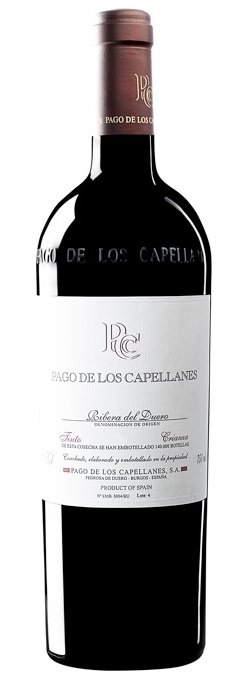
| Winery: | Pago De Los Capellanes |
| Grape Type: | Tempranillo |
| Organic: | Yes |
| Vintage: | 2020 |
| Bottle Size: | 750 ml |
Crianza is the essential wine. Balance and integrity. It displays the fine manners of experience and the grace of plethoric vine. Juicy black fruit on the palate inviting you to eat well and feel good.
But there is more. Crianza maintains an invisible pact with the landscape. An imperceptible force that brings us closer to the truth of the place. And instantly turns extreme climate vineyards into the most welcoming place in the world.
Prepared with Tempranillo grapes (100%), this wine has a very bright, intense maraschino cherry colour that fades to a Cardinal red rim.
It has a very marked aroma with a good balance of fruit and wood, where tones of vanilla intermingle with well-ripened fruit, black berries and wild fruits. There are also noticeable hints of leather and liquorice, resulting from the mingling of the French oak and the aromas inherent in this variety of grape.
In the mouth, the wine has a smooth texture but fills the palate with balanced flavours, including fine tannins, which help extend the life of the wine. The finish and aftertaste are both long and elegant.
Vineyard:
Pago de los Capellanes, Pedrosa de Duero.
Variety composition:
100% Tempranillo.
Type of soil:
Clayey and chalky.
Aging:
12 months in barrel and remainder on rack.
Type of oak:
100% French oak, medium toast.
Serving:
Uncork and decant one hour before serving at a temperature of 16-18 ºC.
Selected harvest with yields limited to 5000 kg per hectare. The harvest begins in early October, starting with the most mature parcels. Once the grapes are brought into the winery, the tanks are seeded with indigenous yeast (start culture) and the alcoholic fermentation begins. During the barrelling period, which lasts 30 days, the wine is crushed and pumped over daily, all the while controlling the density, temperature and evolution of the yeast. At the end of this fermentation, the tanks are emptied and the wine taken for malolactic fermentation.
The malolactic fermentation begins without the addition of bacteria. The temperature is held steady at 20ºC for period of 22 days, during which we monitor the levels of malic and lactic acids. When the malic acid content is less than 0.1 grams per litre, the wine is decanted to separate the lees and is transferred directly to the barrels without undergoing any type of filtration, clarification or cold treatment.
The wine is aged for twelve months in new and semi-new French oak barrels (no more than three years old). At the end of this period, it is taken to the tank for homogenisation, where it undergoes light filtration through cartridges (open pore) and is then bottled.
Review:
"A wonderfully polished expression of Ribera del Duero's match-up of power and high-plain freshness, this still has gorgeous intensity of finger-staining blackberry and mullberry succulence, a shading of expensive, fine-grained, toasty oak and satisfyingly savoury tannins all coming together to match the meat coming off the wood-fired grill. - David WILLIAMS"
- Decanter (December 14th 2022), 94 pts
Pago De Los Capellanes Estate
Pago de los Capellanes is located barely a kilometre from the village of Pedrosa de Duero, nestled deep in the heart of the Ribera del Duero region of Spain.
In the 14th century, a chaplainry existed in the village of Pedrosa de Duero. The inhabitants of the village donated small parcels of land to the chaplains in appreciation for the religious duties that they performed in the area.
Over time, the chaplainry came to have a sizeable landholding.
Some 500 years later, in 1855, the properties of the church and clergy were given over to the city council as part of the Ecclesiastical Confiscations of Mendizábal. Despite this, the inhabitants of Pedrosa continued to call the area “Pago de los Capellanes” in honour of the chaplains.
The estate was home to vineyards. Vines cultivated for generations. Today, these have grown to become one of the most prestigious wineries in the Ribera del Duero region, the Rodero Villa Winery.
The fruit of their work: Pago de los Capellanes.
Pago De Los Capellanes Vineyards
The vineyards of Pago de los Capellanes only grow Tinto Fino or Tempranillo grapes, the variety indigenous to the Ribera del Duero region.
Although the winery was initially founded with just a few select vines, we have expanded year after year with plantings of our best clones.
The plants that show the best adaptation to the soil and climate are selected in the field for further plantings. This ensures ample variety of parcels in the vineyard.
Each plot receives personalised care matching its unique features, so that we can harvest the best possible fruit.
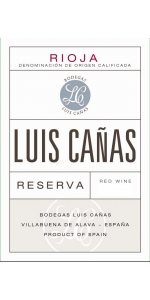
Luis Canas Rioja Reserva is made from 100 percent 95% Tempranillo and 5% Graciano
A classic style Rioja Reserva from one of the regions most enduring family run wineries. The hillside terraced vineyards are sheltered by the Sierra Cantabria Mountains to the north from harsh weather extremes. Small plot production is utilized in this region of infertile chalky clay soil to produce clusters of excellent quality. Almost 900 plots are needed to complete the approximately 400 hectares of estate-owned or cellar-controlled vineyards, some with vines more than 100 years in age.
Tasting notes
Rich color. Very pleasant on the nose, subtle and elegant, complex, with aromas of fine wood, ripe fruit, coffee. Thick, unctuous and round on the palate with solid structure and juicy tannins. The second nose shows spiced nuances and black ripe fruit aromas.
Winemaking and aging
Upon entering the bodega, bunches undergo a manual selection and then individual grapes are sorted based on their weight. Following this double selection process, they are de-stemmed and crushed before undergoing fermentation and then aceration in stainless steel tanks for a total of 8 days, obtaining better color extraction as well as much more complex and tannic wines, suitable for prolonged aging.
After its primary fermentation, the wine is placed in barrels where it undergoes malolactic fermentation and is aged for 18 months in French (70%) and American (30%) oak barrels, then aged minimum 18 months in bottle before release.
Total acidity: 5 g./l. Volatile acidity: 0,6 g./l. PH: 3,59 Free SO2: 25 mg./l. Residual sugar: 1,9 g./l.
Excellent with red or white meats, all types of game, roasts, oily fish, rice with meat and cheese. Within Rioja cuisine it is perfection accompanying peppers stuffed with cod, artichokes with ham, migas pastoriles and trotters
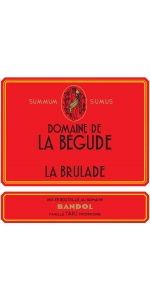
Begude Bandol Rouge La Brulade is made from 95% Mourvedre and 5% Grenache.
"La Brulade" is the name of a select slope located at an altitude of 400 meters overlooking the Mediterranean sea between La Baie d'Amour (the town of La Ciotat) in the South and La Sainte Baume in the North. This is one of the highest parcels in the Bandol appellation.
The wine is only produced in exceptional vintages. This carefully selected blend is made of 95% Mourvedre and 5% Grenache, aged in large French oak barrels for 24 months.
The wine shows a deep purple color. It is fresh and fruity on the nose with intense garrigue aromas. Structured, elegant and well-balanced on the palate with strong tannins. Licorice, ripe black fruits, garrigue flavors and some peppery freshness on the finish.
The 35-year old grapes are grown on clay and limestone soils and are farmed organically. Yield is very low - 15hl/ha. The grapes are harvested manually.
Winemaking: Double selection, destemming, crushing before skin contact fermentation. No filtration. Aging for 24 months in French oak casks (600L).
Grilled meat (lamb, beef, boar), Mediterranean cuisine, spicy dishes.
Review:
"Complex nose with deep black berry fruits, spice and hints of polish. Really lovely texture with layers of creamy red and black fruits, spices and powerful but super fine tannins. Great expression of the appellation; powerfully long."
- Decanter World Wine Award 2020 - 97 pts & Platinum Medal
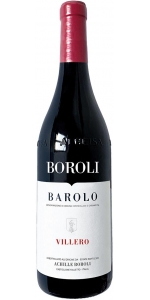
Villero is undoubtedly one of the most important vineyards in Castiglione Falletto in terms of quality and exposure.
The soil is clayey and calcareous, with a south and southwest exposure. The combination of exposure and soil give us a structured and powerful Barolo, with a deep aromatic profile. The tannins are smooth and soft, thanks to long maceration.
Barolo Villero is a long-lasting wine, capable of reaching its full potential even many years after the harvest.
Wine Production
Villero is distinguished by a careful selection of grapes, perfect destemming, long macerations with submerged cap.
Tasting Notes
Clear bright ruby colour with very light garnet red reflections; intense and persistent aroma of red fruit with notes of plum and cherry. A pleasant aroma of wood is noticeable after the fruity aroma, anticipating the full taste of a great wine suitable for long lasting life. A succulent, rich, full-bodied and pleasant taste emerges after the woody one, with the presence of slightly ripe red fruit
Food Pairing
Thanks to its viscosity and body, Barolo is the ideal wine to combine with elaborate dishes such as truffle dishes, meat dishes, pasta with porcini mushrooms, game, and aged cheeses. Villero is also perfect with dry pastries or chocolate.
Review:
This Villero shows sterness and class at the same time. The nose is focused on cherrystone aromas, Parma violets, pomegranates and slightly earthy notes. The attack is dry and austere, with firm, dusty tannins soaked in licorice and tar, enhanced by a bright, juicy and polished blood-orange finish. This is a Barolo to discover over the years, even though it’s ready to drink now.
-James Suckling 95 Points
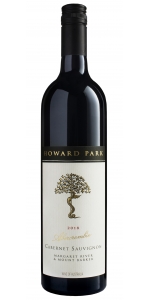
Howard Park Abercrombie Cabernet Sauvignon 100% Cabernet Sauvignon.
The 2018 Abercrombie reflects the highs that can be achieved in a superb vintage when thoughtful and deliberate winemaking combine with exceptional vineyards. The color is a vivid, deep ruby, tingeing purple and betraying the wine's youth. The bouquet evolves in a measured fashion as the wine slowly aerates, filling the glass with textbook Cabernet perfume of powerful dark fruits, rubbed bay leaf, cedar, coffee beans and vanilla. Intensity and purity of fruit is the standout feature, and this transmits seamlessly to the palate, where the profound structure and effortless length also take centre stage. The harmony of rich fruit, clean and vibrant acidity and fine, abiding tannins speak to the beguiling nature of this young wine and the glorious future that awaits its patient custodians in ensuing decades. This is true West Australian Cabernet.
Named for Walter Abercrombie, the much loved Great Grandfather and mentor of Jeff Burch, the owner of Howard Park Wines, this is Howard Park's finest Cabernet Sauvignon.
Howard Park’s winemaking philosophy is to craft elegant, age-worthy wines from our best sites in the Margaret River & Great Southern regions of Western Australia. Critical site selection, meticulous viticultural practice and detailed winemaking underline each Icon wine.
Review:
This is really fine with such polished and manicured fruit and tannins that deliver a thoroughly refined and beautiful palate with sweet dark fruit, from currants to blackberries. Long, long finish. Hard not to drink now. But one for the cellar. Try after 2025.
-James Suckling 97 Points
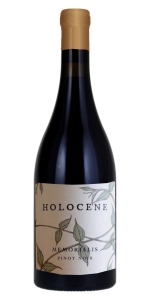
Holocene Memorialis Pinot Noir is made from 100 percent Pinot Noir.
Holocene Pinot Noir Memorialis is a blend of 777, Pommard and 115 clones from MonksGate vineyard in the Yamhill-Carlton AVA, and it saw about 20% new French oak for 16 months prior to bottling. It is always the lighter and more feminine of the two Holocene wines, with red fruits, white flowers, dried herbs, mushroom and forest floor aromatics, bright acidity and a lithe texture, long finish.
By now, everyone knows that the Willamette Valley is an amazing place to grow Pinot Noir. When I relocated from Napa Valley to partner up with Force Majeure Vineyards, I knew I also wanted to start a project where I could focus attention on a varietal and growing region that I loved. Part of the excitement of being in the Pacific Northwest is the ability to have access to so many amazing vineyards and so much diversity, along with the opportunity to push boundaries and try new things – something that is becoming increasingly difficult in other growing regions.
We partner up with a few very small, diverse and amazing vineyards in the Willamette Valley, sourcing fruit from these dry-farmed sites that emphasize low yields, sustainable practices and produce outstanding fruit.
The wines are crafted in the same way I have been making wine since I was carrying it out at Bryant Family Vineyard in the Napa Valley — utilizing very low-impact, non-industrial techniques, native yeasts, little extraction and little new oak, and never filtering or fining. This allows a real sense of place to show through in the wines that is often dimmed when too much manipulation is undertaken.
Our first vintage was 2015, and was released in early 2017. As production is currently extremely small, the best way to get the wines into your hands is to join our mailing list at the “Mailing List” link above to receive an allocation when we have a release. We release wines once per year, and they will be sold on a first come, first served basis, shipped straight to your door.
Review:
"A Bing cherry aroma slinks its way up from the glass, followed by spicy whispers of cardamom and cinnamon. Straw and chalkboard dust scents seal the deal. After a tannic black tea note materializes on the palate, the wine's cranberry and raspberry flavors punch the tart button. You can feel the tannins, but they aren't grippy. The acidity, however, lets you know it is ready for juicy business. Memorialis is quietly becoming one of Oregon's best Pinot Noirs. — Michael ALBERTYS"
- - Wine Enthusiast (October 1st 2025), 98 pts & Editor's Choice
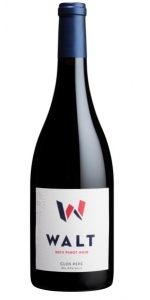
Walt Clos Pepe Pinot Noir is made from 100 percent Pinot Noir.
Deep ruby in color, the wine carries luscious fruit aromas of blackberry preserves and dark cherry, infused with exotic notes of spice, black tea and pomegranate. The palate opens to a dense and velvety texture laced with flavors of barrel char and salinity, leading to a structured and focused finish.
Review:
Big and rich, with luscious spiciness to the plush dark fruit and berry flavors that are supported by medium-grained tannins. There's plenty of creamy and toasty accents on the open-textured finish.
-Wine Spectator 93 Points
Another Sta. Hills release, the 2019 Pinot Noir Clos Pepe Vineyard saw 10% stems and 10 months in 40% new French oak. It's a little more focused and firm, with classic ripe black raspberry, red plum, and cherry fruits as well as orange blossom, spice, and floral nuances. It too is medium-bodied, textured, and beautifully balanced.
-Jeb Dunnuck 93 Points
- The Clos Pepe Vineyard was founded in the late 1980s by Steven and Kathy Pepe. The vineyard is located just east of Lompoc in the Santa Rita Hills appellation. The 2019 ‘Clos Pepe’ revels in its aromatic range from peat moss and pipe tobacco to bright red fruits and wild blackberry. The palate is dense and fresh with beautiful red florals alongside orange rind with sandy soil undertones. Gorgeous now, this has a long way to go in the cellar.
-Owen Bargreen 95 Points
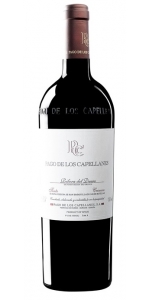
Crianza is the essential wine. Balance and integrity. It displays the fine manners of experience and the grace of plethoric vine. Juicy black fruit on the palate inviting you to eat well and feel good.
But there is more. Crianza maintains an invisible pact with the landscape. An imperceptible force that brings us closer to the truth of the place. And instantly turns extreme climate vineyards into the most welcoming place in the world.
Prepared with Tempranillo grapes (100%), this wine has a very bright, intense maraschino cherry colour that fades to a Cardinal red rim.
It has a very marked aroma with a good balance of fruit and wood, where tones of vanilla intermingle with well-ripened fruit, black berries and wild fruits. There are also noticeable hints of leather and liquorice, resulting from the mingling of the French oak and the aromas inherent in this variety of grape.
In the mouth, the wine has a smooth texture but fills the palate with balanced flavours, including fine tannins, which help extend the life of the wine. The finish and aftertaste are both long and elegant.
Vineyard:
Pago de los Capellanes, Pedrosa de Duero.
Variety composition:
100% Tempranillo.
Type of soil:
Clayey and chalky.
Aging:
12 months in barrel and remainder on rack.
Type of oak:
100% French oak, medium toast.
Serving:
Uncork and decant one hour before serving at a temperature of 16-18 ºC.
Selected harvest with yields limited to 5000 kg per hectare. The harvest begins in early October, starting with the most mature parcels. Once the grapes are brought into the winery, the tanks are seeded with indigenous yeast (start culture) and the alcoholic fermentation begins. During the barrelling period, which lasts 30 days, the wine is crushed and pumped over daily, all the while controlling the density, temperature and evolution of the yeast. At the end of this fermentation, the tanks are emptied and the wine taken for malolactic fermentation.
The malolactic fermentation begins without the addition of bacteria. The temperature is held steady at 20ºC for period of 22 days, during which we monitor the levels of malic and lactic acids. When the malic acid content is less than 0.1 grams per litre, the wine is decanted to separate the lees and is transferred directly to the barrels without undergoing any type of filtration, clarification or cold treatment.
The wine is aged for twelve months in new and semi-new French oak barrels (no more than three years old). At the end of this period, it is taken to the tank for homogenisation, where it undergoes light filtration through cartridges (open pore) and is then bottled.
Crianza is the essential wine. Balance and integrity. It displays the fine manners of experience and the grace of plethoric vine. Juicy black fruit on the palate inviting you to eat well and feel good.
But there is more. Crianza maintains an invisible pact with the landscape. An imperceptible force that brings us closer to the truth of the place. And instantly turns extreme climate vineyards into the most welcoming place in the world.
Prepared with Tempranillo grapes (100%), this wine has a very bright, intense maraschino cherry colour that fades to a Cardinal red rim.
It has a very marked aroma with a good balance of fruit and wood, where tones of vanilla intermingle with well-ripened fruit, black berries and wild fruits. There are also noticeable hints of leather and liquorice, resulting from the mingling of the French oak and the aromas inherent in this variety of grape.
In the mouth, the wine has a smooth texture but fills the palate with balanced flavours, including fine tannins, which help extend the life of the wine. The finish and aftertaste are both long and elegant.
Vineyard:
Pago de los Capellanes, Pedrosa de Duero.
Variety composition:
100% Tempranillo.
Type of soil:
Clayey and chalky.
Aging:
12 months in barrel and remainder on rack.
Type of oak:
100% French oak, medium toast.
Serving:
Uncork and decant one hour before serving at a temperature of 16-18 ºC.
Selected harvest with yields limited to 5000 kg per hectare. The harvest begins in early October, starting with the most mature parcels. Once the grapes are brought into the winery, the tanks are seeded with indigenous yeast (start culture) and the alcoholic fermentation begins. During the barrelling period, which lasts 30 days, the wine is crushed and pumped over daily, all the while controlling the density, temperature and evolution of the yeast. At the end of this fermentation, the tanks are emptied and the wine taken for malolactic fermentation.
The malolactic fermentation begins without the addition of bacteria. The temperature is held steady at 20ºC for period of 22 days, during which we monitor the levels of malic and lactic acids. When the malic acid content is less than 0.1 grams per litre, the wine is decanted to separate the lees and is transferred directly to the barrels without undergoing any type of filtration, clarification or cold treatment.
The wine is aged for twelve months in new and semi-new French oak barrels (no more than three years old). At the end of this period, it is taken to the tank for homogenisation, where it undergoes light filtration through cartridges (open pore) and is then bottled.
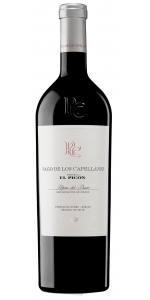
There are afternoons with indigo skies when we approach one of the oldest plots of the estate. Our stroll from the winery follows a line of cypress trees to the corner of a path. This angle gives its name to our most exceptional vineyard.
El Picón is the great symbol and the most profound reality. The sum of enigmas in a beautiful, pure fruit. The wine of silence and intimate joy, an eternal taste in which generations, labours and nature’s favors culminate.
Grapes from the plot of El Picón, one of the oldest at the Pago de los Capellanes estate in Pedrosa de Duero.
22 months in 225-litre, extra-fine grain French oak barrels dried over 60 months.
Pago de los Capellanes Finca El Picón 2018 is a mature red wine with intense aromas of red and black fruit from the forest accompanied by deep balsamic notes and spicy touches provided by aging. In the mouth it is meaty, deep and very balanced. A medium to full-bodied wine with vibrant acidity and fine, velvety tannins. The finish is long and very persistent.
1.6 hectares of clay loam soil with surface gravel. Very poor fertility and very low vineyard yields.
There are afternoons with indigo skies when we approach one of the oldest plots of the estate. Our stroll from the winery follows a line of cypress trees to the corner of a path. This angle gives its name to our most exceptional vineyard.
El Picón is the great symbol and the most profound reality. The sum of enigmas in a beautiful, pure fruit. The wine of silence and intimate joy, an eternal taste in which generations, labours and nature’s favors culminate.
Grapes from the plot of El Picón, one of the oldest at the Pago de los Capellanes estate in Pedrosa de Duero.
22 months in 225-litre, extra-fine grain French oak barrels dried over 60 months.
Pago de los Capellanes Finca El Picón is a mature red wine with intense aromas of red and black fruit from the forest accompanied by deep balsamic notes and spicy touches provided by aging. In the mouth it is meaty, deep and very balanced. A medium to full-bodied wine with vibrant acidity and fine, velvety tannins. The finish is long and very persistent.
1.6 hectares of clay loam soil with surface gravel. Very poor fertility and very low vineyard yields.
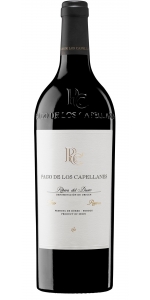
In 2007, production was just less than 5000 kg per hectare. This wine is prepared with Tempranillo 100% grapes from our vineyards.
The grapes are initially subjected to a six-day pre-fermentation cold maceration below 14ºC. They then undergo 30 days of alcoholic fermentation at a controlled temperature of 28ºC, after which the wine is removed from the tanks without pressing the grape skins. The malolactic fermentation is slow and relaxed at a temperature of 20 ºC for 28 days without the addition of bacteria.
The wine is aged for18 months in new French oak barrels and is decanted into new barrels every six months. At the end of this period, the wine is blended and bottled without undergoing any type of filtration, clarification or cold treatment.
Prepared with Tempranillo grapes (100%), this wine has a ruby red colour with very pure, intense garnet tones.
Its bouquet has fine complexity with tones of ripened fruit, especially cherries, blue berries and black currants, which are in harmony with tones of good wood, spices (vanilla and coconut) and a liquorice undertone.
In the mouth, this wine displays great balance, proving pleasing to the taste, sweet due to the maturity of its tannins and exuberant on account of its pleasant level of acidity.
Vineyard:
Pago de los Capellanes, Pedrosa de Duero.
Variety composition:
100% Tempranillo.
Type of soil:
Clayey and chalky.
Aging:
18 months in barrel and remainder on rack.
Type of oak:
100% French oak, medium toast.
Serving:
Uncork and decant one hour before serving at a temperature of 16-18 ºC.
The 2019 Ribera del Duero Reserva is also terrific, with gorgeous aromatics of black and blue fruits supported by Asian spices, lead pencils, cedarwood, and violets. It's beautifully textured, medium to full-bodied, has a concentrated, powerful mouthfeel, and ripe, integrated tannins.
-Jeb Dunnuck 95 Points
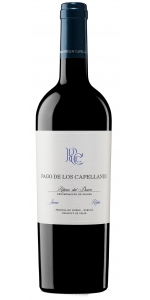
Pago de los Capellanes Tinto Joven is made from 100% Tempranillo.
Joven Roble is for everyone and for every moment. Fresh and vibrant, while at the same time complete and full of energy. A clear, affable, open and solid character. We take its production very seriously to obtain a blissfully satisfying wine with every vintage.
Review:
All Tempranillo, the 2022 Ribera del Duero Tinto Joven has a deep purple hue as well as beautiful blue fruits, violets, graphite, and charcoal aromas and flavors. Along with medium to full-bodied richness, it has wonderful purity and precision, fine tannins, and a great finish. It's a stunning value.
-Jeb Dunnuck 94 Points
Figgins Estate Red Wine is a blend of Cabernet Sauvignon, Petit Verdot & Merlot
Dark to the rim, with signature aromatic notes of ripe red and blue fruits, tanned leather, black olive, and lilac. The nose simply brings a smile. On the palate, if I had to describe the wine in one word it would be precision. The way the sweet fruit and dramatic length are braced by lively acidity and tannins aligns so perfectly that the wine is, quite simply, delicious.
Review:
Inviting aromas of vivid red fruit, fresh herbs and paprika. Full-bodied with juicy, fruit-soaked, fine tannins. Delightful. So much happening here. The fruit is plentiful and full of charming spice and herbal complexity. Very well balanced and long. Fresh. A blend of cabernet sauvignon, merlot and petit verdot. Best after 2024 but attractive now.
-James Suckling 96 Points
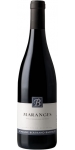
Bachelet Bertrand Maranges Rouge is made from 100 percent Pinot Noir.
The Maranges appellation is the youngest of the Côte de Beaune family, making its debut in May 1989. It spans three villages: Dezize-les-Maranges, Cheilly-les-Maranges and Sampigny-les-Maranges. Several hills and slopes make up this appellation, that are south/south-east-facing. This appellation produces mainly red wines comprising 95% of total production.
Bachelet Bertrand Maranges is produced from two villages, Aux Artaux and En Crevèches, both situated in the Cheilly-les-Maranges area.
The wine offers a deep red color with purplish highlights, a powerful nose with aromas of raspberries, blackcurrants, and small red candied fruits. A silky texture on the palate, complemented by delicate tannins and a lingering finish.
Pairs well with roasted meats, stews, and mature cheeses.



