
" We don't sell the wine without touching the vine "
| BUY MORE! SAVE MORE! | ||||||||||||||||||||
|
| Country: | Spain |
| Region: | Ribera del Duero |
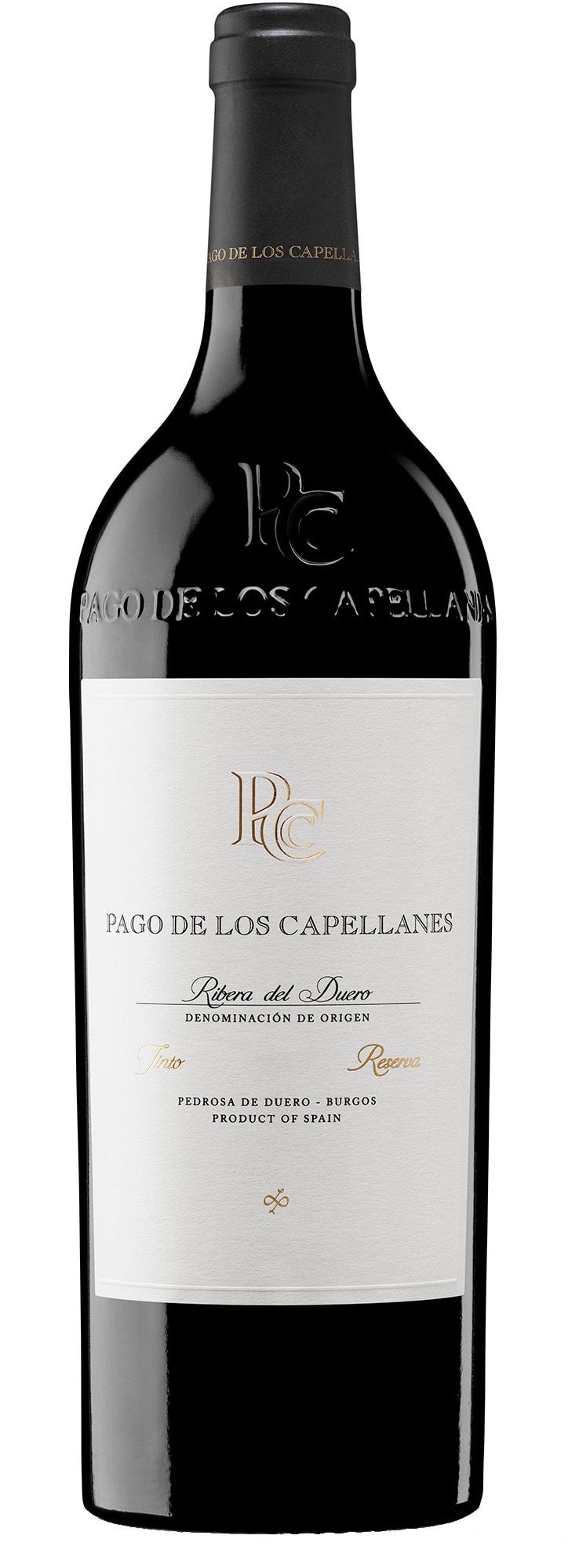
| Winery: | Pago De Los Capellanes |
| Grape Type: | Tempranillo |
| Organic: | Yes |
| Vintage: | 2019 |
| Bottle Size: | 750 ml |
In 2007, production was just less than 5000 kg per hectare. This wine is prepared with Tempranillo 100% grapes from our vineyards.
The grapes are initially subjected to a six-day pre-fermentation cold maceration below 14ºC. They then undergo 30 days of alcoholic fermentation at a controlled temperature of 28ºC, after which the wine is removed from the tanks without pressing the grape skins. The malolactic fermentation is slow and relaxed at a temperature of 20 ºC for 28 days without the addition of bacteria.
The wine is aged for18 months in new French oak barrels and is decanted into new barrels every six months. At the end of this period, the wine is blended and bottled without undergoing any type of filtration, clarification or cold treatment.
Prepared with Tempranillo grapes (100%), this wine has a ruby red colour with very pure, intense garnet tones.
Its bouquet has fine complexity with tones of ripened fruit, especially cherries, blue berries and black currants, which are in harmony with tones of good wood, spices (vanilla and coconut) and a liquorice undertone.
In the mouth, this wine displays great balance, proving pleasing to the taste, sweet due to the maturity of its tannins and exuberant on account of its pleasant level of acidity.
Vineyard:
Pago de los Capellanes, Pedrosa de Duero.
Variety composition:
100% Tempranillo.
Type of soil:
Clayey and chalky.
Aging:
18 months in barrel and remainder on rack.
Type of oak:
100% French oak, medium toast.
Serving:
Uncork and decant one hour before serving at a temperature of 16-18 ºC.
The 2019 Ribera del Duero Reserva is also terrific, with gorgeous aromatics of black and blue fruits supported by Asian spices, lead pencils, cedarwood, and violets. It's beautifully textured, medium to full-bodied, has a concentrated, powerful mouthfeel, and ripe, integrated tannins.
-Jeb Dunnuck 95 Points
Pago De Los Capellanes Estate
Pago de los Capellanes is located barely a kilometre from the village of Pedrosa de Duero, nestled deep in the heart of the Ribera del Duero region of Spain.
In the 14th century, a chaplainry existed in the village of Pedrosa de Duero. The inhabitants of the village donated small parcels of land to the chaplains in appreciation for the religious duties that they performed in the area.
Over time, the chaplainry came to have a sizeable landholding.
Some 500 years later, in 1855, the properties of the church and clergy were given over to the city council as part of the Ecclesiastical Confiscations of Mendizábal. Despite this, the inhabitants of Pedrosa continued to call the area “Pago de los Capellanes” in honour of the chaplains.
The estate was home to vineyards. Vines cultivated for generations. Today, these have grown to become one of the most prestigious wineries in the Ribera del Duero region, the Rodero Villa Winery.
The fruit of their work: Pago de los Capellanes.
Pago De Los Capellanes Vineyards
The vineyards of Pago de los Capellanes only grow Tinto Fino or Tempranillo grapes, the variety indigenous to the Ribera del Duero region.
Although the winery was initially founded with just a few select vines, we have expanded year after year with plantings of our best clones.
The plants that show the best adaptation to the soil and climate are selected in the field for further plantings. This ensures ample variety of parcels in the vineyard.
Each plot receives personalised care matching its unique features, so that we can harvest the best possible fruit.
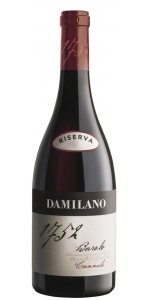
“1752” is the name of the Damilano Barolo Cannubi Riserva, in honor of the year in which the historic bottle was first marked “Cannubi”. It still exists today perfectly conserved by the Manzone family in Bra, close to Barolo. The bottle is clearly marked as being of “1752” vintage, indicating that Cannubi historically precedes Barolo.
About the Vineyard:
The Cannubi Cru is in found within one of the 6 core zones which comprise a UNESCO heritage site in Italy. A mixture of Tortonian and Helvetian calcareous marl gives the grapes intense aromas of cherry, plum and tobacco, rose and violet in sequence. Its low potassium and high calcium/magnesium content offer the wine a fine and polished touch. The vineyard is located at about 270 m. a.s.l. and has a south-east sun exposure. Barolo Riserva Cannubi 1752 It is a small plot of about 2 hectares of Nebbiolo vines, currently between 30 and 50 years of age.
Tasting Notes:
Garnet ruby red in color, the bouquet is intense and balanced, with notes of violet, red fruit, cherry and plum, spices, liquorice, cocoa, leather and tobacco. Dry, robust, full-bodied, very persistent, rich and velvety
Food Pairing:
This wine is excellent with typical piedmontes pasta (tajarin, ravioli); perfect with red meat, braised and roast meat, game and absolutely ideal with all types of cheeses.
Review:
Paul Hobbs Edward James Estate Chardonnay Russian River Valley is made from 100 percent Chardonnay.
This small five-acre estate named after Paul's great-grandfather, Edward James, rewards us with a chardonnay that is pale straw in color with inviting aromas of lemon zest, red apple skin, gardenia, and honeysuckle. A creamy mouthfeel on the palate evolves into poached pear, ginger spice, and brioche that come together with a crunchy acidity and lively finish.
Review:
The 2022 Chardonnay Edward James Estate was named after Paul’s grandparents on his father’s side and originates in a vineyard planted entirely to Hyde Wente clone of Chardonnay. It was raised in French oak for 18 months on the lees. In the glass, it’s highly expressive and layered with aromas of toasted spice, incense, honeysuckle, quince, and preserved citrus. Medium to full-bodied, it has a fantastic, long, supple texture with a linear, crystalline feel, great, evenly fresh acidity, and a salty, mouthwatering finish. This is my favorite of the white wines at this tasting. Drink 2025-2037.
-Jeb Dunnuck 97 Points
Charles Smith K Vintners Powerline Estate Syrah is made from 100 percent Syrah.
Friendly, approachable and vivacious, yet also dark and mysterious. Black cherry, allspice, black ash, and orange blossom. Thyme and flint with ark fruit, cedar, kelp, black pepper, juniper, crushed rock, and tons of complex floral notes. Fear not, embrace it.
While just bottled a week before this tasting, the 2019 Syrah Powerline Vineyard certainly wasn't showing any worse for it, offering a stunning bouquet of ripe red and black fruits as well as white pepper, sandalwood, tobacco, and new leather. Pure, medium to full-bodied, and vibrant, with supple, polished tannins, this brilliant Syrah is going to keep for 10-12 years, if not longer.
-Jeb Dunnuck 97 Points
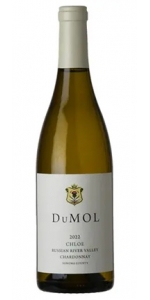
DuMOL 'Chloe' Chardonnay is made from 100 percent Chardonnay.
Our first vintage of Chloe was 2000, and although the vineyard mix has changed over the years, the wine has always focused on the central Russian River Valley district to represent the richest side of DuMOL Chardonnay. The wine has lower acidity than our coastal wines, making it more approachable in its youth, and the flavors focus more on orchard fruits than citrus. The neighboring El Diablo and Flora Marie vineyards sit overlooking the river on gravelly loam soils and provide the wine's deep fruit generosity. These are the first vineyards we harvest each year as the lean soils really advance their crop’s ripening. We offset this fruit richness with grapes from our Green Valley Bressay Estate, which overflow with tense structure and coastal acidity. It’s a seamless combination that produces a thrilling result, and Chloe is the first of our designate Chardonnays you should open each vintage.
The wine’s aromas and flavors are akin to peach, apricot, oatmeal and anise. Fresh thyme and honey notes combine with tangerine and lemon curd. It’s a deeply textural and expansive wine that gently glides along the palate. Lively acidity and spicy notes of ginger and white pepper provide lift and energy to the finish. A beautiful, layered, and richer style to enjoy soon after release. Drink between late-2024 and 2029 and serve no cooler than 55º F.
Review:
A Central Russian River Blend, the 2022 Chardonnay Chloe is a bright yellow hue and captures a wide spectrum of citrus with notes of orange, Meyer lemon, fresh pineapple, toasted spice, and a hint of almond through the mid-palate as well as a nice lift of citrus on the finish. It’s a beautiful wine offering a richer tone through the range. Drink 2024-2034.
-Jeb Dunnuck 96 Points
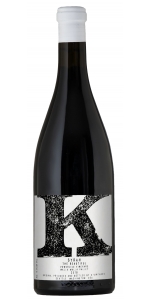
K Vintners The Beautiful Syrah 2018 is made from 97% Syrah, 3% Viognier.
A multi-layered beauty; perfumed, lovely. Super dark rose. Broken, unfiltered cigarette, Amaro. Densely colored with a shimmering red rim. Giving, yet just an inch at a time. One to ponder. One to enjoy.
Review:
The 2018 Syrah The Beautiful Powerline Vineyard comes from a vineyard outside of Walla Walla, in the foothills of the Blue Mountains. It was not destemmed and was brought up in neutral, larger barrels. An exotic nose of ripe blue and black fruits, lavender, sappy flowers, and herbes de Provence-like nuances give way to a medium to full-bodied, richly textured, structured wine with a mouth-filling, layered, meaty style that builds nicely with time in the glass. There's always a sappy, almost herbal edge to this beauty, and it ages beautifully. Feel free to open bottles any time over the coming 15-20 years. It would certainly be hard to pick out in a lineup of top Northern Rhône Syrahs.
-Jeb Dunnuck 97 Points
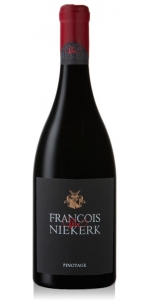
Dense purple hues, with evocative aromas of black cherries, ripe plums, nectarines, boysenberry, wild bramble and exotic oak spice. The juicy and sweet-fruited palate entry, combined with crunchy tannins, lures one into a sense of overtness, yet the wine is sublimely elegant and poised. The complex layers of fruit is in perfect harmony with the oak, all bound together by a lively seam of acidity. The finish is pleasantly dry and savory, with lingering notes of Christmas cake and vanilla pod.
Pair with barbequed meats, especially venison and beef / bobotie / lamb curry / seared tuna / spicy Asian-styled cuisine / aromatic curries / duck with sweet plum sauce / beef or lamb burgers / pizza
Review:
"A full-bodied and brooding wine. Precisely balanced with red cherries, blueberries, coffee, and chocolate with silky tannins and refreshing sour cherry acidity. Serious pedigree here."
- Decanter WWA 2021, 96 points and Gold Medal
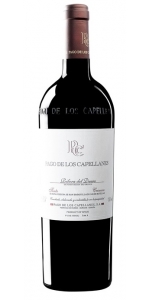
Crianza is the essential wine. Balance and integrity. It displays the fine manners of experience and the grace of plethoric vine. Juicy black fruit on the palate inviting you to eat well and feel good.
But there is more. Crianza maintains an invisible pact with the landscape. An imperceptible force that brings us closer to the truth of the place. And instantly turns extreme climate vineyards into the most welcoming place in the world.
Prepared with Tempranillo grapes (100%), this wine has a very bright, intense maraschino cherry colour that fades to a Cardinal red rim.
It has a very marked aroma with a good balance of fruit and wood, where tones of vanilla intermingle with well-ripened fruit, black berries and wild fruits. There are also noticeable hints of leather and liquorice, resulting from the mingling of the French oak and the aromas inherent in this variety of grape.
In the mouth, the wine has a smooth texture but fills the palate with balanced flavours, including fine tannins, which help extend the life of the wine. The finish and aftertaste are both long and elegant.
Vineyard:
Pago de los Capellanes, Pedrosa de Duero.
Variety composition:
100% Tempranillo.
Type of soil:
Clayey and chalky.
Aging:
12 months in barrel and remainder on rack.
Type of oak:
100% French oak, medium toast.
Serving:
Uncork and decant one hour before serving at a temperature of 16-18 ºC.
Selected harvest with yields limited to 5000 kg per hectare. The harvest begins in early October, starting with the most mature parcels. Once the grapes are brought into the winery, the tanks are seeded with indigenous yeast (start culture) and the alcoholic fermentation begins. During the barrelling period, which lasts 30 days, the wine is crushed and pumped over daily, all the while controlling the density, temperature and evolution of the yeast. At the end of this fermentation, the tanks are emptied and the wine taken for malolactic fermentation.
The malolactic fermentation begins without the addition of bacteria. The temperature is held steady at 20ºC for period of 22 days, during which we monitor the levels of malic and lactic acids. When the malic acid content is less than 0.1 grams per litre, the wine is decanted to separate the lees and is transferred directly to the barrels without undergoing any type of filtration, clarification or cold treatment.
The wine is aged for twelve months in new and semi-new French oak barrels (no more than three years old). At the end of this period, it is taken to the tank for homogenisation, where it undergoes light filtration through cartridges (open pore) and is then bottled.
Review:
"A wonderfully polished expression of Ribera del Duero's match-up of power and high-plain freshness, this still has gorgeous intensity of finger-staining blackberry and mullberry succulence, a shading of expensive, fine-grained, toasty oak and satisfyingly savoury tannins all coming together to match the meat coming off the wood-fired grill. - David WILLIAMS"
- Decanter (December 14th 2022), 94 pts
Crianza is the essential wine. Balance and integrity. It displays the fine manners of experience and the grace of plethoric vine. Juicy black fruit on the palate inviting you to eat well and feel good.
But there is more. Crianza maintains an invisible pact with the landscape. An imperceptible force that brings us closer to the truth of the place. And instantly turns extreme climate vineyards into the most welcoming place in the world.
Prepared with Tempranillo grapes (100%), this wine has a very bright, intense maraschino cherry colour that fades to a Cardinal red rim.
It has a very marked aroma with a good balance of fruit and wood, where tones of vanilla intermingle with well-ripened fruit, black berries and wild fruits. There are also noticeable hints of leather and liquorice, resulting from the mingling of the French oak and the aromas inherent in this variety of grape.
In the mouth, the wine has a smooth texture but fills the palate with balanced flavours, including fine tannins, which help extend the life of the wine. The finish and aftertaste are both long and elegant.
Vineyard:
Pago de los Capellanes, Pedrosa de Duero.
Variety composition:
100% Tempranillo.
Type of soil:
Clayey and chalky.
Aging:
12 months in barrel and remainder on rack.
Type of oak:
100% French oak, medium toast.
Serving:
Uncork and decant one hour before serving at a temperature of 16-18 ºC.
Selected harvest with yields limited to 5000 kg per hectare. The harvest begins in early October, starting with the most mature parcels. Once the grapes are brought into the winery, the tanks are seeded with indigenous yeast (start culture) and the alcoholic fermentation begins. During the barrelling period, which lasts 30 days, the wine is crushed and pumped over daily, all the while controlling the density, temperature and evolution of the yeast. At the end of this fermentation, the tanks are emptied and the wine taken for malolactic fermentation.
The malolactic fermentation begins without the addition of bacteria. The temperature is held steady at 20ºC for period of 22 days, during which we monitor the levels of malic and lactic acids. When the malic acid content is less than 0.1 grams per litre, the wine is decanted to separate the lees and is transferred directly to the barrels without undergoing any type of filtration, clarification or cold treatment.
The wine is aged for twelve months in new and semi-new French oak barrels (no more than three years old). At the end of this period, it is taken to the tank for homogenisation, where it undergoes light filtration through cartridges (open pore) and is then bottled.
Crianza is the essential wine. Balance and integrity. It displays the fine manners of experience and the grace of plethoric vine. Juicy black fruit on the palate inviting you to eat well and feel good.
But there is more. Crianza maintains an invisible pact with the landscape. An imperceptible force that brings us closer to the truth of the place. And instantly turns extreme climate vineyards into the most welcoming place in the world.
Prepared with Tempranillo grapes (100%), this wine has a very bright, intense maraschino cherry colour that fades to a Cardinal red rim.
It has a very marked aroma with a good balance of fruit and wood, where tones of vanilla intermingle with well-ripened fruit, black berries and wild fruits. There are also noticeable hints of leather and liquorice, resulting from the mingling of the French oak and the aromas inherent in this variety of grape.
In the mouth, the wine has a smooth texture but fills the palate with balanced flavours, including fine tannins, which help extend the life of the wine. The finish and aftertaste are both long and elegant.
Vineyard:
Pago de los Capellanes, Pedrosa de Duero.
Variety composition:
100% Tempranillo.
Type of soil:
Clayey and chalky.
Aging:
12 months in barrel and remainder on rack.
Type of oak:
100% French oak, medium toast.
Serving:
Uncork and decant one hour before serving at a temperature of 16-18 ºC.
Selected harvest with yields limited to 5000 kg per hectare. The harvest begins in early October, starting with the most mature parcels. Once the grapes are brought into the winery, the tanks are seeded with indigenous yeast (start culture) and the alcoholic fermentation begins. During the barrelling period, which lasts 30 days, the wine is crushed and pumped over daily, all the while controlling the density, temperature and evolution of the yeast. At the end of this fermentation, the tanks are emptied and the wine taken for malolactic fermentation.
The malolactic fermentation begins without the addition of bacteria. The temperature is held steady at 20ºC for period of 22 days, during which we monitor the levels of malic and lactic acids. When the malic acid content is less than 0.1 grams per litre, the wine is decanted to separate the lees and is transferred directly to the barrels without undergoing any type of filtration, clarification or cold treatment.
The wine is aged for twelve months in new and semi-new French oak barrels (no more than three years old). At the end of this period, it is taken to the tank for homogenisation, where it undergoes light filtration through cartridges (open pore) and is then bottled.
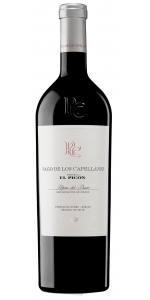
There are afternoons with indigo skies when we approach one of the oldest plots of the estate. Our stroll from the winery follows a line of cypress trees to the corner of a path. This angle gives its name to our most exceptional vineyard.
El Picón is the great symbol and the most profound reality. The sum of enigmas in a beautiful, pure fruit. The wine of silence and intimate joy, an eternal taste in which generations, labours and nature’s favors culminate.
Grapes from the plot of El Picón, one of the oldest at the Pago de los Capellanes estate in Pedrosa de Duero.
22 months in 225-litre, extra-fine grain French oak barrels dried over 60 months.
Pago de los Capellanes Finca El Picón 2018 is a mature red wine with intense aromas of red and black fruit from the forest accompanied by deep balsamic notes and spicy touches provided by aging. In the mouth it is meaty, deep and very balanced. A medium to full-bodied wine with vibrant acidity and fine, velvety tannins. The finish is long and very persistent.
1.6 hectares of clay loam soil with surface gravel. Very poor fertility and very low vineyard yields.
There are afternoons with indigo skies when we approach one of the oldest plots of the estate. Our stroll from the winery follows a line of cypress trees to the corner of a path. This angle gives its name to our most exceptional vineyard.
El Picón is the great symbol and the most profound reality. The sum of enigmas in a beautiful, pure fruit. The wine of silence and intimate joy, an eternal taste in which generations, labours and nature’s favors culminate.
Grapes from the plot of El Picón, one of the oldest at the Pago de los Capellanes estate in Pedrosa de Duero.
22 months in 225-litre, extra-fine grain French oak barrels dried over 60 months.
Pago de los Capellanes Finca El Picón is a mature red wine with intense aromas of red and black fruit from the forest accompanied by deep balsamic notes and spicy touches provided by aging. In the mouth it is meaty, deep and very balanced. A medium to full-bodied wine with vibrant acidity and fine, velvety tannins. The finish is long and very persistent.
1.6 hectares of clay loam soil with surface gravel. Very poor fertility and very low vineyard yields.
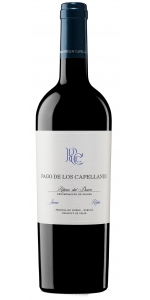
Pago de los Capellanes Tinto Joven is made from 100% Tempranillo.
Joven Roble is for everyone and for every moment. Fresh and vibrant, while at the same time complete and full of energy. A clear, affable, open and solid character. We take its production very seriously to obtain a blissfully satisfying wine with every vintage.
Review:
All Tempranillo, the 2022 Ribera del Duero Tinto Joven has a deep purple hue as well as beautiful blue fruits, violets, graphite, and charcoal aromas and flavors. Along with medium to full-bodied richness, it has wonderful purity and precision, fine tannins, and a great finish. It's a stunning value.
-Jeb Dunnuck 94 Points
Paradigm Cabernet Sauvignon is made from 90% Cabernet Sauvignon, 8% Merlot, 1% Petit Verdot, 1% Cabernet Franc
20 months in French oak (only about a third of that is new oak) and for 20 more months in bottle before release
Our winemaking "style" is solely determined by this place or terrior we call "Paradigm." Winemaking is agriculture when you own your vineyards and are able to farm them to promote the very best Earth will give you. All of our selections of wines are made from five varietals on the estate. Every wine is 100% farmed and grown by us.
Complexity in our wines supported by luscious fruit and acidity is our hallmark. Our efforts during harvest and barrel cellaring concentrate on maintaining the freshness from the first day we handpicked each vineyard block. Simple winemaking protocols are employed while crucial “timing” oriented winemaking decisions rule each day.
The DAOU Cabernet Sauvignon presents a deep ruby-purple color, foreshadowing intense aromas of cherry and blackberry jam complemented by dark chocolate, tobacco leaf and desert sage. The nose also reveals secondary nuances of wet gravel, sandalwood and plum pudding with subtle notes of fennel, black olive and eucalyptus. On the palate, a swirl of black raspberry, pomegranate, cherry preserve and Zante currant melds seamlessly with crushed herbs, fig and cranberry. An impeccably balanced finish flows effortlessly from the juicy mid palate, leaving lovely notes of boysenberry, rhubarb, graphite and dried thyme.
Review:
Clean lines of cherry, toasted wood, red flower and a pinch of thyme make for a satisfying nose on this widely available bottling. The palate pairs familiar blackberry flavors with mocha spice.
-Wine Enthusiast 91 Points



