
" We don't sell the wine without touching the vine "
Pio Cesare Ornato Barolo is made from 100 percent Nebbiolo.
Vineyards
The very first Single Vineyard Barolo produced by the Pio Family, for the first time in 1985. Great structure, power, concentration, with a very long life. Produced in small quantities.
Vinification
In stainless steel tanks at high temperatures. Maceration for 30 days. Ageing In large oak “botti” for about 30 months; a small amount in French oak barriques for the first 12 months.
Review:
Complex on the nose, offering a blend of ripe red berries, nutty minerals, orange-peel and spice. Some savory, almost meaty notes, too. Full, compact and intense, yet there’s a graceful feel to the palate, thanks to the really fine web of tannin. Super polish and promise here. Classy. Needs some time.
-James Suckling 96 Points
“1752” is the name of the Damilano Barolo Cannubi Riserva, in honor of the year in which the historic bottle was first marked “Cannubi”. It still exists today perfectly conserved by the Manzone family in Bra, close to Barolo. The bottle is clearly marked as being of “1752” vintage, indicating that Cannubi historically precedes Barolo.
About the Vineyard:
The Cannubi Cru is in found within one of the 6 core zones which comprise a UNESCO heritage site in Italy. A mixture of Tortonian and Helvetian calcareous marl gives the grapes intense aromas of cherry, plum and tobacco, rose and violet in sequence. Its low potassium and high calcium/magnesium content offer the wine a fine and polished touch. The vineyard is located at about 270 m. a.s.l. and has a south-east sun exposure. Barolo Riserva Cannubi 1752 It is a small plot of about 2 hectares of Nebbiolo vines, currently between 30 and 50 years of age.
Tasting Notes:
Garnet ruby red in color, the bouquet is intense and balanced, with notes of violet, red fruit, cherry and plum, spices, liquorice, cocoa, leather and tobacco. Dry, robust, full-bodied, very persistent, rich and velvety
Food Pairing:
This wine is excellent with typical piedmontes pasta (tajarin, ravioli); perfect with red meat, braised and roast meat, game and absolutely ideal with all types of cheeses.
Review:
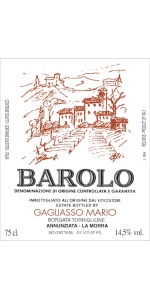
Gagliasso Barolo Riserva Oak Box is made from 100% Nebbiolo
Complex and intense aromas of red fruits intermixed with licorice, prune, leather, smoke and notes of toasty oak and vanilla. Full-bodied on the palate with loads of ripe dried and candied fruits, pepper and mocha.
After malolattic fermentation the wine stays for 10 months in French barrels, 10% new oak and 90% different years; after this period all barrels are blended ( 50% Torriglione and 50% Rocche dell’Annunziata) in old barrels for 48 months again. The wine is bottled and refined for 24 months.
There's a gritty, sandy quality to the tannins that would cut through roast pork stuffed with prunes.
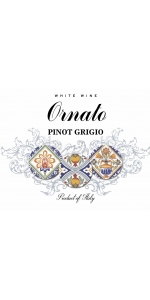
This Pinot Grigio is grown at the foot of the remains of what was once the stunning villa of the della Scala family, one of the most influencial families in Verona from the early 1200's to the late 1300's. The much admired ruler of Verona, Cangrande I della Scala, summered at this villa. Cangrande I was a great warrior, diplomatic prince and an important patron of the arts. He championed the works of Dante, Patrarch and Giotto. He created beautiful architecture throughout the city in the ornate, gothic style of his time. This label is a reproduction of the design taken from a fragment of the ornate and intricate art that once covered the ceilings of the villa. In Italian, Ornato means ornate or adorned. This label celebrates the beautiful, complex taste of the Della Scala family and the Gothic art of that period.
Color: Brilliant straw colored wine with golden reflections.
Bouquet: Fresh and floral bouquet with a hint of pears, apricots and bananas blended with the intense aroma of acacia flowers.
Taste: Fresh and inviting with bright fruit and an easy drinking style with a pleasing hint of almonds in the aftertaste.
Vineyard: Rich in limestone the soil is of alluvial origin. The vineyards are located in the province of Verona. The agricultre is sustainable. No chemical fertilizers, herbicides or pesticides are used. The vineyards are South facing at 300 meters above sea level.
Harvest: September – by hand. The grapes are picked as they ripen to keep the acidity high. The grapes are brought to the cellar and refrigerated within a half hour of picking to keep oxidation to a minimum.
The grapes are soft pressed and the juice is placed in stainless steel along with the skins for a brief maceration of 12 hours at 8-10° C. The must is then racked and lightly filtered. Fermentation then takes place with selected indigenous yeast under controlled temperatures. Of 16-18°C. The fermentation is slow and cool to emhance the natural aromas of the grapes. The finished wine is placed in stainless steel holding tanks until bottled.
Aging: 3-4 months in stainless steel.
Alcohol: 12%
Acidity: 5.30
Seafood dishes, risottos with scampi, spaghetti with clams, sole in white wine.
This Pinot Grigio is grown at the foot of the remains of what was once the stunning villa of the della Scala family, one of the most influencial families in Verona from the early 1200's to the late 1300's. The much admired ruler of Verona, Cangrande I della Scala, summered at this villa. Cangrande I was a great warrior, diplomatic prince and an important patron of the arts. He championed the works of Dante, Patrarch and Giotto. He created beautiful architecture throughout the city in the ornate, gothic style of his time. This label is a reproduction of the design taken from a fragment of the ornate and intricate art that once covered the ceilings of the villa. In Italian, Ornato means ornate or adorned. This label celebrates the beautiful, complex taste of the Della Scala family and the Gothic art of that period.
Color: Brilliant straw colored wine with golden reflections.
Bouquet: Fresh and floral bouquet with a hint of pears, apricots and bananas blended with the intense aroma of acacia flowers.
Taste: Fresh and inviting with bright fruit and an easy drinking style with a pleasing hint of almonds in the aftertaste.
Vineyard: Rich in limestone the soil is of alluvial origin. The vineyards are located in the province of Verona. The agricultre is sustainable. No chemical fertilizers, herbicides or pesticides are used. The vineyards are South facing at 300 meters above sea level.
Harvest: September – by hand. The grapes are picked as they ripen to keep the acidity high. The grapes are brought to the cellar and refrigerated within a half hour of picking to keep oxidation to a minimum.
The grapes are soft pressed and the juice is placed in stainless steel along with the skins for a brief maceration of 12 hours at 8-10° C. The must is then racked and lightly filtered. Fermentation then takes place with selected indigenous yeast under controlled temperatures. Of 16-18°C. The fermentation is slow and cool to emhance the natural aromas of the grapes. The finished wine is placed in stainless steel holding tanks until bottled.
Aging: 3-4 months in stainless steel.
Alcohol: 12%
Acidity: 5.30
Seafood dishes, risottos with scampi, spaghetti with clams, sole in white wine.
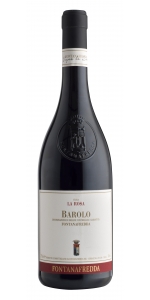
Reviews:
On the savory side, this red opens with freshly mowed grass, hay and eucalyptus aromas before revealing cherry, strawberry, rose and mineral flavors. Fleshy, with a matrix of dense tannins flexing their muscles on the finish. Shows excellent potential. Best from 2023 through 2042.
-Wine Spectator 96 Points
Floral and red fruit nose. Supple attack, very polished and concentrated, with fine-grained tannins and ample acidity. This has a linear drive, precision. and a very long finish. The rewards will be substantial for the patient consumer.
-Decanter 97 Points
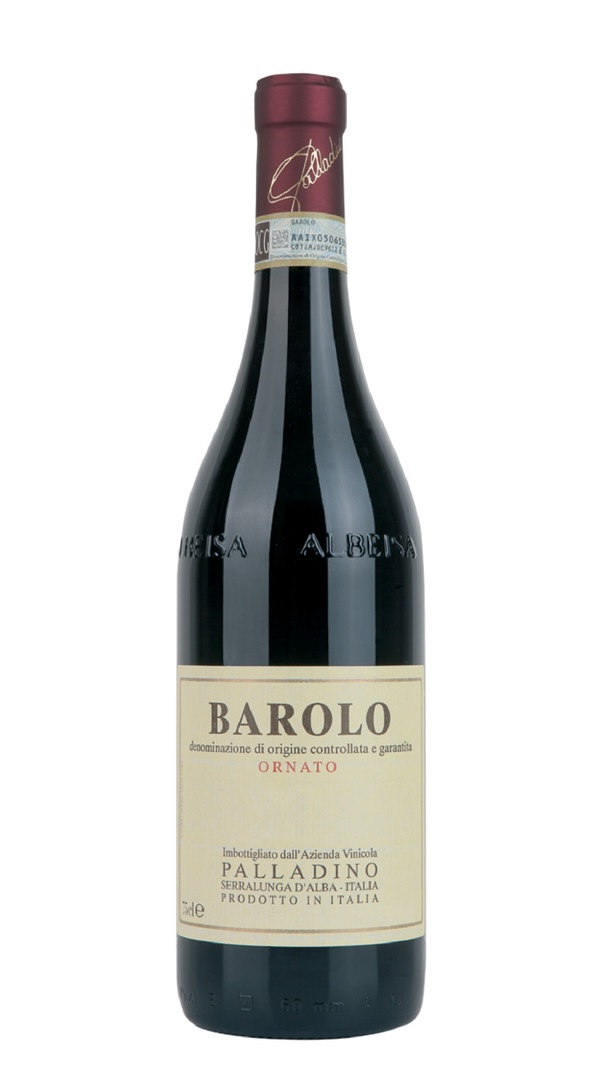
Palladino Barolo Ornato is made from 100 percent Nebbiolo.
VINEYARD: Nebbiolo 100%. Subvarietal: Lampia, Michet.
SOIL COMPOSITION: Calcareous clay.
EXPOSURE: South.
MICROCLIMATE: Fairly temperate.
TOTAL SURFACE AREA: 0,30 ha.
YEALD/Ha: 7.000 kg/ha.
COLOUR: Ruby red with purple and garnet reflections.
AROMA: Balsamic, reminiscence of the soil where the grapes grow.
TASTE: Full-bodied with a slightly bitter aftertaste, excellent structure and good predisposition to ageing.
FOOD AFFINITY: Braised or roasted meats, wild game, seasoned and strong cheeses.
Made with grapes from the Ornate vineyard in Serralunga d'Alba, it has the solid structure that is characteristic of the wines of our region.
With an intense aroma, the characteristic nose has notes of cloves, cinnamon, violets and red cherries. In the mouth, the taste is full and mineral with vigorous tannins and a long finish.
Review:
Ripe berry, dark-spice and camphor aromas are front and center on this fragrant red along with a whiff of iris. Full bodied and juicy, the savory, enveloping palate delivers succulent morello cherry, crushed raspberry, licorice and hints of tobacco. Firm, velvety tannins and fresh acidity provide great structure and balance. Drink 2026–2041.
- Wine Enthusiast 94 Points
The tradition of the great wines of the Langhe proposed in a youthful and dynamic way. Azienda Vinicola Palladino combines the wisdom of its own history with the current trends, in order to ensure that the quality of a production strongly linked to the territory can be fully appreciated, both in Italy and abroad. The selection is exclusively Piedmontese denominations, vinified in purity.
Hailing from Guarene, Piero Palladino spent his youth in Alba, where he studied winemaking at the Istituto Enologico. He was employed as winemaker for a wine vendor in Biella, having moved there after the war. However, Piero did not cut ties with Alba and the Langhe. In the years following, his characterising resourcefulness led him to set up businesses in various sectors, before definitively arriving in the textile industry. However, wine remained his passion, one that he emphatically asserted at the first opportunity. In 1974, Piero bought the current Azienda Vinicola Palladino and entrusted its management to his cousin Maurilio, his subsequent business partner.
Maurilio Palladino, together with his wife Domenica, managed the company for years, drawing inspiration from the principle of fidelity to tradition and the characteristics of the territory. Today his experience is combined with the enthusiasm of the new generation, who help to manage the cellar and to continuously research new markets. They include Maurilio's granddaughter Veronica and her husband Alessandro and Margherita, Piero's granddaughter and daughter to Mauro Palladino, Maurilio's partner and cousin. Not to forget Luca and Matteo who provide invaluable help in the vineyard and in the wine cellar.
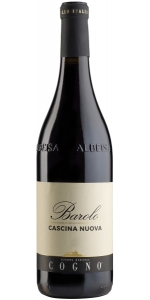
Elvio Cogno Cascina Nuova Barolo 2017
Born to satisfy the curiosity of consumers keen to have a more immediate understanding of Barolo, the wine is bright garnet red in color with orange tints. Pleasing and immediate, it offers scents of flowers and light, delicate spices. The mouth is agreeably rounded, juicy and fresh, with just the right balance between pleasantness and elegance. The aftertaste is very harmonious with a mineral, aromatic finish.
Review:
Attractive dried strawberry with cherry and tar on the nose. Full-bodied with powerful tannins that are dusty and intense. Very flavorful and long. Solid as a rock. Needs at least three or four years to soften and come together.
-James Suckling 95 Points
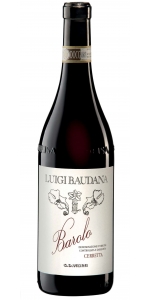
Luigi Baudana Barolo Cerretta is made from 100 percent Nebbiolo.
Austere and very mineral expression of Barolo. Aromas of dark cherries and raspberries jump out vividly from the glass. Hints of iron, menthol, new leather add to the depth and intrigue of this wine. Refined and polished, Cerretta has an extra layer of tannins, important structure and a lively acidity which are nearly buried by its exquisitely lush fruit.
-Wine Independent 95 Points
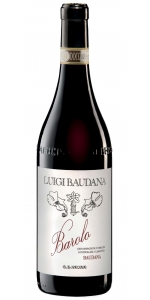
Luigi Baudana Barolo Baudana is made from 100 percent Nebbiolo.
A deep red in the glass introduces aromas of pure cherries and plums accented with spice, graphite, eucalyptus and licorice. Warm and dry character with firm tannins balanced by a fresh and gentle acidity. A unique soil composition with blue clay translates in a wine with a powerful elegance.
Review:
New leather, forest floor and woodland berry aromas come to the forefront along with a whiff of blue flower. It's opens smooth and savory but its true structure shows up midpalate, delivering juicy Morello cherry, licorice and hazelnut framed against a backbone of fresh acidity and tightly-wound, fine-grained tannins. Drink 2026–2036. Kerin O’Keefe
-Wine Enthusiast 95 Points
Rich, exuding cherry, raspberry, plum and floral notes, with iron, tobacco and tar accents lending complexity. Shows terrific balance and depth, with a tightly wound structure that bodes well for future development.
- Wine Spectator 94 Points
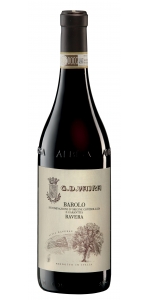
G.D. Vajra Barolo Ravera is made from 100 percent Nebbiolo.
The Barolo Ravera shows a striking balance of all tones. Red and dark fruits on the nose are interlaced with mineral hints and the iron tones which are such a signature of Ravera. The wine has brilliant drinkability, with a layered, ample mid palate and a racy finish.
Review:
Seamlessly stitched together, the G.D. Vajra 2018 Barolo Ravera reveals tight layering and smooth texture. Fruit comes from an amphitheater of vines with Tortoniana epoch sandstone clay that is typical of parts of Barolo and Novello. What stands out here is the mineral character of the wine. It frames a dark core of plum, dark cherry and soft spice.
- Robert Parker's Wine Advocate 94 Points
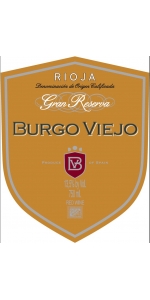
Burgo Viejo Rioja Gran Reserva is made from 100 percent Tempranillo. 30 year old vines.
Burgo Viejo Gran Reserva shows a deep red ruby color and offers powerful aromas of blackberry jam, spice, leather, chocolate with toasty nuances. Smooth yet full-bodied with firm tannins and a long finish.
Review:
"Shimmering garnet. Aromas of cherry, blueberry, candied flowers, tobacco and coconut pick up a smoky overtone with air. Smooth and fleshy on the palate, offering ripe red and blue fruit, mocha, cola and spicecake qualities that tighten up on the back half. Finishes long and supple with repeating spiciness, even tannins and a lingering suggestion of red berry preserves. This old-school Rioja was aged for two years in 90% American and 10% French oak. - Josh Raynolds"
- Antonio Galloni's Vinous (April 2021), 92 pts
2010 Burgo Viejo Rioja Gran Reserva - Silver Medal - MUNDUS VINI
J. Christopher Appassionata Chardonnay is made from 100 percent Chardonnay.
Appassionata Chardonnay is the expressive summit of this classic Burgundian variety in the Willamette Valley. Fermented and matured in large (500-liter) oak casks, it rests on the full lees for two years before bottling. It then rests in our cellar for another year before its release, three years after vintage. The wine’s elegant texture, fine structure and extended maturation time ensure a long life for this vibrant Chardonnay.
Whole-cluster pressing; native yeast fermentation in 500-liter French oak barrels; natural malolactic fermentation; 21 months maturation on the lees.
Review:
Anyone questioning Chardonnay’s potential in the Willamette Valley should try this rich and sophisticated wine. A silky texture, is met with mouthfilling flavors of orange sorbet, pineapple and challah bread, as well as a hint of mint. The aromas of lemon curd and petrichor are equally delightful.
- Wine Enthusiast 94 Points
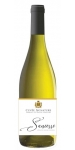
Shirley & David Maudry Sancerre Blanc Cuvee Signature is made from 100% Sauvignon Blanc.
Our Sancerre has citrus aroma and its inimitable "gun flint" notes. Fruity, minerality and freshness in the mouth to leave the taste full of emotions.
RS: less than 1g/L
TA: 4.5g/L
Pairing: Aperitif, fish, seafood, oysters, white meats, spicy dishes and Asian cuisine.



