
" We don't sell the wine without touching the vine "
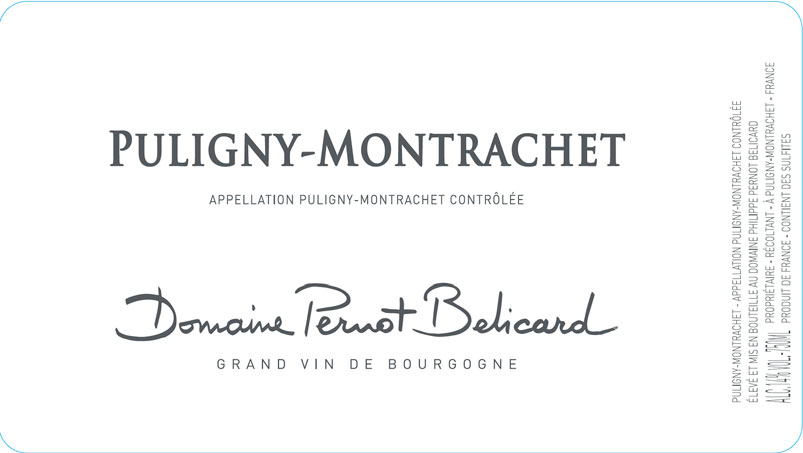
| Country: | France |
| Region: | Burgundy |
| Winery: | Pernot Belicard |
| Grape Type: | Chardonnay |
| Organic: | Yes |
| Vintage: | 2021 |
| Bottle Size: | 750 ml |

Pernot Belicard Puligny-Montrachet is made from 100 percent Chardonnay.
The grapes come from the village of Puligny Montrachet, from a small parcel of 3.7 acres.
An expressive nose showing floral aromas, butter and woody notes. The mouth is round and suave with fruity notes and great minerality.
Pair with Sole Meunière, Bresse Poultry with morels, Livarot cheese.
Pernot Belicard Puligny-Montrachet is made from 100 percent Chardonnay.
The grapes come from the village of Puligny Montrachet, from a small parcel of 3.7 acres.
An expressive nose showing floral aromas, butter and woody notes. The mouth is round and suave with fruity notes and great minerality.
Pair with Sole Meunière, Bresse Poultry with morels, Livarot cheese.

Pernot Belicard Aligoté is produced from old vines planted in 1956 and 1971 by Philippe Pernot's grand father.
Wine is very aromatic, with some tropical notes with a hint of white flowers and white peach. The wine is also quite mineral, due to the Aligote grapes grown on limestone soils in the commune of Puligny Montrachet. Finish is long and balanced.
Oysters, St Jacques Cassolette, Roasted Gambas, Comté Cheese.

Pernot Belicard Batard Montrachet Grand Cru is made from 100 percent Chardonnay.
Aromas of white peach, white apple, with a beautiful minerality. Also lighty salty, chalky aromas and some bread and brioche flavors and a hint of vanilla.
Poultry with cream based sauces, French cheese, like camembert, but not too strong, also seafood and fish.
Pernot Belicard Batard Montrachet Grand Cru is made from 100 percent Chardonnay.
Aromas of white peach, white apple, with a beautiful minerality. Also lighty salty, chalky aromas and some bread and brioche flavors and a hint of vanilla.
Poultry with cream based sauces, French cheese, like camembert, but not too strong, also seafood and fish.

Pernot Belicard Beaune Pertuisots Blanc is made from 100 percent Chardonnay.
The grapes for this wine come from a small parcel of 1.1 acre in the village of Beaune. This Chardonnay offers an intense nose on yellow fruits, apricot and peach. Beautifully textured, round and opulent on the palate, the wine combines a mineral character, power and freshness with a crisp and long finish.
Pair with grilled fish, Bresse chicken, Prawns.
Pernot Belicard Puligny-Montrachet is made from 100 percent Chardonnay.
The grapes come from the village of Puligny Montrachet, from a small parcel of 3.7 acres.
An expressive nose showing floral aromas, butter and woody notes. The mouth is round and suave with fruity notes and great minerality.
Pair with Sole Meunière, Bresse Poultry with morels, Livarot cheese.
This small six-hectare domaine located in the heart of Puligny-Montrachet is making rapid strides. Philippe Pernot (a scion of the Paul Pernot dynasty) launched the Pernot-Belicard label in 2009 after marrying Miss Belicard, daughter of Mr Belicard (who owned vineyards in Puligny-Montrachet). In the vineyards, Philippe cultivates the soils, de-buds aggressively and takes pains to retain his old vines in good health. The grapes are harvested by hand, with Philippe typically among the earlier pickers in the village. Since 2014, there's more sorting, the grapes passing over a shaker table before being whole cluster pressed. Initially, the wines were bottled to make room for the new vintage, but Philippe, evidently an inquiring mind, felt that something was missing: now, the wines stay in barrel until August, but spend an additional three to six months in temperature controlled stainless steel tanks with the fine lees. The result are wines that are more integrated and complete. These are already very good wines, and Philippe possesses some enviable parcels, but it is his desire to refine and improve that marks this out as an estate to watch.
Pernot Belicard Puligny-Montrachet is made from 100 percent Chardonnay.
The grapes come from the village of Puligny Montrachet, from a small parcel of 3.7 acres.
An expressive nose showing floral aromas, butter and woody notes. The mouth is round and suave with fruity notes and great minerality.
Pair with Sole Meunière, Bresse Poultry with morels, Livarot cheese.

Florence Cholet Meursault Blanc is made from 100 percent Chardonnay.
This classic Meursault offers expressive and complex aromas of white flower, white fruit, and herbal aromas. Bright acidity and minerality emerge on the palate from this beautifully balanced and structured white, followed by subtle hints of vanilla and toasted brioche nuances in a refreshing finish.
Pair with fresh Truffle Pasta, Beaufort Cheese, Pike Quennelles.

Guillemot-Michel Vire-Clesse Charleston is made from 100 percent Chardonnay.
This cuvée is produced from hundred-year old vines that the great-grandfather planted after he returned from World War I. The family wanted to honor his memory and vinify these vines the same way he did, in old demi-muids.
Charleston is a deep and complex wine that gently express itself in the glass, offering juicy white fruit flavors and a lengthy finish.
Charleston is vinified and aged for one year in demi-muids of over 10 years old. During the following harvest, the wine is racked and placed in vats for another 6 months of aging before bottling.
Fish in white sauce, poultry in creamy sauce, hard cheeses.
Review:
The 2020 Viré-Clessé Charleston is the most structured, concentrated wine in the range, mingling notions of crisp orchard and stone fruit with scents of clear honey, white flowers, beeswax and mint in an inviting bouquet. Medium to full-bodied ample and satiny, it's layered and multidimensional, with impressive depth at the core, racy acids and chalky grip. Derived from the Guillemot family's oldest parcel of vines (dating back to 1918), it's built to age.
-Wine Advocate 94 Points

Bachelet Bertrand Santenay Blanc is made from 100 percent Chardonnay.
Tasting Notes:
The Santenay Blanc comes from a parcel that is 1.2 hectares in size (3 acres) in the village called “En Charron”, at around 300 meters above sea level, with excellent sunshine and thin limestone soil, guaranteeing great aromatic finesse.
The wine shows a beautiful golden color, a fresh and slightly roasted nose combining lemon and lime aromas with a hint of vanilla. On the palate, almond and toasted hazelnut flavors, along with notes of white flowers and vanilla nuances.
Florence Cholet Meursault Blanc is made from 100 percent Chardonnay.
This classic Meursault offers expressive and complex aromas of white flower, white fruit, and herbal aromas. Bright acidity and minerality emerge on the palate from this beautifully balanced and structured white, followed by subtle hints of vanilla and toasted brioche nuances in a refreshing finish.
Pair with fresh Truffle Pasta, Beaufort Cheese, Pike Quennelles.

Boussey Meursault Vieilles Vignes is made from 100 percent Chardonnay.
The grapes for Meursault Vieilles Vignes come from the parcels located in Meursault. They were planted in 1960 and 1970.
The wine has a beautiful golden-green color. The nose displays aromas of almond, hazelnut with an elegant oaky touch. In the palate, it is full-bodied with good length. Long and intense acidity. Great finesse, purity and elegance.
The Meursault Vieilles Vignes goes well with Foie gras, Fish in creamy sauce, Lobster or also by itself as an aperitif.

Paul Hobbs Edward James Estate Chardonnay Russian River Valley is made from 100 percent Chardonnay.
This small five-acre estate named after Paul's great-grandfather, Edward James, rewards us with a chardonnay that is pale straw in color with inviting aromas of lemon zest, red apple skin, gardenia, and honeysuckle. A creamy mouthfeel on the palate evolves into poached pear, ginger spice, and brioche that come together with a crunchy acidity and lively finish.
Review:
The 2022 Chardonnay Edward James Estate was named after Paul’s grandparents on his father’s side and originates in a vineyard planted entirely to Hyde Wente clone of Chardonnay. It was raised in French oak for 18 months on the lees. In the glass, it’s highly expressive and layered with aromas of toasted spice, incense, honeysuckle, quince, and preserved citrus. Medium to full-bodied, it has a fantastic, long, supple texture with a linear, crystalline feel, great, evenly fresh acidity, and a salty, mouthwatering finish. This is my favorite of the white wines at this tasting. Drink 2025-2037.
-Jeb Dunnuck 97 Points

Fefinanes Albarino de Albarino is 100 percent Albarino
Fresh fruit aromas of apricot and peach slices with notes of lemon and green apple. Pretty notes of honey and wet nutmeg, and the mouth is round, clean, and pleasant with baked apple, honey, and lemon.
This is a classic Albariño which is good young, but actually improves over two to three years and remains quite drinkable for up to five years. Owner Juan Gil comments that the wine really starts to come into its own in June/July, and he actually prefers it 18 or more months after it's made. A Fefiñanes "vertical" of three or four vintages can provide some most interesting surprises.



