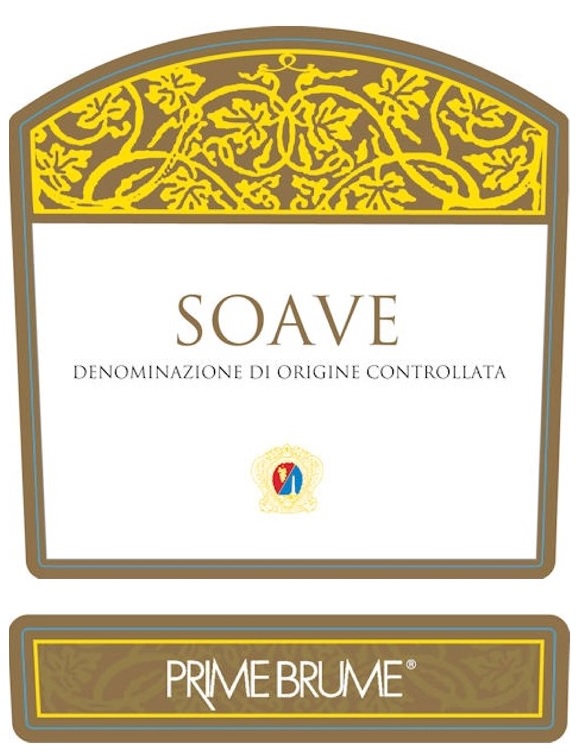
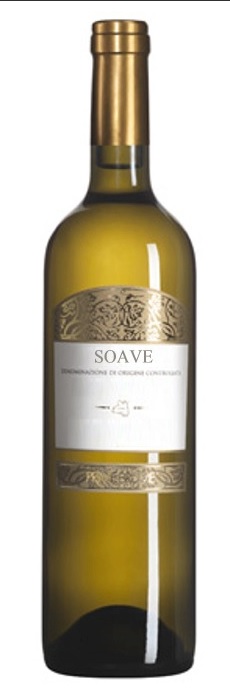
" We don't sell the wine without touching the vine "
| Country: | Italy |
| Regions: | Veneto Soave |
| Winery: | Prime Brume |
| Grape Type: | Garganega |
| Vintage: | 2015 |
| Bottle Size: | 750 ml |

The color is a brilliant straw yellow with a fresh fruit perfumes, especially apple and pear, and floral notes such as elder and bloom. The taste is very fresh and light, with a very interesting acidity. There is an important presence of mineral salts due to the volcanic origin of the soil.
Open pergola Vinification: Destemming, maceration of the grapes in the must for 12 hours, racking and long fermentation at 18 °C
Ideal as aperitif, light main courses such as pasta and risotto, shell fish and fish, soups and vegetables.
Review:
Brilliant emerald straw color. Aromas and flavors of brazil nuts, creme fraiche, and kiwi and starfruit with a silky, lively, dry-yet-fruity light-to-medium body and an effortless, engaging, medium-length watermelon, yellow apple, and clementine finish. A delicious, artfully balanced soave with a great range of fruit flavors. 91 Point Beverage Tasting Institue
The color is a brilliant straw yellow with a fresh fruit perfumes, especially apple and pear, and floral notes such as elder and bloom. The taste is very fresh and light, with a very interesting acidity. There is an important presence of mineral salts due to the volcanic origin of the soil.
Open pergola Vinification: Destemming, maceration of the grapes in the must for 12 hours, racking and long fermentation at 18 °C
Ideal as aperitif, light main courses such as pasta and risotto, shell fish and fish, soups and vegetables.
Review:
Brilliant emerald straw color. Aromas and flavors of brazil nuts, creme fraiche, and kiwi and starfruit with a silky, lively, dry-yet-fruity light-to-medium body and an effortless, engaging, medium-length watermelon, yellow apple, and clementine finish. A delicious, artfully balanced soave with a great range of fruit flavors. 91 Point Beverage Tasting Institue

Pazo de Senorans Seleccion de Anada Albarino is made from 100 percent Albarino.
Straw yellow with greenish tints, vivid and brilliant. High intensity and very expressive. Profusion of aromas with traces of mineral. Great volume and ample body leaving a lasting impression from beginning to end.
Reviews:
The 2015 Albariño Selección de Añada is nothing short of phenomenal. For some reason, I hadn't tasted the young 2015 Albariño at the time it was released. It comes from the Los Bancales vineyard planted some 50 years ago and fermented with indigenous yeasts but without malolactic fermentation. It has a bright, almost fluorescent color and a complex, subtle and nuanced, elegant and expressive nose, with notes of sea shells and sea breeze, grass and white flowers. It's very clean, and the palate shows great balance and even feels a bit young. It has remarkable acidity and freshness (seven grams of tartaric acid) with good ripeness and 13% alcohol. This matured in tank with lees for over 30 months and was bottled in June 2024. It feels more serious and less exotic than earlier vintages. 18,000 bottles produced. This is the finest vintage that I can remember. Bravo!
-Wine Advocate 97 Points
Tech:

Gambellara Soave I Basalti is made from 100% Garganega.
Soave DOC from the Soave hills. Vineyard trained in Pergola Veronese system at 250m altitude on volcanic basalt soils. Straw yellow in color with delicate aromas of white flowers, almond, and citrus. Fresh and harmonious on the palate with pleasant minerality and a clean finish.
Hand-harvested grapes are gently pressed and fermented in stainless steel at controlled temperature.

Salmon hue with bright red tints. Fine and energetic bubbles. A ripe, complex and youthful bouquet of slightly tangy red fruit (redcurrants, blackcurrants), ripe citrus (blood orange) and roasted cocoa beans. After some time in the glass, the wine reveals sappier, floral and sweet notes with a saline, almost briny, core. The first impression of the wine is of a generosity, softness and concentration. One has the sensation of biting into juicy, ripe fruit and blood orange, it is a fabulous aromatic explosion with luscious and slightly tangy overtones. The concentrated and dense body takes over and reinforces the impression of substance, of concentrated liqueur on the mid-palate. The finish stretches out, perfectly-honed, gradually revealing umami notes thanks to the precise and crisp mineral freshness.
Reviews:
The 2015 Brut Vintage Rosé is generous and demonstrative, bursting with aromas of peach, orange and pear mingled with hints of red berries, fresh bread and ginger. Full-bodied, layered and vinous, it's rich and enveloping, its textural attack segueing into an ample, fleshy core that's girdled by bright acids and enlivened by a pillowy mousse. Long and expansive, it's more generous and gourmand than its racier 2014 predecessor, but just as good.
-Wine Advocate 94 Points
This shows lots of cotton candy and peach, together with strawberries and cream. But not overpowering. Some cranberry, too. It’s medium-to full-bodied with fine bubbles and a lively finish. Dosage 8g/L. Drink now or hold.
-James Suckling 94 Points

Paradigm Cabernet Sauvignon is made from 90% Cabernet Sauvignon, 8% Merlot, 1% Petit Verdot, 1% Cabernet Franc
20 months in French oak (only about a third of that is new oak) and for 20 more months in bottle before release
Our winemaking "style" is solely determined by this place or terrior we call "Paradigm." Winemaking is agriculture when you own your vineyards and are able to farm them to promote the very best Earth will give you. All of our selections of wines are made from five varietals on the estate. Every wine is 100% farmed and grown by us.
Complexity in our wines supported by luscious fruit and acidity is our hallmark. Our efforts during harvest and barrel cellaring concentrate on maintaining the freshness from the first day we handpicked each vineyard block. Simple winemaking protocols are employed while crucial “timing” oriented winemaking decisions rule each day.
The 2015 vintage produced delicious concentrated wines in smaller quantity than normal. This black raspberry colored Cabernet has lovely open aromatics of black cherry, berry, and plum layered with a perfect balance of new and used French Oak.
Reviews:
"Owned and managed by the Harris family, Paradigm winery produced its first vintage in 1991 in Oakville with winemaker Heidi Barrett. A self-contained winery estate with 50 acres of vineyards, Paradigm maintains a hands-on approach to all winemaking and vineyard operations. The 2015 Cabernet Sauvignon consists of 89% Cabernet Sauvignon, 6% Merlot, 3% Petit Verdot and 2% Cabernet Franc, and is aged in both new and used French oak for 20 months, then aged a further 20 months in bottle before release. The total production for this vintage was 5,544 bottles." Blind tasted by Dave Allen, Stephen Brook, Terry Kandylis (at Decanter Magazine's December 2019 Californian Cabernet 2015 Panel Tasting, London, 17 Sep 2019) - Decanter 95 Points
The color is a brilliant straw yellow with a fresh fruit perfumes, especially apple and pear, and floral notes such as elder and bloom. The taste is very fresh and light, with a very interesting acidity. There is an important presence of mineral salts due to the volcanic origin of the soil.
Open pergola Vinification: Destemming, maceration of the grapes in the must for 12 hours, racking and long fermentation at 18 °C
Ideal as aperitif, light main courses such as pasta and risotto, shell fish and fish, soups and vegetables.
Review:
Brilliant emerald straw color. Aromas and flavors of brazil nuts, creme fraiche, and kiwi and starfruit with a silky, lively, dry-yet-fruity light-to-medium body and an effortless, engaging, medium-length watermelon, yellow apple, and clementine finish. A delicious, artfully balanced soave with a great range of fruit flavors. 91 Point Beverage Tasting Institue
Prime Brume Estate:
Prime Brume is a cave cooperative from the Veneto Region that was founded in 1947 by a group of 26 associated grape growers. Today there are 365 partners cultivating 650 ha of vineyard. They are dedicating to producing high quality wines from the Soave DOC made with 100% Garganega Grapes.
Date Founded:1947
Owner:365 families
Winery Philosophy:
At the end of the first millennium under the direction of the Benedectine monks, the grape growing in this region had a great impulse, abandoning the old techniques learnt from the Roman Empire times. During the centuries the art of winemaking improved quickly, reaching the present high quality now appreciated all over the world.
In 1882 the expert Domenico Lampertico in its "Studies and news on the agrarian economy of Vicenza, Lonigo and Barbarano districts" writes about this region: "we have to do a special mention to the grape growing in the town of Gambellara, where since the high quality standards are famous all over the world.
Prime Brume's vineyards are located in the center of the most important areas for the DOC wine production such as Soave, Gambellara, Colli Berici and Lessini Durello and Prosecco.
Prime Brume has a storage capacity of 160,000 hl of wine and an average harvest of 130,000 quintal of grapes. We have 365 members growing around 650 hectares of vineyards.

Made from 50% chenin blanc and 50% chardonnay
It is an interesting experience as a sparkling wine for people who want to have a fine and elegant wine comparable to Champagne for a very good price.
This methode traditionnelle sparkling wine is aged for minimum 18-24 months in cave before disgorging. The dosage is 12 g/l residual sugar and the wine is aged for minimum 3 months after disgorging .
Review:
"The two sparkling wines should not be missed. They're both terrific examples of how good sparkling Vouvray can be. Both are 100% Chenin Blanc cuvees. Even better is the slightly richer, more honey and lemon-scented and flavored non-vintage Cremant de Loire. A blend of equal parts Chenin Blanc and Chardonnay aged for a minimum of 18 to 24 months in their cellars before disgorgement, this is a real beauty and a superb wine. Unfortunately, just under 100 cases are imported to the United States." -Wine Advocate 92 pts

All older vintage wines have been purchased from a single collectors cellar. Pictures can be requested before shipment.

Castellare di Castellina 'I Sodi di San Niccolo' Toscana IGT is a blend of Sangioveto (85%-90%) and Malvasia nera (15-10%)
Intense ruby red in color and with a great olfactory concentration, thanks to the presence of a ripe red fruit that leads to notes of jam, but also spices, vanilla and licorice. In the mouth the wine is characterized by a dense and elegant texture, also supported by the important acidity of the Sangiovese, the tannins are absolutely sweet and the finish is long and of great persistence.
Excellent with cured meats and savory meats, with succulent dishes and mature cheeses. Much appreciated when paired with Tuscan Pecorino and Parmigiano.
The masterpiece of Castellare, I Sodi di San Niccolo, has twice placed in the top 100 of Wine Spectator, and has been awarded “Three Glasses” by Il Gambero Rosso.
I Sodi di San Niccolo is produced solely with native varieties: 85-90% of Sangioveto and 10-15% of Malvasia Nera, I Sodi comes from the two best crus of the farm.
The word "I Sodi" was used by the Tuscan farmers to describe those grounds which had to be processed by hand, being too hard (in fact firm) or too steep to allow for the employment of the horses, unlike the "fields" that make the grounds more easily cultivable.
Reviews:
Packed with ripe, juicy cherry, blackberry, pomegranate and floral aromas and flavors, this red is supple and beautifully integrated. Earth, iron and tobacco accents add detail as this winds down on the lazy, resonant aftertaste, showing terrific energy. Sangioveto and Malvasia Nera. Best from 2026 through 2043.
-Wine Spectator 97 Points
#35 Wine Spectator Top 100 of 2024
Vinous 97+ Points