
" We don't sell the wine without touching the vine "
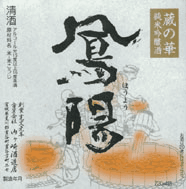
| Country: | Japan |
| Region: | Miyagi |
| Winery: | Hoyo Uchigasaki Brewing Company |
| Grape Type: | Kura no Hana (Sake) |
| Vintage: | NV |
| Bottle Size: | 500 ml |
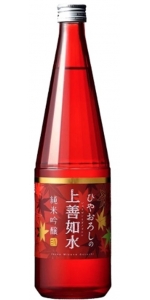
Hiyaoroshi is a general term referring to sake that has been pasteurized once in the winter and then allowed to mature over the summer before distribution in autumn. The Japan Sake Brewers Association designates September 9th as the official start for Hiyaoroshi sales. (Essentially aged Namazume)
September 9th is known as Kiku-no-Sekku (“Chrysanthemum Festival”), where hundreds of chrysanthemums are displayed around various venues and chrysanthemum sake is served. The chrysanthemum (kiku) was brought to Japan from China during the Nara period. In 1183, it was adopted as the Imperial Seal of Japan, and during the Meiji period no one but the Emperor could use it. Nowadays it still represents the authority of the emperor and you can see it everywhere in Japan.
Aromas are forward, fresh, and fruity in the nose with notes of sweet melon, cherries, and hints of vanilla. Flavors on the palate evoke feelings of the season with pumpkin pie, roasted nuts, and stewed plums. This sake is medium-bodied and accented by medium acidity, showing classic Jozen minerality and a lingering dry finish. Additional 7 months of aging adds depth and roundness.
{Pairs with roasted poultry, baked ham, butternut squash ravioli, BBQ, and dishes with sweet spice.
Aged Gouda, triple cream, fresh chevre .
Hiyaoroshi is a general term referring to sake that has been pasteurized once in the winter and then allowed to mature over the summer before distribution in autumn. The Japan Sake Brewers Association designates September 9th as the official start for Hiyaoroshi sales. (Essentially aged Namazume)
September 9th is known as Kiku-no-Sekku (“Chrysanthemum Festival”), where hundreds of chrysanthemums are displayed around various venues and chrysanthemum sake is served. The chrysanthemum (kiku) was brought to Japan from China during the Nara period. In 1183, it was adopted as the Imperial Seal of Japan, and during the Meiji period no one but the Emperor could use it. Nowadays it still represents the authority of the emperor and you can see it everywhere in Japan.
Aromas are forward, fresh, and fruity in the nose with notes of sweet melon, cherries, and hints of vanilla. Flavors on the palate evoke feelings of the season with pumpkin pie, roasted nuts, and stewed plums. This sake is medium-bodied and accented by medium acidity, showing classic Jozen minerality and a lingering dry finish. Additional 7 months of aging adds depth and roundness.
{Pairs with roasted poultry, baked ham, butternut squash ravioli, BBQ, and dishes with sweet spice.
Aged Gouda, triple cream, fresh chevre .
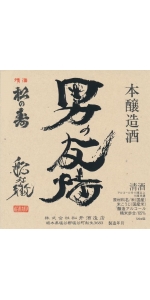
TASTING NOTES: This fresh, subtle Honjozo has a lovely nose of cantaloupe, leek, fresh clay and pear. With just a hint of sweetness, the palate is light bodied with alluring flavors of burnt caramel, chalk and marsh-mallow and a classic Honjozo clean, dry finish.
The fanciful name "Otoko no Yujyo", represents a feeling for which the sake was made, to honor brotherly love, between comrades.
PREFECTURE: TOCHIGI
POLISHING RATIO: 65%
ALCOHOL: 15.0 - 16.0%
SMV +/-: +8.0
ACIDITY: 1.4
RICE KOJI: HITOGOKOCHI
RICE KAKE: TOCHIGI 14
YEAST STRAIN: KYOKAI 901
FOOD PAIRINGS: Versatile with all foods, Grilled Fish, Paella, Smoked Fish, Fried Fish or Fried Chicken
CHEESE PAIRINGS: Foggy Morning, Prima Donna, Domaine de Village
TASTING NOTES: This fresh, subtle Honjozo has a lovely nose of cantaloupe, leek, fresh clay and pear. With just a hint of sweetness, the palate is light bodied with alluring flavors of burnt caramel, chalk and marsh-mallow and a classic Honjozo clean, dry finish.
The fanciful name "Otoko no Yujyo", represents a feeling for which the sake was made, to honor brotherly love, between comrades.
PREFECTURE: TOCHIGI
POLISHING RATIO: 65%
ALCOHOL: 15.0 - 16.0%
SMV +/-: +8.0
ACIDITY: 1.4
RICE KOJI: HITOGOKOCHI
RICE KAKE: TOCHIGI 14
YEAST STRAIN: KYOKAI 901
FOOD PAIRINGS: Versatile with all foods, Grilled Fish, Paella, Smoked Fish, Fried Fish or Fried Chicken
CHEESE PAIRINGS: Foggy Morning, Prima Donna, Domaine de Village
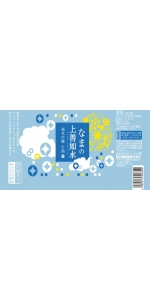
This unpasteurized sake is exciting and lively with a nose full of citrus, apple blossom and shizo. The palate is equally as bold featuring fresh persimmons, marshmallow and slightly underipe stone fruit. The finish is clean showing soft minerality.
POLISHING RATIO: 60%
ALCOHOL: 15.5
SMV +/-: +5.0
ACIDITY: 1.6
RICE KOJI: GOHYAKUMANGOKU
RICE KAKE: KOSHI IBUKI
YEAST STRAIN: K1801
FOOD PAIRINGS: Sushi Nigiri with fatty fish, oysters, omelettes, Lighter Italian, Chinese or French dishes
CHEESE PAIRINGS: Mildly ripe Coulommiers or Brie, Italian Raschera
This unpasteurized sake is exciting and lively with a nose full of citrus, apple blossom and shizo. The palate is equally as bold featuring fresh persimmons, marshmallow and slightly underipe stone fruit. The finish is clean showing soft minerality.
POLISHING RATIO: 60%
ALCOHOL: 15.5
SMV +/-: +5.0
ACIDITY: 1.6
RICE KOJI: GOHYAKUMANGOKU
RICE KAKE: KOSHI IBUKI
YEAST STRAIN: K1801
FOOD PAIRINGS: Sushi Nigiri with fatty fish, oysters, omelettes, Lighter Italian, Chinese or French dishes
CHEESE PAIRINGS: Mildly ripe Coulommiers or Brie, Italian Raschera
Sake Hoyo Kura No Hana Fair Maiden transparently light and touched with a sweet kiss of anise, Hoyo's winsome grace and charm are irresistible. Its floral aroma and luscious flavor extend a demure invitation to the world of sake enjoyment. Delicious as an aperitif, or with salads and light seafood dishes and at the sushi bar; goes perfectly with lobster and scallops. Best enjoyed cold, but not chilled.
Awards: Gold Medal, Daiginjo B class, 2002, 2003 and 2004 U.S. National Sake Appraisal
Rice Variety: Kura no Hana
Polishing Ratio: 45%
Alcohol Percentage: 15.5%
Sake Meter Value: -2.0
Acidity: 1.2
Yeast Type: Association 1601
The Uchigasaki Brewing Company Brewery
In 1620, Date Masamune, daimyo of present-day Miyagi Prefecture, ordered his retainer Uchigasaki Oribe to build a town one day's march from Sendai, on the road north to Aomori. In 1661, Oribe's son Sakuemon founded the Uchigasaki Sake Brewery, which has continued in production for 343 years and is the oldest brewery in the region. Little is known of those early days, and we can only surmise what the brewery's sakes tasted like then. But today we know exactly what to expect when we see a bottle with the brewery's Hoyo label on it. The sake inside will be gentle, reticent and charming, especially so in the case of ones made from regional rice strains like "Manamusume" and "Kura no Hana," which seem to lend themselves especially well to the brewery's delicately nuanced brewing style.
There are commentators who have called attention to the connection between sake and Buddhism, noting how, after all, it is the tiny microorganisms who do all the work, with human beings acting as mere coaches on the side. Brewmaster Shoji Kano lets them do the work, but ensures that their every need is sincerely and attentively met.
“If sakes were people,” one enthusiast commented recently, "Kura no Hana daiginjo would be a young girl playing gaily in a meadow.” By aspiring to produce a label that is light, winsome and graceful, the Uchigasaki Sake Brewery has produced one of the very few "crossover" sakes in the United States: Even flinty burgundy-sippers light up with a smile at first sip.
The grapes for this wine come from loamy, well-drained soils on our estate vineyard. Dijon and Wente clones are fermented in stainless steel and aged in French oak. This is an elegant chardonnay with a focused mid-palate and the refreshing cool climate acidity characteristic of Sea Smoke Vineyard.
Tasting Notes An elegant Chardonnay with aromas of lemon curd, star fruit, fresh cut peach and wet stone. Complemented by satsuma mandarins and a touch of hazelnut in the focused mid-palate and the refreshing cool climate acidity of our estate vineyard. Winemaking Our estate-grown Chardonnay fruit was picked and hand-sorted in the vineyard before spending the night in our cold room. Chilled grapes were softly pressed and the juice was gently pumped into a stainless steel tank and cold settled. Once the heavy solids were removed, the juice was racked to a stainless steel fermenter, then inoculated for primary fermentation. Following primary fermentation, the wine was racked to barrels, inoculated for malolactic fermentation, then periodically stirred to enhance depth and mouthfeel. The 2023 Sea Smoke Chardonnay was aged for a total of 10 months prior to bottling with no fining and no filtration.
Arzuaga Ribera del Duero Crianza 95% Tempranillo and 5% Cabernet Sauvignon.
Dark cherry color with purple highlights. Powerful nose and high aromatic diversity of ripe red and black fruits, spicy and balsamic notes, and a roasted finish. Soft and mellow in the mouth with a great fruitiness and length.
Review:
Color: bright cherry. Aroma: ripe fruit, lactic notes, balanced, expressive, neat. Flavour: fruity, spicy, round tannins.
Guia Penin 92 Points



