" We don't sell the wine without touching the vine "
| BUY MORE! SAVE MORE! | ||||||||||||||||||||
|
| Country: | Japan |
| Winery: | Shirataki Shuzo |
| Grape Type: | Rice Wine (Sake) |
| Organic: | Yes |
| Vintage: | NV |
| Bottle Size: | 750 ml |
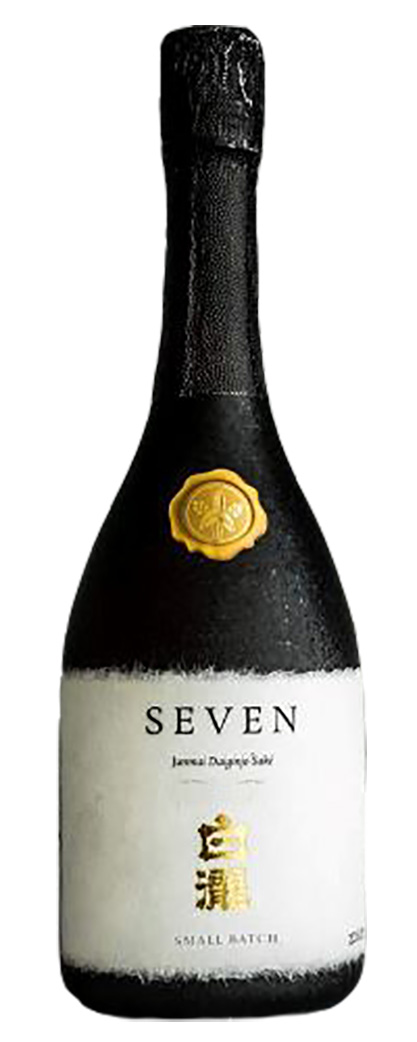
Seven has been brewed by making use of soft ground water from Echigo Yuzawa, which is the utmost characteristics of Shirataki. This sake features fruity and elegant aromas of peach, coconut and orange complimented by floral, ginger, cucumber and almond. On the palate, generouse and rich flavors of honeydew, almond and toasted rice, with balanced acidity and smooth aftertaste.
SEVEN - The name "SEVEN" reflects the intention of brewing new sake in a new era with two seventh generations.
The current head of Shirataki Sake Brewery, Shintaro Takahashi, represents the seventh generation.
The general manager of a sake brewing is called a toji. In 2018, Takaki Matsumoto was appointed as the seventh generation brewer at Shirataki Sake Brewery. He was 27 back then - a young new toji who will open up a new chapter for Shirataki Sake Brewery.
Seven is the first brand that Mr Matsumoto planned from scratch as a chief brewer.
The finest sake rice is luxuriously polished to a rice polishing ratio of 25%, and carefully brewed in small tanks during the coldest months of January and February. The mash is pressed with a traditional press called "fune" and the mash is poured into bags. The bags are laid or hanged in a fune, then the fresh sake is squeezed out naturally. No dilution with water was done to enjoy a fresh and rich taste.
ABOUT SHIRATAKI SHUZO:
Shirataki is located in the heart of the Japanese Alps called "Snow Country" in the Niigata prefecture. Each spring the snowpack melts providing an abundance of clear natural spring water. This water runs through a coal seam providing a natural filtration process that accentuates the taste and quality of the water. This very soft water is the secret behind the very light, elegant, pretty style of sake made at Shirataki. The town of Echigo Yuzawa is home to "Koshihikari" a famous high quality rice brand in Japan.

This Junmai Daiginjo has a beautiful nose full of banana, melon and star anise. The all natural brewing process gives this sake a bright fresh palate of plum, lime and minerality with a clean dry finish. A very food friendly sake, and is thought to be best after the meal with a light, smooth, rich cow's milk cheese.
POLISHING RATIO: 40%
ALCOHOL: 16-17%
SMV +/-: +1.0
ACIDITY: 1.2
RICE KOJI: HATTANISHIKI
RICE KAKE: HATTANISHIKI
YEAST STRAIN: PROPRIETARY YEAST
FOOD PAIRINGS: Poached Lobster, Seared Scallops, Tofu, Steamed Dumplings
CHEESE PAIRINGS: Brillat Savarin, Cambozola, Dulce Latte Gorgonzola, Mimolette

Juicy & Refreshing. Full of fruity flavors with clean sweetness. Brewed with Hitogokochi, the special sake rice harvested in Nagano, and natural water slowly filtered down the Japan Alps. In 1866, toward the end of the Edo period, Matsujirou Kurogouchi and his family started a small sake brewery currently called Senjo named after Senjo Ga Take, a 3000-meter peak in the Japanese Alps. Today Senjo Brewery strives to combine art with science and old skill with new technology by adding modern twits to the rich historical traditions of Sake brewing.
Pair with Deep-fried fish with sweet & sour sauce, Young sweetfish tempura (chiayu tempura), Caesar salad.
Juicy & Refreshing. Full of fruity flavors with clean sweetness. Brewed with Hitogokochi, the special sake rice harvested in Nagano, and natural water slowly filtered down the Japan Alps. In 1866, toward the end of the Edo period, Matsujirou Kurogouchi and his family started a small sake brewery currently called Senjo named after Senjo Ga Take, a 3000-meter peak in the Japanese Alps. Today Senjo Brewery strives to combine art with science and old skill with new technology by adding modern twits to the rich historical traditions of Sake brewing.
Pair with Deep-fried fish with sweet & sour sauce, Young sweetfish tempura (chiayu tempura), Caesar salad.
Juicy & Refreshing. Full of fruity flavors with clean sweetness. Brewed with Hitogokochi, the special sake rice harvested in Nagano, and natural water slowly filtered down the Japan Alps. In 1866, toward the end of the Edo period, Matsujirou Kurogouchi and his family started a small sake brewery currently called Senjo named after Senjo Ga Take, a 3000-meter peak in the Japanese Alps. Today Senjo Brewery strives to combine art with science and old skill with new technology by adding modern twits to the rich historical traditions of Sake brewing.
Pair with Deep-fried fish with sweet & sour sauce, Young sweetfish tempura (chiayu tempura), Caesar salad.

Sake Eikun Junmai Ginjo Water Lords 12/720ml is made with Iwai rice.
Eikun sake uses water from a source called "Fusui", rated as one of the top 100 sources of water in Japan. This water source is located just south of the ancient Japanese, and still cultural capital of Japan, Kyoto.
Aromas of macadamia oatmeal cookie, spicy zucchini bread, and vanilla cream with a satiny fruity-yet-dry medium-to-full body and a layered, banana custard, jicama, salted whole nut, apple, and radish nuanced finish. A Wonderfully vibrant and flavorful sake.-Beverage Tasting Institute 94 points (Exceptional)
RATING: 94 points (Exceptional)
CATEGORY: Junmai Ginjo Sake, Sake
ALCOHOL BY VOLUME: 15.3%
TASTING LOCATION: In Our Chicago Tasting Room
TASTING DATE: Dec-05-2012
WINE ID: 200768
Made with Iwai rice.
Eikun sake uses water from a source called "Fusui", rated as one of the top 100 sources of water in Japan. This water source is located just south of the ancient Japanese, and still cultural capital of Japan, Kyoto.
Rice milling: 60%

Sake Eikun Junmai Ginjo Water Lords is made with Iwai rice.
Eikun sake uses water from a source called "Fusui", rated as one of the top 100 sources of water in Japan. This water source is located just south of the ancient Japanese, and still cultural capital of Japan, Kyoto.
Aromas of macadamia oatmeal cookie, spicy zucchini bread, and vanilla cream with a satiny fruity-yet-dry medium-to-full body and a layered, banana custard, jicama, salted whole nut, apple, and radish nuanced finish. A Wonderfully vibrant and flavorful sake.-Beverage Tasting Institute 94 points (Exceptional)
RATING: 94 points (Exceptional)
CATEGORY: Junmai Ginjo Sake, Sake
ALCOHOL BY VOLUME: 15.3%
TASTING LOCATION: In Our Chicago Tasting Room
TASTING DATE: Dec-05-2012
WINE ID: 200768

Pike Road Shea Vineyard Pinot Noir is made from 100 percent Pinot Noir.
Tasting Notes
Rich and complex, black cherry, confectionary strawberry and dusty rose waft up from the glass. An expressive palate follows with juicy black cherry and pomegranate alongside notes of tropical mango and coconut in a slightly gamey, smoky finish.
About Shea Vineyard
Shea Vineyard sits in the heart of the Yamhill-Carlton AVA and is farmed by our friends Dick & Deirdre Shea. This is arguably the most famous vineyard for Oregon Pinot Noir because of the many well-known wineries that make a Single Vineyard Shea wine, including our sister brand Elk Cove Vineyards and neighbors Ken Wright, Bergstrom, Penner-Ash and others. It's worth checking out the Shea Vineyard website to learn more about this unique vineyard. Wines from Shea vineyard are earthy with a black cherry kick
Review:
This balanced wine has one of my favorite aromas of all time—the caramel and brioche-like cookie scents of a Stroopwafel cookie. These divine scents are joined by red cherries and chalkboard dust. Raspberry, dark chocolate and espresso flavors are supported by velvety tannins and slightly elevated acidity
- Wine Enthusiast 94 Points

Palacio del Burgo Rioja Reserva is made from 85% Tempranillo, 10% Garnacha & 5% Carignan.
Red ruby color; black pepper and vanilla flavors and some mature black fruit taste too. Well-balanced, well-structured and elegant in mouth displaying some splendid taste of fruit and bouquet too.


.jpg)