
" We don't sell the wine without touching the vine "
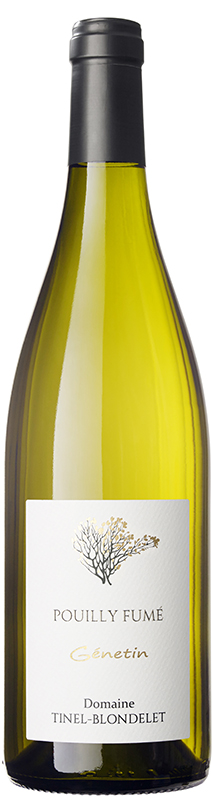
| Country: | France |
| Region: | Loire |
| Winery: | Tinel-Blondelet |
| Grape Type: | Sauvignon Blanc |
| Vintage: | 2019 |
| Bottle Size: | 750 ml |
Tinel Blondelet Pouilly-Fume Genetin is made from 100 percent Sauvignon Blanc.
The soil is made of "caillottes" (limestone stones).
"Genetin" is a name given in homage to the original name for Sauvignon Blanc: Muscat Genetin. The Genetin bottling is normally reserved for the most powerful Cuvées in the winery. No oak.
Produced from 25 year-old vines coming from the Villiers limestone terroir, situated in Bouchot.
Traditional vinification in thermo-regulated stainless steel tanks. Following a gentle pressing the juice is then fermented at controlled temperatures before being left to mature on its fine lees to gain extra depth and concentration before bottling in the next spring.
Matured on fine lees bringing finesse to the wine and bottled late in order to let all its roundness evolve.
Yield: 55 hl/ha
A golden colored and mineral wine with elegance and finesse. Can be cellared for 2-3 years.
A mineral-laced smoky accent and citrus aromas. Elegant and powerful on the palate.
Food pairing: shellfish, goat cheese such as “Crottin de Chavignol”. Perfect also as an aperitif.
Review:
- Wine & Spirits (Regional Tasting Report, Spring 2022), 91 pts
Tinel Blondelet Pouilly-Fume Genetin is made from 100 percent Sauvignon Blanc.
The soil is made of "caillottes" (limestone stones).
"Genetin" is a name given in homage to the original name for Sauvignon Blanc: Muscat Genetin. The Genetin bottling is normally reserved for the most powerful Cuvées in the winery. No oak.
Produced from 25 year-old vines coming from the Villiers limestone terroir, situated in Bouchot.
Traditional vinification in thermo-regulated stainless steel tanks. Following a gentle pressing the juice is then fermented at controlled temperatures before being left to mature on its fine lees to gain extra depth and concentration before bottling in the next spring.
Matured on fine lees bringing finesse to the wine and bottled late in order to let all its roundness evolve.
Yield: 55 hl/ha
A golden colored and mineral wine with elegance and finesse. Can be cellared for 2-3 years.
A mineral-laced smoky accent and citrus aromas. Elegant and powerful on the palate.
Food pairing: shellfish, goat cheese such as “Crottin de Chavignol”. Perfect also as an aperitif.
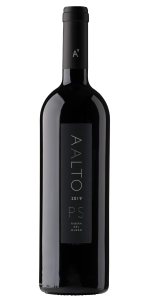
Aalto P.S. Pagos Seleccionados Tinto is made from 100 percent Tempranillo.
Climatic conditions
The farming year began with a mild autumn and little precipitation. A very dry winter started with -9ºC reaching at the end higher temperatures than normal for that time of the year. Spring and summer characterized by little rain, only some rain showers in July and late August avoided the hydric stress of the vines. The vegetative cycle of the vine developed with big variations of temperatures, alternating warm and atypical low temperatures of 4ºC for mid-June. The ripening of the grapes happened under very good conditions and the harvest started on 24th September 2019.
100% Tinto Fino (Tempranillo) primarily from very old vines – 60 to 90 years old – from selected plots in La Horra and La Aguilera. The harvest was done by hand, in small boxes of 15 kilos that are thoroughly inspected, bunch by bunch, on the selection table.
Tasting notes
Review:
Color: dark cherry, Aroma: toasty, spicy, fine cocoa, black fruit, Mouth: tasty, toasty, fine bitterness, ripe tannins
Guia Penin 94 Points
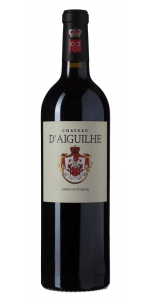
This wine reveals a complex and elegant bouquet that combines ripe fruit, leather and a fine woodiness. Round and warm on the attack, the palate is supported by solid tannins and a pleasant freshness in this harmonious and well textured wine.
The Merlot bring fruity notes and minerality from the clay-limestone terroir, enhanced by the incredibly expressive and spicy Cabernet Franc.
Review:
"A terrific effort from this large and immaculately maintained property on the clay-limestone slopes of the Côtes de Castillon, the 2019 d'Aiguilhe exhibits aromas of cherries and cassis mingled with notions of burning embers, licorice and warm spices. Medium to full-bodied, layered and concentrated, with lively acids, powdery tannins and a mineral finish, it's intelligently matured in tank and large-format oak as well as small barriques. - William Kelley"
- Robert Parker's Wine Advocate (April 2022), 92 pts
"The 2019 d'Aiguilhe has a really lovely bouquet of ample black cherry, mulberry and light floral scents, very pure and delineated. The palate is medium-bodied with cedar-infused red fruit. While not as exuberant as the aromatics, this is nicely detailed and quite poised on the finish. No, I still cannot pronounce its name, but this Castillon Côtes de Bordeaux is well worth seeking out. - Neal Martin"
- Antonio Galloni's Vinous (February 2022), 92 pts
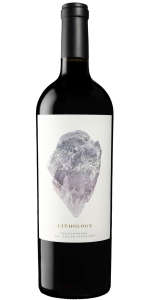
Alejandro Bulgheroni Lithology Beckstoffer Dr. Crane Vineyard Cabernet Sauvignon 99% Cabernet Sauvignon, 1% Cabernet Franc.
Here the Cabernet comes to us typically flawless, and the wines are as such. There is blue fruit, blueberries, black plums, blackberries, and cassis to the aromas, as well as stones, mineral, chocolate, fresh tobacco, and subtle herbs. It is incredibly full-bodied, but at the same time effortlessly drinkable, with ultra-smooth tannins and a positive, long, upturned finish. 70-75% new French oak is the norm for us with Dr. Crane, and those flavors are absorbed to become a vanillin complexity, sweetness, and length. An unbelievable wine.
Review:
You don’t see many Cabernet Franc-dominated wines from this site, but the 2019 Cabernet Franc Lithology Beckstoffer Dr. Crane Vineyard is certainly impressive. Offering more herbal, chocolate, gravelly earth, and espresso aromas and flavors, it has full-bodied richness and, as expected, is a powerful, opulent expression of this noble variety. The blend is 83% Cabernet Franc and 17% Cabernet Sauvignon, aged 20 months in 80% new French oak. It will benefit from short-term bottle age and drink nicely for 20 years.
-Jeb Dunnuck 97 Points
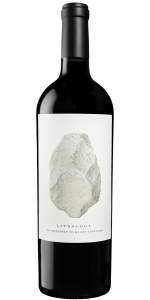
Alejandro Bulgheroni Lithology Beckstoffer To Kalon Vineyard Cabernet Sauvignon is made from 100 percent Cabernet Sauvignon.
Alejandro Bulgheroni Estate Lithology is a series of single vineyard and AVA-designated wines made from select sites within Napa Valley. Lithology Beckstoffer To Kalon Vineyard is produced solely from fruit grown in the historic Beckstoffer to Kalon Vineyard planted in 1865 by W.H. Crabb and represents Oakville's famous bench land.
Review:
The 2019 Cabernet Franc Lithology Beckstoffer To Kalon Vineyard just shines for its bouquet, which is classic To Kalon with its floral, incense, spicy, red and black-fruited aromatics. These all flow to a medium to full-bodied, utterly seamless Cabernet Franc that’s balanced, has laser-like precision, and a great finish. This isn’t the biggest or richest wine in the lineup, but it’s Cabernet Franc in all its glory, with soaring aromatics and complexity, ample richness and texture, and a beautiful sense of finesse and elegance. It’s going to keep for 15-20 years with no issues.
-Jeb Dunnuck 98 Points
Composed of 90% Cabernet Sauvignon and 10% Cabernet Franc, the 2019 Lithology Cabernet Sauvignon Beckstoffer To Kalon Vineyard is a barrel sample with a deep garnet-purple color. It needs a fair bit of coaxing to unlock scents of blackberry pie, warm blueberries and cassis plus suggestions of spice cake, underbrush, candied violets and chocolate box. The full-bodied palate brings forth loads of earthy layers to accent the rich, black fruits, framed by plush tannins and lovely freshness, finishing long and fragrant.
-Wine Advocate 97 to 99 points
The 2019 Cabernet Sauvignon Lithology Beckstoffer To Kalon Vineyard is one of the very finest wines I have tasted from Alejandro Bulgheroni's Napa Valley project. The 2019 To Kalon captures all the pedigree of this iconic Oakville vineyard, and yet also remains nuanced and wonderfully finessed for an intense wine. To Kalon Cabernets are rarely this elegant, but the Bulgheroni 2019 sure is.
-- Antonio Galloni 97 Points
SALE!
Tinel Blondelet Pouilly-Fume Genetin is made from 100 percent Sauvignon Blanc.
The soil is made of "caillottes" (limestone stones).
"Genetin" is a name given in homage to the original name for Sauvignon Blanc: Muscat Genetin. The Genetin bottling is normally reserved for the most powerful Cuvées in the winery. No oak.
Produced from 25 year-old vines coming from the Villiers limestone terroir, situated in Bouchot.
Traditional vinification in thermo-regulated stainless steel tanks. Following a gentle pressing the juice is then fermented at controlled temperatures before being left to mature on its fine lees to gain extra depth and concentration before bottling in the next spring.
Matured on fine lees bringing finesse to the wine and bottled late in order to let all its roundness evolve.
Yield: 55 hl/ha
A golden colored and mineral wine with elegance and finesse. Can be cellared for 2-3 years.
A mineral-laced smoky accent and citrus aromas. Elegant and powerful on the palate.
Food pairing: shellfish, goat cheese such as “Crottin de Chavignol”. Perfect also as an aperitif.
Review:
"Grown on limestone soil, this perfumed, citrus-flavored wine will be very attractive. As it softens and the initial shock of acidity dissipates, the wine will develop peach and apple flavors, always keeping its mineral edge. Drink from 2022. - Roger Voss"
- Wine Enthusiast (December 2020), 92 pts
The Tinel-Blondelet Estate
Annick Tinel represents the 6th generation of winemakers. She took over the estate from her parents in1985 . The total production averages 8,000 cases per year and she exports 60%.
The Tinel-Blondelet Vineyard
This 15 hectares (37 acres) vineyard is divided into 3 parcels in Sancerre and 16 parcels in Pouilly:
- 9.5 hectares: Pouilly-Fumé, on limestone soils and kimmeridgian marls (oyster shells fossils)
- 0.5 hectares: Pouilly-sur-Loire
- 4 hectares:Sancerre, "Les Blancs Gateaux", on limestone and silicious soils.
Annick Tinel focuses on the quality of the vineyard to obtain the optimum maturity of the grapes. She combines the use of modern techniques (pneumatic press, thermo-regulator, etc) with traditional vinfication methods to give richness and aromatic complexity to the wines.
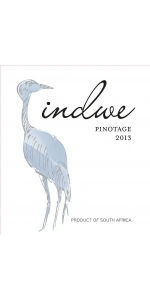
Indwe Pinotage Coastal Region is made from 100 percent Pinotage.
Pinotage is a true South African grape variety, Our signature grape smilar to the Blue Crane being our national bird. Indwe Pinotage grapes are meticulously sourced from our grape producers along the Coastal region of the Western Cape ensuring complexity, depth and purity of fruit. The wine is layered with sweet cherry notes, and subtle hints of mocha and vanilla flavors.
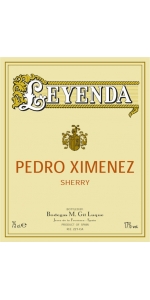
Intense mahogany. Deep aroma of dried fruits (raisins, figs) bouquet subtle notes of chocolate and coffee. Smooth and velvety in the mouth with a long after taste.
To be served with desserts, at room temperature or slightly chilled, delicious poured over ice cream.
Review:
"Violet color. Aromas and flavors of mashed raisins and prunes and chocolate nuts with a bright, sweet medium-full body and a subtle, long fig paste, mincemeat pie, and baklava finish with no oak. A rich and toothsome PX Sherry with great length and depth."
- Tastings, 2018 World Wine Championships, 93 pts - "EXCEPTIONAL"
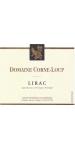
Corne Loup Lirac Rouge is made from 50% Grenache, 40% Syrah and 10% Mourvedre
Dry - less than 4 grams/liter
Color: dark red ruby.
Aromas: red berries, truffles and spices.
Flavors: complex and rich. It shows red and black fruits, with an herbal spice type of aromas coming from the surrounding vegetation (Garrigue).
The average age of the vines is 40 years. (The oldest vines are 80 years old).
The soil is mainly sandy marl and small pebble stones.
Pairs with lamb, duck, turkey, red meat, game and cheese.

Rubus Sauvignon Blanc Marlborough is made from 100 percent Sauvignon Blanc.
The Rubus Project was created by Fran Kysela as a way to source & sell incredible wines at value prices. All wines in this international project are hand-selected by Fran Kysela. Rubus wines are fruit driven, true-to-type values that over deliver - a true representation of quality for the consumer at an excellent price.
Aromas of gooseberry, lemongrass, boxwood, fresh celery and bready notes on the nose. The palate is dry to taste with juicy gooseberry and citrus flavors forming a light, refreshing medium bodied wine with a tart yet soft lingering finish.
Grapes are gently pressed, settled and racked to fermentation. Juice is cool fermented in stainless steel tanks for 21 days and left on the lees for 2 months prior to blending, light fining, filtering and bottling.
The perfect accompaniment to vegetable or light seafood dishes or to enjoy before a meal.



