" We don't sell the wine without touching the vine "
| Country: | Spain |
| Region: | Calatayud |
| Winery: | Tres Ojos |
| Grape Types: | Tempranillo Garnacha |
| Vintage: | 2018 |
| Bottle Size: | 750 ml |
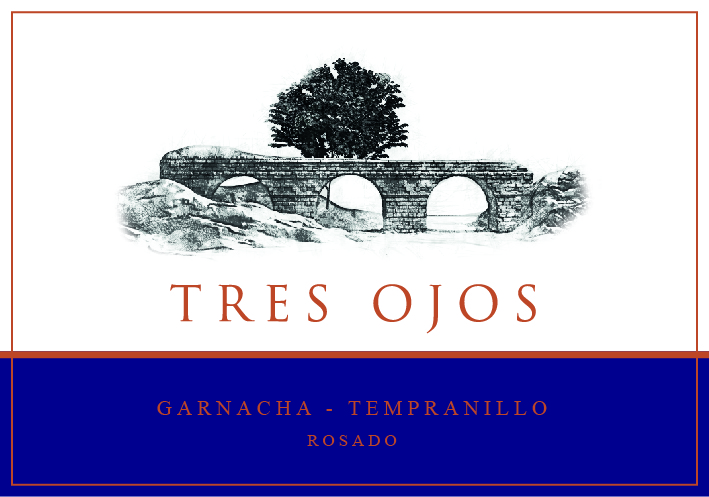
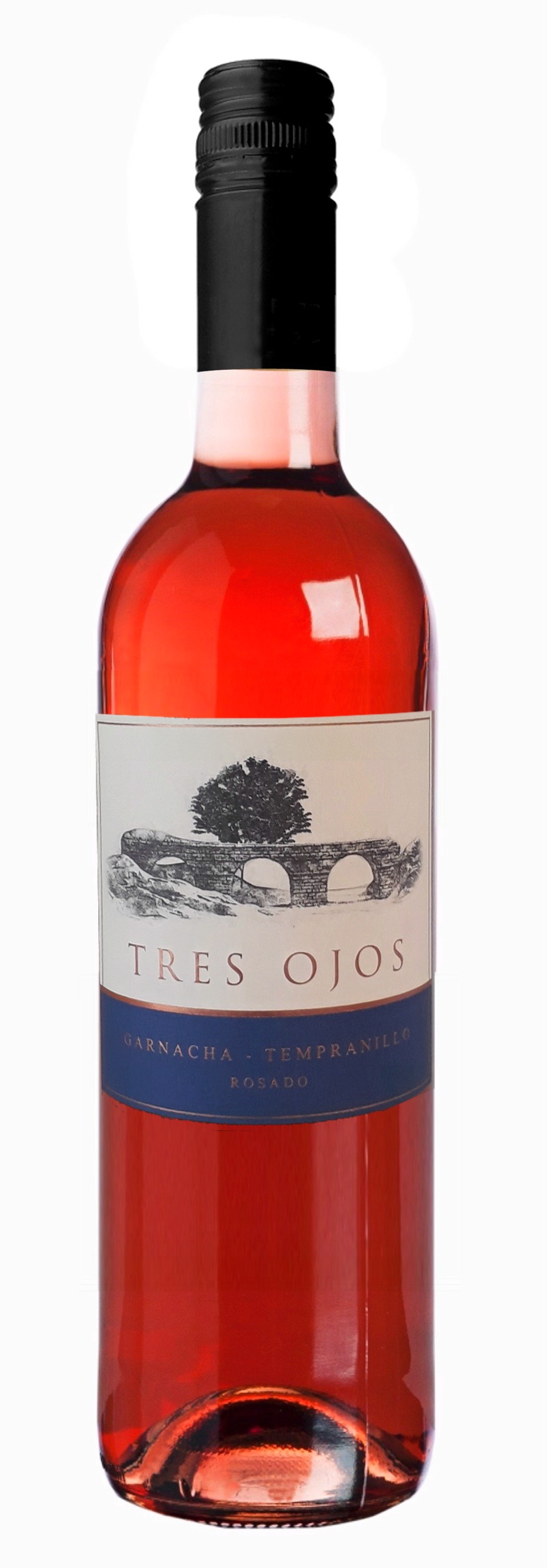
Tres Ojos Rosado Calatayud is fresh, crisp and juicy Rose made of 50% Garnacha and 50% Tempranillo displaying beautiful strawberry and raspberry fruits. Enjoy with salads, chicken or simply with a glass. Serve chilled.
Tres Ojos Rosado Calatayud is fresh, crisp and juicy Rose made of 50% Garnacha and 50% Tempranillo displaying beautiful strawberry and raspberry fruits.
Enjoy with salads, chicken or simply with a glass. Serve chilled.
Laird Cabernet Sauvignon Flat Rock Ranch is made from 100 percent Cabernet Sauvignon.
Laird's Flat Rock Ranch vineyard is located near the north corner of where Yountville Cross Road meets Silverado Trail, on State Lane. This prized, complex fruit from the Yountville Appellation is a result of unique geological and meteorological conditions: volcanic soils similar to the adjacent Stags Leap District, but also display ancient coastal deposits, and sedimentary and alluvial soils that provide beneficial stress for our vines. Marine air currents from San Pablo Bay to the south are caught when they reach the "Yountville Mounts," providing a natural cooling effect that balances warm, sunny days that ripen the rich tannins of our hallmark Cabernet Sauvignon to elegant distinction.
Bold violet-red color introduces a captivating bouquet of blueberries, tea leaf, and vanilla. This full-bodied wine has flavors of cassis, hazelnut and briary undertones with fresh acidity and chewy tannins on the palate
Review:
"The 2018 Cabernet Sauvignon Flat Rock is laced with crème de cassis, menthol, lavender, spice and blueberry jam. Inky and plush, the 2018 also has quite a bit of energy backing it all up. The 2018 is a gorgeous wine from Laird.- Antonio GALLONI"
- Vinous (The 2019 Napa Valley Cabernets: A Deep Dive, January 2022), 93+ pts
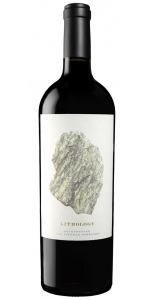
Alejandro Bulgheroni Lithology Beckstoffer Las Piedras Cabernet Sauvignon is made from 100 percent Cabernet Sauvignon.
From a St. Helena vineyard planted by early Napa settler Edward Bale more than 150 years ago, and later serving as the estate vineyard for the area’s first winery built by Henry Pellet in 1860, the Las Piedras site always gives us our prettiest wine. When placed next to Dr. Crane and To-Kalon wines, the Las Piedras show a certain elegance, with a very graceful entry and finely detailed complexity. We produce it with at least 75% new French oak, so there is a floral, spicy, and vanilla accent to the intense red and black fruits, cassis, and black cherry liqueur. What distinguishes this bottling is the beautifully fine tannins, delicate texture, and stunning purity. (Less than 100 cases made.)
Fermentation 70% Oak, 24% Concrete, 6% Puncheon
Review:
"The 2018 Cabernet Sauvignon Lithology Beckstoffer Las Piedras Vineyard comes from a world-class site outside of St. Helena and is all Cabernet that spent 20 months in 80% new oak. It offers a touch more red fruit as well ample cassis, spring flowers, loamy earth, and spice-like aromas and flavors. It has a wonderful sense of minerality, ultra-fine tannins, a dense, layered texture, and incredibly purity of fruit. It’s another just about off the charts release from this estate."
- Jeb Dunnuck 98 Points
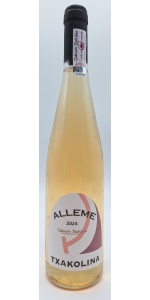
Alleme Getariako Txakolina Rosado is made from 50% Hondarrabi Zuri and 50% Hondarrabi Beltza
Limpid pink. Bright and energetic on the nose and palate, displaying vibrant, mineral-tinged cranberry, blood orange and white pepper qualities and a touch of pungent flowers. Racy and sharply focused, carrying no excess fat. Finishes tight and dry, displaying repeating citrus character and good persistence.
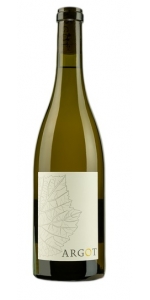
Argot Chardonnay Sonoma County is made from 100 percent Chardonnay.
Pouring a green-tinted gold, our Sonoma County Chardonnay is a beautiful wine from word go. Radiating from within, a blast of apple/pear fruit informs this wine both aromatically, and on the palate. As flavors unfurl, a progression of orange blossom, pineapple, white peach, and hazlenut are followed by a finish dominated by ginger, baked apple, with a trailing kiss of mint’s freshness. A stunning wine — wholly informed by the perfection of 2018’s growing season — defined by its dichotomy of massively intense flavors, and superb acidity and freshness.
Raised by minimalistic methods, often associated with the classic Chardonnay winemaking techniques of Meursault. With a focus on the coolest Chardonnay region in Sonoma County, 2018’s long, even growing season favored our vineyards’ moderate climate, old vines and deep volcanic soils. These grapes were allowed an extended ripening period on the vine, resulting in perfect balance and concentrated flavors.
Tres Ojos Rosado Calatayud is fresh, crisp and juicy Rose made of 50% Garnacha and 50% Tempranillo displaying beautiful strawberry and raspberry fruits. Enjoy with salads, chicken or simply with a glass. Serve chilled.
The Tres Ojos Estate
Tres Ojos is made at the Bodega San Gregorio, a cave co-op founded in 1965 that counts 160 members. The president is Gregorio Abad Gil and the vice president is Jose Maria Hernandez.
They sell wine to nine different countries.
The winery is located in the Ribota River Valley, some 15 kilometers north of the city of Calatayud. Tres Ojos hails from the D.O. Calatayud, located in Aragon, a province unparalleled in Spain by its variety of landscapes (lush river valleys, mountainsides and semi-desert areas.) The name Calatayud derives from a Moorish governor named Ayud who built a castle (qalat) at the confluence of the Jalon and Jiloca rivers (qalat Ayud.) There has been thriving population here as far back as Roman times when the old city of Bilbilis was used as an important staging-post for the Roman legions on their way north to Gaul.
The Tres Ojos Vineyards
The coop cultivates 820 hectares (2,025.40 acres) of primarily Garnacha (62%), Tempranillo (22%), 7% white Macabeo and 9% Cabernet, Syrah & Merlot (a mix). Most of the vines are at least 40 years old and some are 50+. The vines, planted “en vaso”(head-trained) are not irrigated, offering very low production levels. Local soils are rich in limestone, marl and slate, providing plenty of opportunities to make good wine on a regular basis of which Tres Ojos is a perfect example.
2021 Rossj-Bass displays the main features of the vintage well, with intense fruit concentration and floral notes. The nose shows ripe citrus notes of lemon peel and orange evolving into tropical fruits. The richness of the nose and the same notes are reflected on the palate, where remarkable acidity balances the fruit concentration. The wine is rich, full-bodied and creamy, with a long finish.
Review:
The 2021 Gaja Rossj-Bass starts off with very, crisp, green fruit and much more Sauvignon Blanc dominant aromas of grassy, bright, fragrant green apple and green pepper - all very bright and cheerful. Then Chardonnay seems to take over in the medium-full bodied and pleasing creamy texture of the wine. This is balanced again by the tangy, juicy acidity of Sauvignon. This is very elegant blend of Sauvignon Blanc aromas and zestiness and the textural comfort of Chardonnay. The name Rossj is a nickname of Angelo Gaja’s second daughter, Rossanna.
-Wine Independent 94 Points
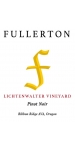
Fullerton Lichtenwalter Pinot Noir is made from 100% Pinot Noir - 10 years old
12 months in 100% neutral French Oak
On the western slope of the south-facing Ribbon Ridge sits the lovely Lichtenwalter Vineyard. Here Willakenzie soils, derived from ancient sedimentary seabed, coax black fruits and concentrated spices out of the wines.
Aromas of blackcurrant, blueberry, blackberry, and black cherry with concentrated spices followed by hints of sandalwood, smoke and oolong tea. Depth in the mid-palate pairs with balanced acidity, and so, yet structured tannins. The Willamee Valley’s smallest AVA speaks clearly and compellingly through this wine.
This wine comes from 100% destemmed rotator barrels fermented at ambient temperature reaching a peak temperature of 73° F. The rotator barrel spun twice daily during fermentation yielding a gentle extraction. Aer fermentation, the wine went through a three-week extended maceration, allowing the tannins to polymerize, soening the wine. Aged for 12 months in French oak barrels and three months in tank, the wine was then boled aer filtration.