" We don't sell the wine without touching the vine "
| Country: | Spain |
| Region: | Calatayud |
| Winery: | Tres Ojos |
| Grape Types: | Tempranillo Garnacha |
| Vintage: | 2019 |
| Bottle Size: | 750 ml |
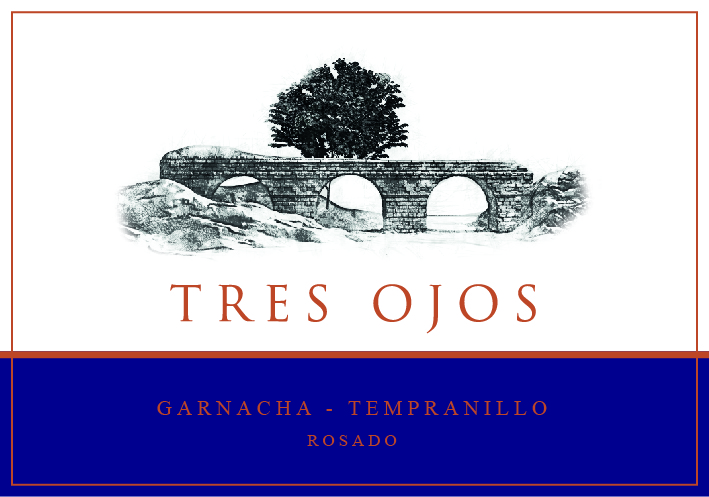
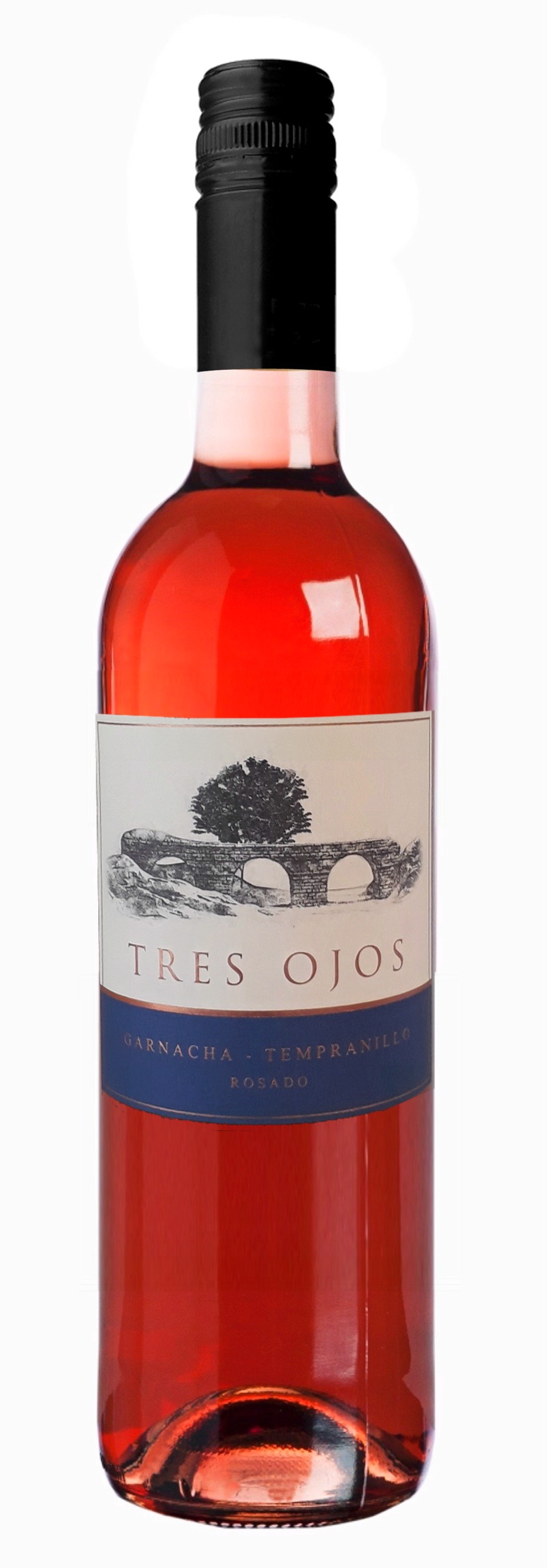
Tres Ojos Rosado Calatayud is fresh, crisp and juicy Rose made of 50% Garnacha and 50% Tempranillo displaying beautiful strawberry and raspberry fruits. Enjoy with salads, chicken or simply with a glass. Serve chilled.
Tres Ojos Rosado Calatayud is fresh, crisp and juicy Rose made of 50% Garnacha and 50% Tempranillo displaying beautiful strawberry and raspberry fruits.
Enjoy with salads, chicken or simply with a glass. Serve chilled.
Tres Ojos Rosado Calatayud is fresh, crisp and juicy Rose made of 50% Garnacha and 50% Tempranillo displaying beautiful strawberry and raspberry fruits.
Enjoy with salads, chicken or simply with a glass. Serve chilled.
Tres Ojos Garnacha Calatayud is made from 100 percent 85% Old Vine Garnacha (40-50 year old vines) and 15% Tempranillo.
The wine has a brick red color with a bouquet of red raspberries, spice and white pepper. The palate is incredibly concentrated and rich. The modern styles of Garnacha in Spain are continuously being perceived worldwide as wines of extraordinarily good quality. This wine is fruity, juicy and shows a great depth, ripe tannins, length but yet with wonderful elegance and lightness.
The wine ferments for 7 days at 30ºC, followed by 14 days maceration on the skins. Aged 12 months in large stainless steel vats. Cold stabilized and lightly filtered before bottling
Enjoy with sausages, roasted meats, aged cheeses etc.
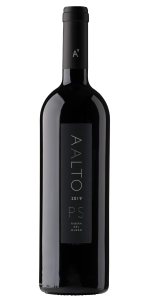
Aalto P.S. Pagos Seleccionados Tinto is made from 100 percent Tempranillo.
Climatic conditions
The farming year began with a mild autumn and little precipitation. A very dry winter started with -9ºC reaching at the end higher temperatures than normal for that time of the year. Spring and summer characterized by little rain, only some rain showers in July and late August avoided the hydric stress of the vines. The vegetative cycle of the vine developed with big variations of temperatures, alternating warm and atypical low temperatures of 4ºC for mid-June. The ripening of the grapes happened under very good conditions and the harvest started on 24th September 2019.
100% Tinto Fino (Tempranillo) primarily from very old vines – 60 to 90 years old – from selected plots in La Horra and La Aguilera. The harvest was done by hand, in small boxes of 15 kilos that are thoroughly inspected, bunch by bunch, on the selection table.
Tasting notes
Review:
Color: dark cherry, Aroma: toasty, spicy, fine cocoa, black fruit, Mouth: tasty, toasty, fine bitterness, ripe tannins
Guia Penin 94 Points
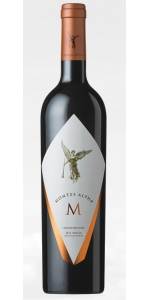
Montes Alpha M 2019 is made from 80% Cabernet Sauvignon, 10% Cabernet Franc, 5% Merlot, 5% Petit Verdot.
Montes Alpha M is the result of an extremely limited production and a rigorous selection of the grapes, one by one, led by Aurelio Montes. Coming from the Colchagua Valley, it is one of the best and most awarded wines of Chile. The vineyards that give rise to Montes Alpha M are located in the Apalta zone of the Colchagua Valley. The soils are of granitic origin and are shallow in the upper, mountainous sectors. They vary in the clay content, depth, amount of organic matter, and especially the types of rocks and stones they are made up of. The soils origin can also range from fluvial to glacial, which shows the great diversity of soils in our vineyards. Some zones are influenced by the Tinguiririca River and others by mudslides and the detachment of material from high above in the mountain chain that delimits the valley.
Review:
Deep nose, but really fresh at the same time. Currants, blackberries and chili-pepper chocolate with cedary and meaty undertones. This is really juicy, with a tight, tensely framed palate, underscored by lots of creamy, dusty tannins. A lengthy, refined and elegant expression of cabernet sauvignon, but a strong statement from Colchagua. Drink or hold.
-James Suckling 97 Points
Tres Ojos Rosado Calatayud is fresh, crisp and juicy Rose made of 50% Garnacha and 50% Tempranillo displaying beautiful strawberry and raspberry fruits. Enjoy with salads, chicken or simply with a glass. Serve chilled.
Review:
"Coming from the Calatayud region of Spain and 70% Garnacha and 30% Tempranillo, the 2019 Rosado Rose boasts a medium ruby hue as well as a big bouquet of ripe cherry, watermelon, framboise fruits, and a touch of spice. Playing in the medium-bodied end of the spectrum, with plenty of richness yet also good acidity, it’s going to be incredibly versatile with food and drink beautifully over the coming summer months." - Jeb Dunnuck (March 2020), 90 pts
The Tres Ojos Estate
Tres Ojos is made at the Bodega San Gregorio, a cave co-op founded in 1965 that counts 160 members. The president is Gregorio Abad Gil and the vice president is Jose Maria Hernandez.
They sell wine to nine different countries.
The winery is located in the Ribota River Valley, some 15 kilometers north of the city of Calatayud. Tres Ojos hails from the D.O. Calatayud, located in Aragon, a province unparalleled in Spain by its variety of landscapes (lush river valleys, mountainsides and semi-desert areas.) The name Calatayud derives from a Moorish governor named Ayud who built a castle (qalat) at the confluence of the Jalon and Jiloca rivers (qalat Ayud.) There has been thriving population here as far back as Roman times when the old city of Bilbilis was used as an important staging-post for the Roman legions on their way north to Gaul.
The Tres Ojos Vineyards
The coop cultivates 820 hectares (2,025.40 acres) of primarily Garnacha (62%), Tempranillo (22%), 7% white Macabeo and 9% Cabernet, Syrah & Merlot (a mix). Most of the vines are at least 40 years old and some are 50+. The vines, planted “en vaso”(head-trained) are not irrigated, offering very low production levels. Local soils are rich in limestone, marl and slate, providing plenty of opportunities to make good wine on a regular basis of which Tres Ojos is a perfect example.
Florence Cholet Meursault Blanc is made from 100 percent Chardonnay.
This classic Meursault offers expressive and complex aromas of white flower, white fruit, and herbal aromas. Bright acidity and minerality emerge on the palate from this beautifully balanced and structured white, followed by subtle hints of vanilla and toasted brioche nuances in a refreshing finish.
Pair with fresh Truffle Pasta, Beaufort Cheese, Pike Quennelles.
Belle Glos, a passion project of fifth-generation winemaker Joe Wagner (Caymus Vineyards), is famous for its bold, expressive Pinot Noirs. With this Rosé, Joe applies his "Go With Your Palate" philosophy to the world of sparkling wine, creating a unique, uncompromising, and luxurious offering. The inspiration for this wine began over a decade ago in Champagne, when Joe encountered an ancient, bone-dry bottle aged in tirage (on the lees with no dosage), igniting his passion for this pure, traditional style. The resulting Zero Dosage Rosé is a 100% Pinot Noir sparkling wine produced in the Méthode Champenoise (traditional method), capturing the lively elegance of the Russian River Valley.
Zero Dosage is a bold style—it is bone dry, allowing the pure expression of the terroir and the traditional methods to shine without the sweetness of added sugar. To compensate for this lack of dosage, Joe employs intensive winemaking techniques: the base wine is aged in French oak, undergoes malolactic fermentation (for texture), and is a multi-vintage blend. This blending ensures a youthful, vibrant expression is harmonized with complex, aged characteristics, resulting in a sparkling wine with searing acidity, fine bubbles, and a firm mineral backbone that evolves beautifully over time.
This wine is bright and vibrant, with flavors of orange zest, raspberry, bright cherry, and apricot. Its firm minerality and fine bubbles make it a pure, exciting, and refreshing experience.
The wine's searing acidity and bone-dry profile make it an exceptional partner for delicate, rich, or spicy dishes. Pair with Smoked Salmon, fresh oysters, a spicy tuna roll, or the classic combination of roast chicken and goat cheese.
Review:
“This bone dry and razor sharp Brut Rosé displays aromas of tangerine, tart strawberry and melon on the nose, giving way to an acid-driven palate loaded with flavors of mixed citrus, Ranier cherry, and white flowers that linger across the finish.” — Tom R. Capo.
Wine Enthusiast: 92 points