
" We don't sell the wine without touching the vine "
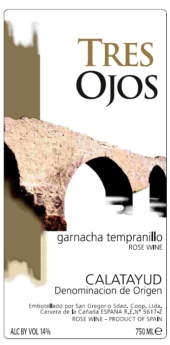
| Country: | Spain |
| Region: | Calatayud |
| Winery: | Tres Ojos |
| Grape Types: | Grenache Tempranillo |
| Vintage: | 2012 |
| Bottle Size: | 750 ml |
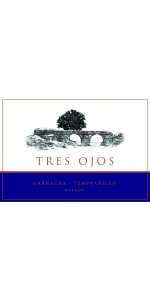
Tres Ojos Rosado Calatayud is fresh, crisp and juicy Rose made of 50% Garnacha and 50% Tempranillo displaying beautiful strawberry and raspberry fruits. Enjoy with salads, chicken or simply with a glass. Serve chilled.
Tres Ojos Rosado Calatayud is fresh, crisp and juicy Rose made of 50% Garnacha and 50% Tempranillo displaying beautiful strawberry and raspberry fruits.
Enjoy with salads, chicken or simply with a glass. Serve chilled.
Sourced from a vineyard at 505 metres above sea level in San Vicente de la Sonsierra, the wine takes its name from the site it is located on. The soils are primarily composed of depleted limestone in the subsoil and pebbles on the topsoil. These types of soils offer long-ageing capacity, freshness, volume and structured wines.
Fresh, structured and complex, this wine is very aromatic, with intense aromas of wild black fruits, accompanied by deep balsamic aromas and licorice. A silky texture and mineral notes, it is round, powerful and polished on the palate with flavors of black fruits, prunes, balsamic and spice. A long and persistent finish.
Meat and game, either grilled, baked or stewed, pastes, creams and soups, all kind of meat recipes, roast lamb.
Review:
"Dark plums, wild berries, dried herbs and warm earth with sweet spices and discreet vanilla creaminess interwoven to the nose. A medium-to full-bodied tempranillo with chalky, calculated tannins and vivid acidity. Lively, with a bright core of fruit on the center-palate and a flavorful, spicy finish. Naturally concentrated, but extremely drinkable, too. Long and bright. Drink or hold."
- James Suckling (September 9th 2022), 95 pts
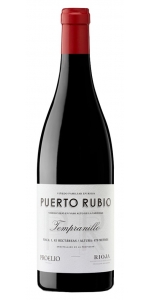
Proelio Puerto Rubio Rioja Tempranillo 2019 is 100% Tempranillo.
Sourced from a vineyard at 505 metres above sea level in San Vicente de la Sonsierra, the wine takes its name from the site it is located on. The soils are primarily composed of depleted limestone in the subsoil and pebbles on the topsoil. These types of soils offer long-ageing capacity, freshness, volume and structured wines.
Fresh, structured and complex, this wine is very aromatic, with intense aromas of wild black fruits, accompanied by deep balsamic aromas and licorice. A silky texture and mineral notes, it is round, powerful and polished on the palate with flavors of black fruits, prunes, balsamic and spice. A long and persistent finish.
Meat and game, either grilled, baked or stewed, pastes, creams and soups, all kind of meat recipes, roast lamb.
Review:
This is a spicy Rioja with aromas of mulberries, spiced cherries, cinnamon stick, licorice and dill. Turns to walnuts and roasted chestnuts. Chewy and full-bodied, with firm yet polished tannins. Well structured, deep and persistent. Drink from 2024.
-James Suckling 94 Points
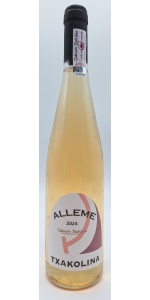
Alleme Getariako Txakolina Rosado is made from 50% Hondarrabi Zuri and 50% Hondarrabi Beltza
Limpid pink. Bright and energetic on the nose and palate, displaying vibrant, mineral-tinged cranberry, blood orange and white pepper qualities and a touch of pungent flowers. Racy and sharply focused, carrying no excess fat. Finishes tight and dry, displaying repeating citrus character and good persistence.
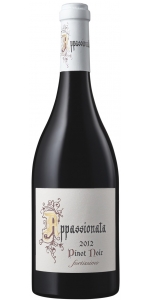
J. Christopher Appassionata Fortissimo Pinot Noir is made from 100 percent Pinot Noir.
Inspired by the three movements of Beethoven’s “Appassionata” Piano Sonata, there are three Appassionata Pinot Noirs, released at different tempos.
The finale of the Appassionata Pinot Sonata is Fortissimo (dynamically forceful). Selected for ultimate expressivity and longevity, it is not released until 10 years after the vintage. This is the epitome of expressive excellence that we are seeking in Willamette Valley Pinot Noir – a wine that combines brooding intensity with lilting grace and can stand alongside the classic wines of the world. The 2012 Fortissimo is muscular and full-bodied, with a deep color and seamless structure. In this phase of maturation, tertiary aromas begin to show a profound complexity and subtle earthiness that only develops with bottle age and cannot be accelerated
Review:
Loosen Bros. and J. Christopher Wines just released the Fortissimo and it is showing great acidity and fine-grained tannins. Its aromas and flavors of sweet red cherries, roasted pork shoulder and orange-pekoe tea are alive and kicking. Enjoy 2023–2032.
-Wine Enthusiast 95 Points
More intense than you might expect from an 11 year old Pinot Noir, certainly one that has been held back at the estate for 10 years before release. Grilled raspberry leaf and reductive smoky notes greet you on the nose here, with sweet black fruits softening the tangy red cherry and cranberry of Oregon Pinot, all wrapped up with waves of leather, sage and tobacco. This has power and succulence, and even at 10 years old it feels pretty young, just at the beginning of its development with a good decade ahead of it. Late release is an unusual approach in Oregon, but not so unusual if you follow Loosen’s winemaking in the Mosel, where he has been known to keep Riesling between 20 and 30 years in barrel. In this case the barrel ageing is for around two years, with the rest taking place in the bottle. Old fashioned winemaking, delicious results. 20% new oak. Fermented with natural yeast, unfiltered and unfined. Tim Malone winemaker. First time on the Place from this wine, from a vineyard in the foothills of the Chehalem Mountains in Oregon’s Willamette Valley. Heavy bottle.
- Jane Anson - Inside Bordeaux 97 Points
2012 Tres Ojos, Rosado, Garnacha Tempranillo, Calatayud is made from 50% Garnacha and 50% Tempranillo
Fresh, crisp and juicy Rose made of 50% Garnacha and 50% Tempranillo displaying beautiful strawberry and raspberry fruits. Enjoy with salads, chicken or simply with a glass. Serve chilled.
The Tres Ojos Estate
Tres Ojos is made at the Bodega San Gregorio, a cave co-op founded in 1965 that counts 160 members. The president is Gregorio Abad Gil and the vice president is Jose Maria Hernandez.
They sell wine to nine different countries.
The winery is located in the Ribota River Valley, some 15 kilometers north of the city of Calatayud. Tres Ojos hails from the D.O. Calatayud, located in Aragon, a province unparalleled in Spain by its variety of landscapes (lush river valleys, mountainsides and semi-desert areas.) The name Calatayud derives from a Moorish governor named Ayud who built a castle (qalat) at the confluence of the Jalon and Jiloca rivers (qalat Ayud.) There has been thriving population here as far back as Roman times when the old city of Bilbilis was used as an important staging-post for the Roman legions on their way north to Gaul.
The Tres Ojos Vineyards
The coop cultivates 820 hectares (2,025.40 acres) of primarily Garnacha (62%), Tempranillo (22%), 7% white Macabeo and 9% Cabernet, Syrah & Merlot (a mix). Most of the vines are at least 40 years old and some are 50+. The vines, planted “en vaso”(head-trained) are not irrigated, offering very low production levels. Local soils are rich in limestone, marl and slate, providing plenty of opportunities to make good wine on a regular basis of which Tres Ojos is a perfect example.

All older vintage wines have been purchased from a single collector’s cellar. Pictures can be requested before shipment.

Larroque Bordeaux Blanc is made from 73% Sauvignon Blanc and 27% Colombard.
No oak.
Color : Pale yellow with green tints.
Nose : Complex aromas of white flowers, exotic fruits, citrus and boxwood, with a touch of minerality.
Mouth : Aromatic, with a nice richness and freshness. Predominant flavors of tart, crisp fruit.
Marie-Christine, the daughter of Henri Ducourt, purchased this prestigious left-bank property in 1979, which lies on the border of the Graves appellation.
The 60-hectare vineyard was rapidly replanted and the château building, which dates from 1348, was restored.
Our family now produces three different-colored wines there: red, white and rosé.
Grown on loamy-clay soil.
Harvest : Machine harvesting in the cool, early morning
Maceration : Skin-contact maceration for several hours, depending on ripeness, and pressing
Fermentation : Beginning of the cold alcoholic fermentation (12°C / 53°F) then an increase in temperature to finish the fermentation at 20°C / 68°F.
Enjoy this wine as an aperitif or during the meal with fish, seafood or chicken salad.



