
" We don't sell the wine without touching the vine "
| BUY MORE! SAVE MORE! | ||||||||||||||||||||
|
| Country: | France |
| Region: | Alsace |
| Winery: | Wolfberger |
| Grape Type: | Gewurztraminer |
| Vintage: | 2018 |
| Bottle Size: | 750 ml |
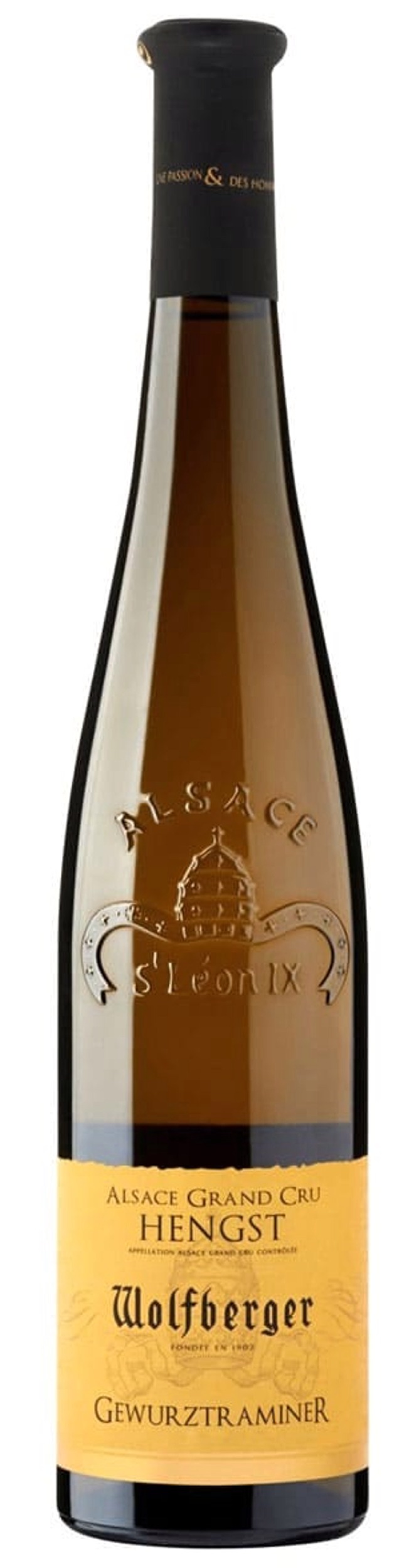
Wolfberger Alsace Grand Cru Hengst Gewurztraminer is made from 100 percent Grand Cru Gewurztraminer.
Hengst means stallion in alsatian.
Floral nose, yellow fruits, sweet spices. The mouth is ample with the same aromatic.
Tangential filtration before bottling.Vinification in stainless steel tanks at 16°C then aging on fine lees until spring of the following year.
Full-bodied cheese (munster, époisses), curry, dessert with fresh fruit
The Wolfberger Estate
Wolfberger is a union of producers located in Eguisheim, south of Colmar. The city was also the home of Pope Leo IX, the Reformer (Pope from 1048 – 1054 A.D.). The winery was founded in 1902 when a group of wine-growers in Eguisheim decided to join forces to create one of the first cooperatives in Alsace. The cave counts 800 members today. Wolfberger combines tradition and constant innovation to elaborate high quality wines and preserve their typicity.
The resident oenologist at Wolfberger is Bertrand Praz. A young but extremely capable winemaker, he learned his craft at the famous Dijon wine school and from working at the Mumm Champagne House. He has taken huge strides in raising the quality level here. They also take their evaluative wine tasting very seriously and have a highly efficient set-up for tasters. The amphitheatre style classroom has individual wine-tasting desks each with light, spit bowl and automatic water faucet.
"This huge cooperative with more than 800 members makes charming crémant sparklers and clean varietals at a bargain price." - Anthony Dias Blue's Pocket Guide to Wine 2006
"An Alsatian cooperative located just south of the town of Colmar, these are tasty, fairly priced, dry white wines from a region that could use some help." - Wine Advocate (Aug. 2010)
Wolfberger is the rare example, in the wine world, of bigger actually being better.
The Wolfberger Vineyard
With 1300 hectares (3,211 acres), 500 hectares of which are in and around Eguisheim, there is a lot of raw material for a specialty importer to choose from. Pinot Blanc has been known in Alsace since the 16th century. Today it covers 22% of the vineyards and is the second most important variety after Riesling. It succeeds well in most soils and enjoys the dry microclimate of the area. The grapes are gathered in vineyards situated above Eguisheim and in surrounding villages. Rangen is the most southerly vineyard in Alsace and belongs to the towns of Thann and Vieux-Thann. This mountainside vineyard ranges from 340 to 470 m in altitude, and its slopes are extremely steep (up to 85%), with dark, stony soil, where harvesting resembles mountain climbing because the grape-pickers work from top to bottom, secured with harnesses and ropes. The grapes are brought down on sledges. The river Thur which flows at its base helps to preserve it from spring frosts. From the geological point of view, Rangen is immediately adjacent to the main Vosges fault and lies on the Devonian-Carboniferous volcano-clastic base. This gives a siliceous rock, more or less coarse sand, with acid and basic minerals, fertilizing elements for the soil: Ca, K, Mg, Mn, Fe, F, P, S, with trace elements. Rangen is the only vineyard
-150x300.jpg "Bernardins Muscat Beaumes Venise VDN 2022")
Bernardins Muscat Beaumes Venise VDN 100% Muscat petits grains (75% Blanc, 25% Red)
Copper/rose hue and ripe soft aromas of orange, spice and flowers. The wine is full bodied with the texture of silk and flavors of orange custard, white peach, pear, apricot, toffee and orange peel.
The vineyards and their terroir are the essence of our wines. This is where everything starts and where we focus our efforts throughout the year. You can’t make great wine without great grapes.
The viticulture is essentially done by hand. Five people work full-time in the vineyards. They are supplemented by seasonal employees who work during bunch thinning and the harvest in order to bring out the very best in our vines. Working by hand and the attention each vine gets are fundamental. Pruning, de-budding, trellising, leaf removal and picking are thus carried out by hand with the utmost care.
We prepare the soil by using good old-fashioned ploughing. Organic compost is made from grape marc (the discarded stalks and skins).
As a way of protecting the plants, we only use phytosanitary products when necessary and within strict guidelines by staggering the treatments appropriately, to minimise the amount of chemicals used. We prefer to use as much as possible manual and organic techniques . Leaving natural grass cover, removing buds and leaves from the vines, preserving biodiversity around the vineyard: olive, almond and cypress trees, wild rosemary and capers.
In the spirit of respecting traditional techniques and the best elements of modern technology, cellar manager Andrew Hall and his winemaker son Romain Hall take family traditions very seriously.
When making our wines, the Muscat de Beaumes de Venise plays a central role and requires great care. After picking the grapes by hand, we press them straightaway to ferment the juice without skins. We don’t add any yeasts and keep the alcoholic fermentation in check by temperature control. Vin Doux Naturel winemaking involves stopping fermentation to preserve the grapes’ natural sweetness. During vinification, we watch the vats day and night and add the fortifying spirit just at the right moment. At this stage, the wine’s final balance is at stake. The wine is then aged in stainless steel tanks for 6 months before bottling.
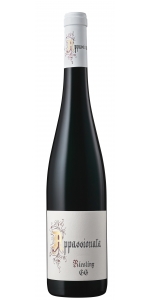
Inspired by the historical winemaking techniques of Erni Loosen’s great-grandfather, the Appassionata Riesling GG is made in the same way as the Dr. Loosen Grosses Gewächs (“Great Growth”) Rieslings he produces in Germany. The GG designation indicates a dry-style wine from a vineyard of special distinction — in this case, the old-vine Medici vineyard, planted in 1976. We farm this exceptional site, which is just a few miles east on the Chehalem Mountain ridge.
The fruit for this wine was harvested from old Rieslng vines (planted in 1976) in the Medici Vineyard, which is also in the Chehalem Mountains AVA, just a few miles from the winery. We lease this vineyard and have been farming it organically since 2015. The wine was fermented in a 3,000-liter German oak cask, and rests on the full lees for 12 months before bottling. The extended lees contact allows the wine to clarify and find its own harmonious balance naturally.
Production notes:
Whole-cluster pressing; natural fermentation in a neutral 3,000-liter oak cask; matured on the full lees for 12 months; no bâtonnage.
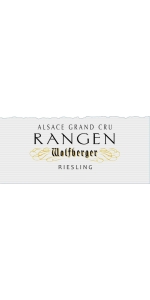
Wolfberger Alsace Grand Cru Riesling Rangen de Thann is made from 100 percent Riesling.
Mineral, spicy, minty with some eucalyptus notes, tropical fruits, grapefruit. Balanced and exotic in the finish, with long lasting flavors.
The Rangen Grand Cru is located in Thann, deep in the south of Alsace. Its particular soil is made of volcano-clastic rocks that drink up the heat of the day and send it back out again at night. The composition of the soil allows the roots of the vines to drink deeply from the mineral-rich sub-soil. Its southern exposure has the advantage of refreshing, drying winds in case of dampness. The high slopes are quite steep, reaching 68% in some places, requiring that the harvest be done by abseiling or roping down. Perfect for aging, these wines will reveal even more qualities after several years in the cellar.
Pair with Serve with fish, seafood, sushi, sashimi, goat cheese, vegetarian food.
Review:
"Aromas shimmy out of the glass. An enticing haze of petrol is lifted by lime and grapefruit zest, as well as pineapple. The texture of this wind is smooth and heavy, but the acidity and citrus notes bring freshness and light. A long finish carries just a hint of menthol. - LAYLA SCHLACK"
- Wine Enthusiast (November 2021), 93 pts
Wolfberger Alsace Grand Cru Riesling Rangen de Thann is made from 100 percent Riesling.
Mineral, spicy, minty with some eucalyptus notes, tropical fruits, grapefruit. Balanced and exotic in the finish, with long lasting flavors.
The Rangen Grand Cru is located in Thann, deep in the south of Alsace. Its particular soil is made of volcano-clastic rocks that drink up the heat of the day and send it back out again at night. The composition of the soil allows the roots of the vines to drink deeply from the mineral-rich sub-soil. Its southern exposure has the advantage of refreshing, drying winds in case of dampness. The high slopes are quite steep, reaching 68% in some places, requiring that the harvest be done by abseiling or roping down. Perfect for aging, these wines will reveal even more qualities after several years in the cellar.
Pair with Serve with fish, seafood, sushi, sashimi, goat cheese, vegetarian food.
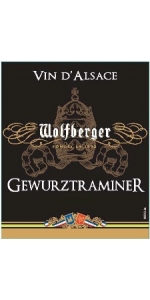
Wolfberger Alsace Gewurztraminer is made from 100 percent Gewurztraminer
Very aromatic, with rose petal, peach and honeysuckle aromas. Full bodied, bright, zesty and crisp, this wine is extravagant and extroverted.
This wine has been awarded with silver and gold medal on a regular basis for the last decade.

Wolfberger Alsace Grand Cru Riesling Rangen de Thann is made from 100 percent Riesling.
Mineral, spicy, minty with some eucalyptus notes, tropical fruits, grapefruit. Balanced and exotic in the finish, with long lasting flavors.
The Rangen Grand Cru is located in Thann, deep in the south of Alsace. Its particular soil is made of volcano-clastic rocks that drink up the heat of the day and send it back out again at night. The composition of the soil allows the roots of the vines to drink deeply from the mineral-rich sub-soil. Its southern exposure has the advantage of refreshing, drying winds in case of dampness. The high slopes are quite steep, reaching 68% in some places, requiring that the harvest be done by abseiling or roping down. Perfect for aging, these wines will reveal even more qualities after several years in the cellar.
Pair with fish, seafood, sushi, sashimi, goat cheese, vegetarian food.
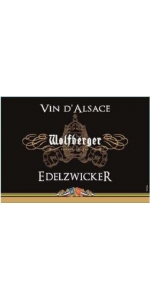
Wolfberger Alsace Edelzwicker is made from 40 % Pinot Blanc, 30% Riesling, 15% Gewurztraminer and 15 % Muscat
Edelzwicker has a nose of grilled almonds and walnuts, with a light floral hint following. The first sip shows its true character: fresh and lemony with vegetal, herbaceous flavor. It is round and easy drinking, not overpowering and finishes clean.
Each grape variety is harvested individually in early or mid-October on the most suitable date for each vineyard.
It is a good companion for food without ever dominating it. In Alsace it is served by the glass or in large jugs to partner regional specialties. In general Edelzwicker goes well with fresh salads, cold or warm starters, but also with oysters, mussels and seafood. It should always be served chilled, around 10 ° C.
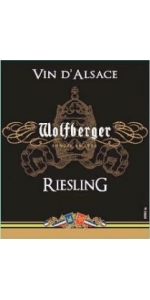
Wolfberger Alsace Riesling is 100 percent Riesling.
Riesling is the most popular grape variety in Alsace. Racy yet slightly fruity, Wolfberger Riesling is a subtle fine wine of citrus and mineral aromas, good acidity and freshness. It has been known for being the perfect "food wine" - great with traditional Alsatian dishes such as sauerkraut, but also, thanks to their vivacity, with fish and shellfish.
A very slow-growing variety, Riesling ripens with chilly nights. The leaves are round and thick with sharp teeth.
The berries – small, green or yellow, with thick skin – grow on a short-stemmed, cylindrical, compact cluster.
The Reisling grows best in soil that isn’t too rich, with a preference for light terroirs with lots of sunshine.
After the harvest, the grapes are put into horizontal pneumatic presses where the juice is slowly extracted. After crushing the grapes, the juice (actually the must, which includes the skins, stems and seeds) is stored in different vats, then it is carefully clarified.
Fermenting in temperature-controlled stainless steel vats for 3-4 weeks.
Racking. Fining (3-4 months). Filtration and stabilization, then aging in the bottle.
Excellent with grilled fish or cooked in a sauce, and shellfish.
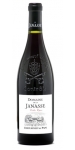
Domaine de la Janasse Chateauneuf-du-Pape Cuvee Vieilles Vignes is made from 65% Grenache, 20% Mourvèdre, 10% Syrah, 5% divers.
In contrast to Chaupin, which is made from old-vine Grenache on sandy soils, the cuvée Vieilles Vignes is from old vines of Grenache, Mourvedre, Syrah along with smaller percentages of other permitted varieties that are grown in these old vineyards. The wine is sourced from 4 terroirs: pebbly clay, sand, gravelly red clay and sandy limestone. Vieilles Vignes is always the most powerful and concentrated Châteauneuf-du-Pape cuvée made at Domaine de la Janasse.
Review:
The advantages of old vines are perhaps most evident in the more difficult vintages (whether hot and dry or cool and rainy). The 2021 Chateauneuf du Pape Vieilles Vignes is a strong effort, delivering supple, velvety waves of ripe black cherries and black raspberries. Medium to full-bodied, it's rich and concentrated without seeming at all heavy or unbalanced, finishing long and juicy. It's approximately 75% Grenache, 15% Mourvèdre, 5% Syrah and 5% other varieties, keeping in mind that up to 15% of the old Grenache vines are actually Clairette Rose.
-Wine Advocate 96 Points

El Cortijillo Tempranillo La Mancha is made from 100% Tempranillo
Up front aromas of raspberry and cherry fruit, medium to light weight, Rhône wine in character, cherry fruit flavors, followed by bright acidity. Reminds of a mythical cross between a Pinot Noir and a Côtes-du-Rhône. Pleasant and fun, bistro red.
Made from 30 year old vine.
Delicious with Paella, hamburger or pasta. But also great with grilled vegetables. (bell pepper, eggplant, etc)



