" We don't sell the wine without touching the vine "
| Country: | France |
| Region: | Burgundy |
| Winery: | Chartron et Trebuchet |
| Grape Type: | Chardonnay |
| Vintage: | 2016 |
| Bottle Size: | 750 ml |

Mt Monster Chardonnay is made from 100 percent Chardonnay.
Gentle pressing and free run juices create the base of this wine.
Traditionally Mt Monster Chardonnay is 100% fermented and matured in stainless steel, this receives some lees contact to add texture and complexity to the palate, but essentially this wine is pure Chardonnay fruit.
Review & Tasting notes:
Bright straw color, with hints of lime green. Fresh figs and melon, with vibrant lemon citrus fruit. The nose also shows some yeast complexity from extended lees contact. Fresh tangy melon fruit flavors, & a clean acid finish. Although it may benefit from up to 2 years maturation in bottle, this wine is best consumed when young and fresh.
- Australian Wine Showcase (December 2016), 94 pts

Jip Jip Rocks Chardonnay 2014 is made from 100 percent unoaked Chardonnay.
Light yellow with a pale straw hue. A classic nose of lemon, fresh stonefruit and melon. The palate is clean and fresh with mineral characters underpinning ripe pineapple and lime flavours. This wine will age beautifully over the next 4-5 years.
Winemaking report: Gentle pressing and free run juices create the base of this wine. Traditionally Jip Jip Rocks Chardonnay is a 2/3 blend fermented and matured in stainless steel and 1/3 fermented in stainless steel, which receives extended lees contact to add texture and complexity to the palate.


Sunset Hills Shenandoah Springs Chardonnay is made from 100 percent Chardonnay.
This is our first release of a clone-specific wine for Sunset Hills. The goal is to show you a specific terroir, one that year after year delivers excellent fruit quality. I chose clone 96 for its complexity both in ripening and barrel aging. During ripening, the fruit has notes of pineapple and pear with great acidity. I saw this wine as a chance to highlight not only the vineyard, but how detailed we can get in growing and making wine.
100% Chardonnay:
75% Clone 96
20% Clone 76
5% Clone 17
Notes of light honeysuckle, Asian pear, raw almond, and lemon custard. Medium body and medium acid.

This Chardonnay features bright, concentrated citrus, pear, green apple and nectarine fruit, with just a touch of oak to add richness to the palate. The wine lingers on the palate, and has the structure and acidity to provide for good longevity.
fter whole-cluster pressing, the Chardonnay juice was barrel-fermented in French oak barrels and aged sur lie for 8 months. During this period, the barrels were routinely stirred to increase yeast contact and add richness; 30% of the wine underwent secondary malo-lactic fermentation. One- and two-year-old French oak barrels were used. Prior to bottling, the wine received minimal filtration and fining to preserve the fresh fruit flavors.

Domaine Nico le Paradis Pinot Noir is made from 100 percent Pinot Noir.
The cool climate vineyard that belongs to Laura and her sister Adrianna Catena feels like paradise itself to Laura. It is lined by trees and fruit orchards, with majestic views of the Andes. Inside the 12 Hectare vineyard, there is a little house with two tiny bedrooms and a kitchen, where Laura dreams of spending a whole month reading books-Laura's version of paradise. The little house is affectionately named Chateau Laura. About the Vineyard The tiny parcel where Le Paradis is grown was planted in 2011 with Dijon 667 Clones over two acres. Wine Production The grapes from this small parcel were elaborated in 15 separate microvinifications.
All the microvinifications were fermented with indigenous yeast. 20% of the microvinifications were fermented with 100% whole clusters in oak roll-fermentor of 600L and low temp (22 Celcius degrees). 40% were fermented with 20% whole cluster in small vats of 800L and 40% fermented in small vats of 800L without sulfites until 4%V/V of alcohol.
Review:
From soils rich in calcium carbonate and sand, in a vineyard 1,600 meters above sea level, this wine comes from a selection of 2.7 hectares that produced very little fruit in 2016, just barely enough to fill 800 bottles. But watch out for this white, with its edge, its minerality, those saline notes that are so characteristic of chardonnay from the chalky Gualtallary soils. The wine was aged for a year in used barrels, and it has some of the toast, but here it’s the deep minerality that dominates.
Patricio Tapia - Descorchados 96 Points
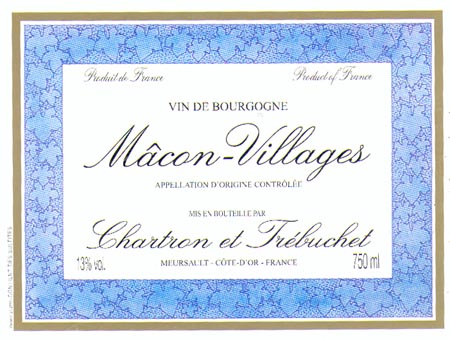
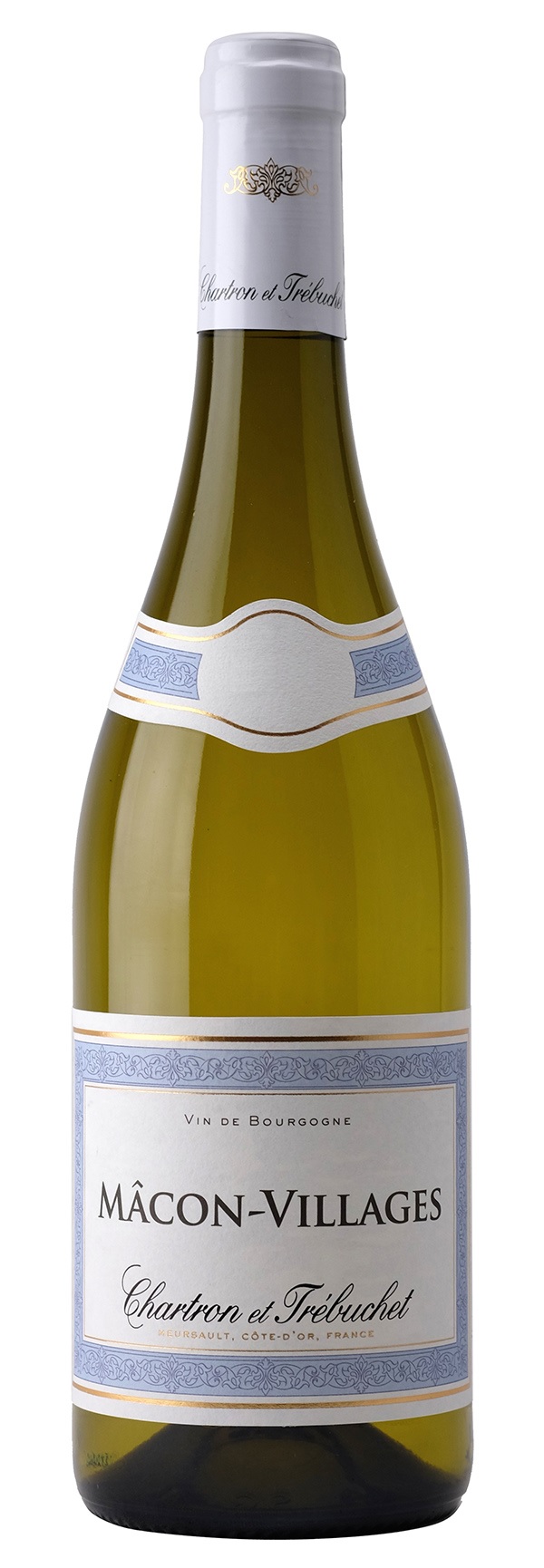
Chartron & Trebuchet Macon-Villages Chardonnay is made from 100 percent Chardonnay.
White gold in color with silver highlights. The notes of chalk and limestone make it a very tense and mineral wine. The palate is complex with aromas of lemon and orange blossom. The freshness is ensured by a good acidity that pleasantly wakes up the taste buds.
Ideal as an aperitif, but also with poultry and veal in creamy sauce, creamy risotto with meat or fish, grilled fish, cold antipasti and ratatouille, mixed salads, sushi. Perfect with Goat cheese.
The Chartron et Trebuchet Estate
Owners of Premiers and Grands Crus in Puligny-Montrachet since 1859 with the Domaine Jean Chartron, Jean-René Chartron founded the Maison Chartron et Trébuchet in 1984 with Louis Trébuchet, manager of a wine trading company.
Vincent Sauvestre acquired the company in 2004. His objective is to continue to promote the great white wines of Burgundy, whilst respecting and perpetuating the quality work achieved by Jean Chartron and Louis Trébuchet.
The Maison Chartron et Trébuchet specialises in producing great white Burgundy wines. The know-how of the winemakers begins with a radical selection of the very best plots: the highest-quality terroirs of the Côte are chosen and the grapes are carefully monitored throughout the ripening period. Grapes are hand-picked when the balance between acidity and sweetness is at its prime: the fruit must not be too ripe so that the full potential of the terroir is maintained, including its acidity, to ensure that the wines age properly. All of the winemaking is done in casks: the alcoholic fermentation is followed by malolactic fermentation. A proportion of 20 to 40% of new barrels is used, depending on the appellations and the vintage. Wines are left to age for 12 to 18 months depending on the appellations.
The Chartron et Trebuchet Vineyards
Chartron et Trébuchet's vineyards are all planted on Limestone and Clay based soils. In average, the age of the vines is 30 years old.

Florence Cholet Meursault Blanc is made from 100 percent Chardonnay.
This classic Meursault offers expressive and complex aromas of white flower, white fruit, and herbal aromas. Bright acidity and minerality emerge on the palate from this beautifully balanced and structured white, followed by subtle hints of vanilla and toasted brioche nuances in a refreshing finish.
Pair with fresh Truffle Pasta, Beaufort Cheese, Pike Quennelles.

Chateau Cabrieres Cotes du Rhone Rouge Vieilles Vignes is made from 50% Grenache and 50% Syrah.
Château Cabrières’ Côtes du Rhône vineyard is located south of Orange, on the edge of Châteauneuf-du-Pape. The area of the vineyard is 1.53 hectares. The soil is comprised of clay-limestone mixed with pebbles.
Bright cherry red color with an expressive red fruit nose (strawberry and raspberry). Soft tannins in mouth, with freshness and spices. This CDR tastes like a baby Châteauneuf-du-Pape!
Pairs with charcuterie, pizza, pasta and mild cheeses.