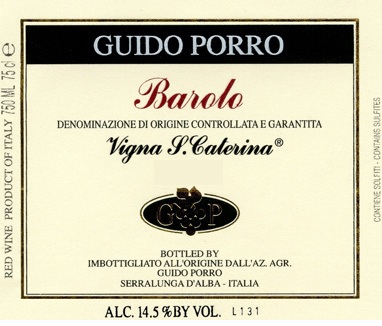
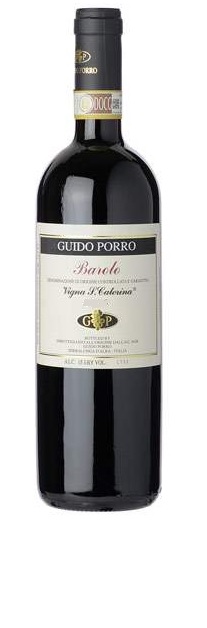
" We don't sell the wine without touching the vine "
| Country: | Italy |
| Region: | Piemonte |
| Winery: | Guido Porro |
| Grape Type: | Nebbiolo |
| Vintage: | 2011 |
| Bottle Size: | 750 ml |

All older vintage wines have been purchased from a single collectors cellar. Pictures can be requested before shipment.
Reviews:
On the savory side, this red opens with freshly mowed grass, hay and eucalyptus aromas before revealing cherry, strawberry, rose and mineral flavors. Fleshy, with a matrix of dense tannins flexing their muscles on the finish. Shows excellent potential. Best from 2023 through 2042.
-Wine Spectator 96 Points
Floral and red fruit nose. Supple attack, very polished and concentrated, with fine-grained tannins and ample acidity. This has a linear drive, precision. and a very long finish. The rewards will be substantial for the patient consumer.
-Decanter 97 Points
All older vintage wines have been purchased from a single collectors cellar. Pictures can be requested before shipment.
Antica Vigna Amarone della Valpolicella Riserva is made from 65% Corvina, 20% Rondinella, 10% Corvinone, 5% Merlot.
Amarone DOCG has maintained unchanged its typicality, so that “the essence of the territory” of Valle di Mezzane and Cazzano di Tramigna powerfully emerges. Rich in color, firmly structured but with fresh notes.
WINEMAKING AND AGING:
Manual harvest early October with selection of the best bunches.
Drying: natural drying in fruit cellar for 3/4 months with a sharp drop in weight of around 30%.
Vinification: soft crushing of destemmed grapes in the months of January and February.
Fermentation: at a controlled temperature of 18/21°C. Fermentation time: about 30 days
Aging:· 80% in oak barrels for 30 months of which 2/3 in American and French barriques, half of which are used for the second and third time, 1/3 in large
THE TERRITORY:
Geographical location: Tenuta di Mezzane, Tenuta di Cazzano di Tramigna
Height: 350/400 meters asl
Exposure: south
Soil type: limestone
Vineyard training system: guyot and pergola
Vine planting year: from 1972 to 2009
Vine density: 4,000 to 5,400 vines per hectare Vineyard management: sustainable agriculture and great attention to natural
cycles
Pairs well with grilled and roasted meats, as well as cheese.
Timeless Notes:
Dark cherry in color, firm on the palate with a vibrant acidity underbelly. Thought lush on the palate the flavors are complex and elegant from entry to mid-palate with hints of currant and wild berries. The finish brings in a touch of tobacco and leather notes ,classic examples of this region, with more ripe fruit flavors that linger on long strain tannin finish. Complex with depth and elegance on the palate. This one is drinking now, but can handle more time in the cellar with ease. An excellent value in the Riserva category.
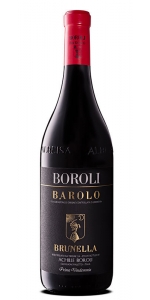
Boroli Barolo Brunella is made from 100 percent Nebbiolo.
A clear ruby red color, with very light orange reflections. A net aroma in which liquorice stands out at first, immediately followed by a fruity scent; the aroma makes you scent it again and again to discover different and pleasant facets. The fruity aroma magnificently prevails after a few minutes in the glass. A very enveloping, fresh and harmonious taste, with a delicate and tasty presence of wood. A long lasting taste that invites to sip it slowly again and again.
Tasting Notes
Brunella is distinguished by a careful selection of grapes, perfect destemming, long macerations with submerged cap. The barrels for Brunella are specifically chosen by the winemaker.
Wine Production
Brunella is one of the most historic single vineyard sites of all of Castiglione Falletto, however it hasn’t ever been bottled singularly under the Menzione Geografica Aggiuntiva BRUNELLA until 2013. The Brunella vineyard occupies the western crest of the Villero hillside and complete surrounds the Boroli winery. The vineyard is a monopole—owned entirely by Boroli and is the most prestigious wine in the lineup. As it occupies the best exposed section of the Villero hillside, La Brunella expresses power, drive, complexity, and extraordinary length and ageability.
About the Vineyard
The Boroli family is a family of entrepreneurs, with roots in Piedmont dating back to 1831. The family started their winemaking business in1997, when Silvano and Elena Boroli felt an ardent desire to step away from the pressures of their publishing business and reconnect to nature. Silvano and Elena grew the company until their son, Achille, stepped in to run the wine-growing and production business in 2012.
With the 2012 grape harvest Achille decided to radically change the methods used in vineyards and wineries, aiming for the highest quality in Barolo and its crus. He cut production levels, updated the winemaking technology, and focused on low intervention methods to raise the quality of the Boroli wines be on par with the finest Barolo wines.
Review:
Ripe red cherries and blood oranges, as well as herbs and roses on the nose, leading to a juicy and flavorful palate that has a swathe of bright, juicy red-fruit flavor. Drinking well now.
-James Suckling 93 Points
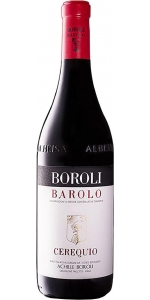
Boroli Cerequio is made from 100 percent Nebbiolo.
The Boroli family is a family of entrepreneurs, with roots in Piedmont dating back to 1831. The family started their winemaking business in1997, when Silvano and Elena Boroli felt an ardent desire to step away from the pressures of their publishing business and reconnect to nature. Silvano and Elena grew the company until their son, Achille, stepped in to run the wine-growing and production business in 2012.
With the 2012 grape harvest Achille decided to radically change the methods used in vineyards and wineries, aiming for the highest quality in Barolo and its crus. He cut production levels, updated the winemaking technology, and focused on low intervention methods to raise the quality of the Boroli wines be on par with the finest Barolo wines.
About the Vineyard
The Cerequio cru lies just across the valley from the Boroli winery in the commune of La Morra and is considered one of the most prestigious sites in the Barolo DOCG zone. It is known to produce Nebbiolo wine of enormous elegance and finesse.
Wine Production
Cerequio is distinguished by a careful selection of grapes, precise destemming, and a long maceration with submerged cap.
Tasting Notes
A clear bright ruby color with very light garnet red reflections; intense and persistent aroma of red fruit with notes of plum and cherry. A pleasant aroma of wood is noticeable after the fruity aroma, anticipating the full taste of a great wine suitable for long lasting life. A succulent, rich, full-bodied and pleasant taste emerges after the woody one, with the presence of slightly ripe red fruit.
Food Pairing
Thanks to its viscosity and body, Barolo is the ideal wine to pair with elaborate dishes and dishes like truffle dishes, meat dishes, pasta with porcini mushrooms, game, and aged cheeses. Cerequio is also perfect with dry pastries or chocolate.
Review:
Precise and essential, it displays notes of lavender, hibiscus, violet, white pepper, lime, jasmine flowers, and elderberry. Medium body, perfectly ripe, fine-grained tannins, and a juicy finish that displays smoothness and relaxation. Beautiful right away, it will only improve from 2024 onwards. One of the best Barolos tasted in the 2019 vintage.
-WineCritics.com 96 Points
Mint, pine, anise, tangerine peel and sweet red stone fruits hover from the glass in the 2011 Barolo Vigna S. Caterina. Deceptive in its mid-weight structure, the 2011 captures the best qualities of the year in its pliant, expressive personality. Today the tannins are soft and silky. - Antonio Galloni 90-92 Points
Guido Porro:
Reviews and notes on Guido Porro regularly refer to him as “under the radar”: the wines he makes are worthy of a stellar reputation, but he is too easygoing and unassuming to worry about whether the general wine-drinking public recognizes his name. He rarely bothers to send samples to wine writers. Guido is the fourth generation at an estate that has always been passed from father to son, and although fifth-generation Fabio hasn’t reached middle school, he is already showing a keen curiosity in the family business. The Porros continue to work just as their predecessors did—the only major change over the last few decades has been the decision to bottle at the estate instead of selling the wine in demijohns or barrels—and they like to keep things simple and down to earth. The door is always open, and Guido’s wife Giovanna never looks quite as happy as when she’s serving enormous platters of classic local dishes to a full table of guests.
The limestone-heavy soils of Serralunga d’Alba are known for providing the most long-lived and full-bodied Barolos. Porro’s vineyards are located here in the Lazzarito cru, a gorgeous amphitheatre that faces south-southwest and offers the grapes full sun exposure and protection from the wind. The sub-zones of Lazzairascoand Santa Caterina are both monopoli and share the same soil; however, different exposition and altitude bring distinct traits to each wine. Lazzairasco, a very hot site home to Guido’s oldest Nebbiolo, gives a more powerful, masculine wine, while the cooler, breezier Santa Caterina brings out the delicacy and elegance of Nebbiolo. Even Porro’s Barbera, a grape that is usually planted in lesser vineyards, enjoys a privileged place inSanta Caterina. Guido sticks to traditional methods in the vineyards and cellar, and he never gets in the way of the grapes’ natural expression.
• Vines are sustainably farmed, the equivalent of lutte raisonnée in France.
• Only indigenous yeasts are used
• Almost all barrels used (barriques, tonneaux, and botti) are at least 5th passage; new barrels are introduced occasionally as needed
• The Lazzairasco, Santa Caterina, and l’Pari vineyards are all monopolies
Langhe Nebbiolo “Camilu”:
• Maceration in cement vats lasts 20-25 days; pumping over 3-4 times daily
• Six or seven months in 500-L tonneaux
• Vines are located in the Serralunga within the Barolo DOCG
Langhe Rosso “Paesan”:
• Nebbiolo and Barbera vinified and matured separately
• Maceration in cement vats lasts 20-25 days; pumping over 3-4 times daily
• Nebbiolo: 1 year in tonneaux
• Barbera: 1 year in barriques
Dolcetto, Barbera:
• Maceration in cement vats lasts 7-12 days; pumping over 3-4 times daily
• Dolcetto: 2 months in botti then 10-12 months in cement vats before bottling
• Barbera: 4-6 months in botti then about 6 months in stainless steel before bottling
Barolos:
• Maceration in cement vats lasts 20-25 days; pumping over 3-4 times daily
• Three years in 15- to 25-hl Slavonian oak botti
Lazzairasco and Santa Caterina:
• Both vineyards in the Lazzarito cru of Barolo
• Lazzairasco: 300-350 m altitude; S/SE exposure
• Santa Caterina: 340-390 m altitude; SW exposure
Maggy Hawk Unforgettable Pinot Noir is made from 100 percent Pinot Noir.
HARVEST NOTES
All plants require water to grow, and grapevines are no exception. The 2021 growing season was our driest yet. The Maggy Hawk vineyard relies on rainfall in the winter and spring to fill our vineyard ponds to irrigate our vines during the summer months. These ponds ran dry a few weeks before harvest began. Fortunately, the grapes made it across the finish line without being affected by the drought. We typically harvest over 2-3 weeks. In 2021, everything was ready at once, and we harvested in just one and a half weeks. The clusters had a shorter ripening period and were harvested on the earlier side, which produced wines with intense hues, great acidity, and concentrated aromas and flavors.
WINEMAKING
Our 2021 Unforgettable Pinot Noir is crafted from a unique selection of five blocks and three clones from all corners of the Maggy Hawk vineyard. Upon arriving at the winery, we separate the individual blocks and allow the grapes to cold soak for 5 days before raising the temperature and beginning fermentation. The fruit is then pressed very gently, and the free run is kept separate from the harder pressing and racked down to barrels. The wine is allowed to go through malolactic fermentation on its own before being left to age in 30% new French oak barrels for 17 months. Finished unfined and unfitered.
Freshness, power and persistence. Unforgettable delivers a pronounced mix of fresh black cherry and red plum balanced by hints of dried lavender, bay leaf, anise and potting soil notes. A perfect balance of structured and juicy with smooth, rounded edges on the palate due to integrated tannin.
Review:
This wine is opulent, with aromas of Black cherry, red currant compote, cinnamon spice, and fresh florals on the nose. The flavors on the palate are Bing cherry, blackcurrant confiture, vanilla lime cream interwoven with dried herbs, bittersweet chocolate, earth and a long silky finish. Hold or Drink until 2032 Pair with Lamb Shoulder — Tonya Pitts
-Wine Enthusiast 94 Points
The 2021 Pinot Noir Unforgettable boasts a deeper red/ruby color and was aged in 38% new French oak. There’s more 667 clone in this blend, which reveals a darker profile in the glass, with red and black-fruited notes of black raspberries, brambly herbs, forest floor, and cedar. Medium-bodied, it has a broader shouldered feel, with lovely structure throughout and a lovely, ripe finish. It’s going to drink well over the coming 10 years.
-Jeb Dunnuck 94 Points
Pahlmeyer Jayson Red Napa Valley is made from 51% Merlot, 27% Cabernet Sauvignon, 11% Malbec, 7% Petit Verdot, 4% Cabernet Franc.
Voluptuousness meets vibrance in this classic Bordeaux-inspired blend. Ripe Merlot-dominant aromas of juicy macerated raspberry unfurl with hints of pencil lead, clove, cedar, and fresh sage. The compact fruit core, flanked by fine, polished tannin, surges open on a full, silky palate, giving way to complex underpinnings of earth and spice. A beam of bright acidity keeps the fruit fresh and focused through a soft, lingering finish of dusty plum and cocoa.
It’s best to serve this rich, layered wine at a temperature between 60°F and 65°F. Open and opulent in its youth, this wine is ready to match with a range of flavorful summer dishes such as Carolina-style pulled pork, bánh mì sandwiches, or bacon cheddar burgers.
Review:
This is a very polished wine in 2022, well-built with neatly knit tannins that form a solid foundation for the dark currant and blackberry fruit that floods the mid-palate. Good depth of concentration and driving energy create a sense of tension and vibrancy. Indeed not a shy wine, yet more approachable, with tannins almost melting away on the finish—very characteristic of the warm vintage. Grape sources include William Hill and Broken Rock in Napa, Stagecoach, Waters, and Round Pond in Rutherford, along with Cabernet Franc and Cabernet Sauvignon from the iconic Monte Rosso Vineyard in Sonoma. Grapes are sorted by hand, fermented in stainless steel with a small percentage in oak tanks, and then aged for 15 months in 80% new French oak. (JC)
-Decanter 94 Points