
" We don't sell the wine without touching the vine "
| Country: | France |
| Regions: | Burgundy Chablis |
| Winery: | Louis Moreau |
| Grape Type: | Chardonnay |
| Organic: | Yes |
| Vintage: | 2021 |
| Bottle Size: | 750 ml |

Domaine Louis Moreau Chablis Vaillons Premier Cru is made from 100 percent Chardonnay.
Chablis achieves its highly distinctive mineral character due to its cool northerly climate and its highly calcareous soil. The Domaine Louis Moreau Chablis Vaillons Premier Cru is a generous, fleshy and lively wine that displays a beautiful balance of minerality, fruitiness and elegance.
Chablis, with its steely character and fresh citrus flavor, pairs well with white fish and shellfish and its naturally high acidity can counterbalance cream-based sauces. Unoaked Chablis lends itself well to vegetables, starches, Comté, or fresh goat cheese.

Les Gentilhommes Pouilly Fuisse Premier Cru Clos Reyssier is made from 100 percent Chardonnay.
A gentilhomme is a gentleman characterized by his delicacy, thoughtfulness, and courtesy. "Les Gentilhommes" was created by brothers Richard and Stephane Martin as brand embodying the gentleman's character combined with Burgundian know-how.
From the work in the vineyard to the vinification in barrel, they are inspired to share these noble values. Quality, authenticity and long family tradition are the foundation of these wines.
Les Gentilhommes Pouilly Fuisse Premier Cru Clos Reyssier's description

Grand Veneur Chateauneuf Du Pape Vieilles Vignes is made from 50% Grenache, 40% Mourvedre, 10% Syrah
Matured in concrete vats (40%) and oak casks (60%)
It boasts an inky/purple color in addition to a gorgeous perfume of crushed rocks, jammy black fruits, charcoal and graphite. Blackberry aroma with an air of dates pressed in alongside – this is sweet-noted. It is easy to appreciate, a sleek and stylish start. The palate holds excellent fruit that runs well and has kick. Its tannins move round freely and a minted finale comes forward. Its dark fruit is tasty, darkens on the finish, where tar and char from its oak enter. It is all very much together, a bundle of harmony, and will gain local attributes as it ages.
An outstanding Chateauneuf du Pape which display the best of its terroir.
The vines are 50 to 100+ year old. They are planted on red clay soils covered with pebble stones.
Harvest is destemmed and crushed. Fermentation temperature is controlled at 30°C. Vatting period of 18 to 20 days. Matured in concrete vats (40%) and oak casks (60%).
The vines are 50 to 100+ year old. They are planted on red clay soils covered with pebble stones.
Harvest is destemmed and crushed. Fermentation temperature is controlled at 30°C. Vatting period of 18 to 20 days. Matured in concrete vats (40%) and oak casks (60%).
The vineyards are located in the north of Châteauneuf du Pape. GRAND VENEUR «Vieilles Vignes» cuvee is produced from the older vines. Thanks to time and an organic growing, roots go very deep in the soil. Yields are naturally low and grapes highly concentrated.
Winemaking and aging
Pair with venisson, duck, braised lamb or strong cheese.
Review:
"The 2021 Châteauneuf Du Pape Vieilles Vignes is even more powerful, with a dense purple color as well as serious notes of blackberries, currants, ground pepper, graphite, chocolate, and violets. I love its mid-palate density, it's medium to full-bodied, has building tannins, and a great finish. It's going to need short-term cellaring, but it’s one heck of an impressive 2021."
- Jeb Dunnuck (November 2021),94-96 pts
Grand Veneur Chateauneuf Du Pape Vieilles Vignes is made from 50% Grenache, 40% Mourvedre, 10% Syrah
Matured in concrete vats (40%) and oak casks (60%)
It boasts an inky/purple color in addition to a gorgeous perfume of crushed rocks, jammy black fruits, charcoal and graphite. Blackberry aroma with an air of dates pressed in alongside – this is sweet-noted. It is easy to appreciate, a sleek and stylish start. The palate holds excellent fruit that runs well and has kick. Its tannins move round freely and a minted finale comes forward. Its dark fruit is tasty, darkens on the finish, where tar and char from its oak enter. It is all very much together, a bundle of harmony, and will gain local attributes as it ages.
An outstanding Chateauneuf du Pape which display the best of its terroir.
The vines are 50 to 100+ year old. They are planted on red clay soils covered with pebble stones.
Harvest is destemmed and crushed. Fermentation temperature is controlled at 30°C. Vatting period of 18 to 20 days. Matured in concrete vats (40%) and oak casks (60%).
The vineyards are located in the north of Châteauneuf du Pape. GRAND VENEUR «Vieilles Vignes» cuvee is produced from the older vines. Thanks to time and an organic growing, roots go very deep in the soil. Yields are naturally low and grapes highly concentrated.
The vines are 50 to 100+ year old. They are planted on red clay soils covered with pebble stones.
Winemaking and aging
Harvest is destemmed and crushed. Fermentation temperature is controlled at 30°C. Vatting period of 18 to 20 days. Matured in concrete vats (40%) and oak casks (60%).
Pair with venisson, duck, braised lamb or strong cheese.
Review:
he 2021 Châteauneuf Du Pape Vieilles Vignes is even more powerful, with a dense purple color as well as serious notes of blackberries, currants, ground pepper, graphite, chocolate, and violets. I love its mid-palate density, it's medium to full-bodied, has building tannins, and a great finish. It's going to need short-term cellaring, but it’s one heck of an impressive 2021."
- Jeb Dunnuck (November 2021),94-96 pts

Clos Saint-Jean is a 41-hectare estate in Châteauneuf-du-Pape run by brothers Vincent and Pascal Maurel. Considered by many critics and wine-writers as the preeminent estate espousing the modern style of winemaking in Châteauneuf, this cellar is one of the oldest in the region, having been founded in 1900 by the greatgreat-grandfather of Vincent and Pascal, Edmund Tacussel. A short time after its founding and well before the AOP of Chateauneuf-du-Pape was created in 1923, Edmund began bottling estate wines in 1910.
The farming at Clos Saint-Jean is fully sustainable due to the warm and dry climate, which prevents the need for chemical inputs. Instead, Vincent and Pascal employ organic methods for pest control, mainly pheromones, to prevent pests from taking up residence in their vines, a process called amusingly enough in French, confusion sexuelle. The vines tended manually, and harvest is conducted in several passes entirely by hand.
Combe des Fous literally means, the hill of the fool. The hill, in this case, is located in the far southern reach of Le Crau which was left barren for many centuries because the layer of galets was so exceedingly deep that everyone assumed vines could never survive there. The fool in this situation is Edmund Tacussel, the great-great-grandfather of Vincent and Pascal Maruel who planted a Grenache vineyard on this site in 1905. That old-vine Grenache form the heart of this cuvée with a small amount of Syrah, Cinsault and Vaccarèse. La Combe des Fous is only made in the best vintages.
Review:
This has good concentration and energy to the dense core of dark fruit and bitter cherry, with great poise and elegance despite its ripeness (an impressive feat for the vintage). Guided by finely crushed mineral accents and tannins, this reveals pretty high-toned floral notes and leafy tobacco. Grenache, Syrah, Mourvedre, Cinsault, Vaccarese and Muscardin. Drink now through 2032. 900 cases made.
-Wine Spectator 95 Points

Grand Veneur Chateauneuf-du-Pape Rouge Les Origines is made from 50% Grenache, 30% Mourvedre and 20% Syrah
Matured in vats (grenache) and in oak casks (syrah and mourvèdre).
Deep and brilliant, purple-red colour. An exciting nose with aromas of black fruit (blackcurrant, cherry) spices and vanilla. This great aromatic complexity is found on the palate : the spices and ripe fruit appear with an elegant woodiness and harmonious tannins. The finish has good aromatic length and introduces a touch of liquorice and pepper.
A terrific Châteauneuf du Pape with great concentration and finesse.
Best between 2 and 20 years. Best to decant if young (less than 5 years old).
Soil type Extreme north of Châteauneuf du Pape. This plateau is made with a high quantity of red clay mixed with rocks. This area is considerated to be one of the best to produce rich and powerful red wines. By definition, LES ORIGINES will always deliver a great complexity and ageing potential. Winemaking & ageing Harvest is sorted by hand, destemmed and crushed. Fermentation temperature is controlled at 30°C. Vatting period of 18 to 20 days. Matured in vats (grenache) and in oak casks (syrah and mourvèdre).
Review:
"The full dry tannins shape the personality of this bold and crisp Chateauneuf. Aromas of dry earth, savory and black pepper. Seriously structured finish where the tannins need some time to resolve. A cuvee of 50% grenache, 30% mourvedre and 20% syrah. From organically grown grapes. Drinkable now, but best from 2025."
- James Suckling (April 2023), 92 pts
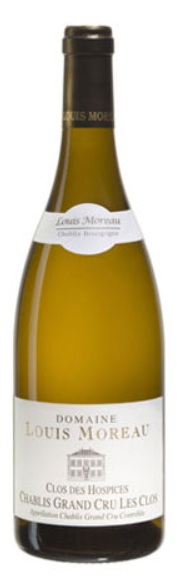
Louis Moreau Chablis Grand Cru Les Clos Clos Des Hospices is made from 100 percent Chardonnay.
Grand Cru Clos des Hospices is located in Grand Cru Les Clos and produces outstanding wines, opulent and generous.
Vinification Methods: Grand Cru Clos des Hospices dans Les Clos parcel is handpicked, like all our 1ers Crus and Grands Crus. We generally start picking in Grands Crus parcels first because the grapes ripen earlier thanks to their ideal exposure. We vinified Grand Cru Clos des Hospices dans Les Clos in stainless steel tanks for both alcoholic fermentation, activated with natural yeast for 15-18 days at low temperature (18°C) and malolactic fermentation, thanks to natural bacteria at 20°C for a few months.
Aging Methods: From vintage 2013, Louis decided that our monopole Grand Cru Clos des Hospices dans Les Clos will age only in tank, on fine lees, with minimum intervention, to let it express all its minerality and purity. Just before bottling, the cuvee will go through a light filtration and bottling. Generally, the bottling takes place 18-20 months after harvest.
Tasting notes: Grand Cru Clos des Hospices is located within Les Clos and it produces exceptional wines, displaying great generosity. Its nose is full and expressive, with a nice minerality that we find again in the mouth, confirmed by an elegant length in the finish.
Review:
Outstanding layers of passion fruit, pomelo and white peach underpinned by a lavish outlay of marzipan, coconut water and smoky mineral spice with a mouth-coating creamy scone texture and spine-tingling acidity. All-encompassing, immersive and everlasting. (Platinum) – DWWA 2024
-Decanter 97 Points
The Moreau family has been settled in Chablis since 1814 and today, Louis represents the 6th generation.
After he graduated in oenology-viticulture at Fresno State University (California) and worked for several wineries in California, Louis came back to Chablis and succeeded his father.
Based on his academic background and keen on passing a vineyard respectful of the environment to the future generations, Louis practices sustainable viticulture in the parcels. He always seeks for the most natural solution to preserve the quality of his vines and his grapes.

The Special Club concept started in 1971. A dozen wine growers from some old families of Champagne had an idea to familiarize people with the originality of the “Champagne de Vigneron” (Champagne of wine grower), thanks to prestigious vintages.
In the beginning, they created an association called the “Club des Viticulteurs Champenois” and chose a bottle with a special shape, created exclusively for them & used only by then. In 1988, they changed the bottle and the label. In 1999, the Club changed its name to “Club Trésor of Champagne.”
The Club Trésors comprises 28 artisan wine makers, selected from the finest areas of the Champagne region, each one recognized for the quality of their work. The Club Trésors is the only organization in Champagne to select its members according to a set of unrelenting quality standards:
Roland Champion's Special Club selection has rich and structured aromas. Very pleasant and generous roundness, nice length in mouth. Golden color with buttery and fruity aromas. All the expression of a magnificent terroir for your most pleasurable moments.

K Vintners Syrah Royal City us made from 100 percent Syrah.
Royal City for REAL. Perfume of great complexity. Camphor, black cherry and forest floor. All spice building on the palate. Suave and full of finesse with cured olive and wet earth. This is where elegance reigns supreme. – Winemaker, Charles Smith
Review:
Lots of lavender, cured meats, loamy earthy, and pepper as well as both red and darker fruits emerge from the 2018 Syrah Royal City, easily one of the richest, most powerful Syrahs in the lineup. Full-bodied and concentrated, with loads of meaty, gamey, spicy nuances, this rock star of a Syrah offers loads of pleasure today yet is going to benefit from 2-4 years of bottle age and cruise for another 10-15 years in cold cellars. It's a ripe, sexy, yet again, incredibly savory and meaty Syrah that could come from nowhere else!
-James Suckling 98 Points
Lots of lavender, cured meats, loamy earthy, and pepper as well as both red and darker fruits emerge from the 2018 Syrah Royal City, easily one of the richest, most powerful Syrahs in the lineup. Full-bodied and concentrated, with loads of meaty, gamey, spicy nuances, this rock star of a Syrah offers loads of pleasure today yet is going to benefit from 2-4 years of bottle age and cruise for another 10-15 years in cold cellars. It's a ripe, sexy, yet again, incredibly savory and meaty Syrah that could come from nowhere else!
-Jeb Dunnuck 98 Points

I feel this wine expresses the greatness of California and its hidden pockets where Cabernet can excel. The cold Pacific Ocean running the entire length of the state presents maritime influences – and with each small distance eastward the climate warms. Stony soils, south facing slopes and moderately warm conditions are the keys to producing dark, rich and good tasting Cabernet.
A small release from Caymus Vineyards, this wine is a California-appellation Cabernet Sauvignon – supple, dark and rich, bearing the signature hallmarks of Caymus. It is sourced from sites throughout the state which feature climatic conditions, soils and topography that are ideally suited to Cabernet. This project stems from excitement over California's diverse vineyard land, often in lesser-known areas, with the potential to produce exceptional Cabernet.

Zuccardi Finca Piedra Infinita Altamira is made from 100 percent Malbec.
Deep red in color, the Zuccardi Finca Piedra Infinita Altamira expresses great fruity character with notes of red fruit. Grand structure and acidity on the palate with mineral with notes of wet stone and graphite and a long finish.
Review:
Quiet complexity that needs time in the glass. While it is brooding and deep, there is also a perfumed, floral and herbal aspect that makes it so attractive and unforgettable, even at such an embryonic stage. Freshly crushed blueberries, dried licorice, decadent violets, crushed stones and ash on the nose. Satin-textured tannins on the palate, which are tense, chalky and seamless. Powerful and juicy with impeccable balance. A great, cerebral and intrinsic malbec from Argentina. You can drink now, if you want, but it is a wine that you’d want to keep for the next two decades. A real charmer, especially for the wine nerds. Buy this and try!
-James Suckling 99 Points

Vinsacro Dioro Seleccion is made from 100% Vidau (Blend of the de varietals Tempranillo, Graciano and Mazuelo with predominance of 70+ years old Garnacha).
A wine to enjoy.Vinsacro Dioro, a wine inspired by the Egyptian, Greek and Roman cultures that worshipped wine and gave it a sacred meaning associated with joy and festivity. It is the fruit of our best vineyards, living witnesses to the work and passion of the four generations that preceded us.
Pair with Roast lamb or pork, game, beef steaks, stewed meats. During the aperitive, it will accompany as well with aged and blue cheese.
14% Vol.
Grapes selected manually from our vineyards located on the southern slopes of Monte Yerga in the “Cuesta la Reina” estate. Grapes that are harvested with the utmost care, transported at low temperature in fruit boxes to the winery to avoid any damage to the fruit.
Fermentation is carried out with indigenous yeasts and the wine is kept in maceration for 30 days while breaking the cap daily. Afterwards, the wine is transferred to oak barrels where it remains for 17 months before bottling.
"Really sophisticated and polished with vanilla, coffee, earth and spice scents and oaky flavours. Long, brooding finish."
- Decanter World Wine Award (April 2022), 94 pts
"The 2019 Vinsacro Dioro Selección is a Vidau field blend sourced from Monte Yerga in Rioja Oriental. Aged for 18 months in French and Eastern European oak barrels, it is only released after five years in the cellar. Dark garnet in color, time in the glass reveals soy sauce, bay leaf and thyme notes, along with black fruit and chutney-like undertones. Dry and rich on the palate, it flows with softened tannins and a clingy mouthfeel, lingering long with an impression of tomato leaf. This is a complex, nuanced and solar red that will warmly captivate your palate. - Joaquin HIDALGO"
- Antonio Galloni's Vinous (April 2024), 94 pts

Young and present, this is an energetic and bold expression of violets, lavender, and cassis mixed with dark chocolate, cherry, plum, and graphite. A wine happy to be tucked away in the cellar, and it’s also expressing itself beautifully now.
Review:
Lovely fragrant blackberry and black cherry fruit, cassis, and rich tobacco spices with lovely fresh earth notes and a sweet kiss of new wood cedar. Incredibly concentrated dark berry fruit with fabulously angular tannins with smooth long beams with crisp edges. Purple florals, dried sagebrush, and chocolate shavings with lids of graphite and deep iron-like mineral character. And a finish of dark saturated fruit that goes and goes for days. There are purple floras too. Polished and bright, with vivacious acidity and freshness evident from the sip to the finish. Wow, this wine.
-Decanter 98-100 Points

Jean-Michel Sorbe Quincy Blanc is made from 100 percent Sauvingon Blanc.
The first nose is expressive and opens up to notes of acacia, citrus (lemon, grapefruit). Full on the palate with lovely freshness. This wine boasts nice balance and good length.
The vines are 15 to 20 years old and are located on the left bank of the Cher River, southwest of Quincy. This vineyard enjoys good exposure to the sun and overlies hillocks composed of sandy alluvial deposits and gravel dating back to the Quaternary Period. Each terroir is managed with minimal intervention in an environmentally friendly approach. Vinification: Slow pressing. Fermentation took place under controlled temperatures (18°C).The wine was aged on fine lees for a minimum of 4 months. It was filtered only once before being bottled.
Pair with crustaceans, asparagus, or goat's cheeses.
After pouring, allow the wine to breathe for a few moments in the glass before enjoying so that it may fully release all of its aromas.

Clos Du Val Yettalil is a Bordeaux blend of 70% Cabernet Sauvignon, 8% Cabernet Franc, 8% Petit Verdot, 6% Malbec, 5% Carménère, 3% Merlot
A tribute to Clos du Val's founding matriarch, Henrietta Goelet, Yettalil is the fullest expression of their Stags Leap District Estate. A blend of primarily Cabernet Sauvignon, the wine is supported by Cabernet Franc, Merlot, Malbec, Carménère, and Petit Verdot.
Yettalil draws you into the glass with captivating aromas of blackberry, plum, cherry compote, fresh sage, and spice. Expressive yet composed, the layers foretell a wine of character and complexity. As you taste, the wine sweeps across the palate with polished tannins and flavors of pure blackcurrant. The 2022 vintage's vibrant acidity carries the wine towards along, smooth finish.
Review:
Fragrant and expressive with aromas of red and black currants, lavender and fresh spearmint. Medium- to full-bodied with supple texture and fine, integrated tannins. There’s a cool-fruit elegance, layered with floral spices and a touch of cedar. Balanced and refined with quiet persistence. Very good. Drink now or from 2028.
- James Suckling 97 Points



