
" We don't sell the wine without touching the vine "
| BUY MORE! SAVE MORE! | ||||||||||||||||||||
|
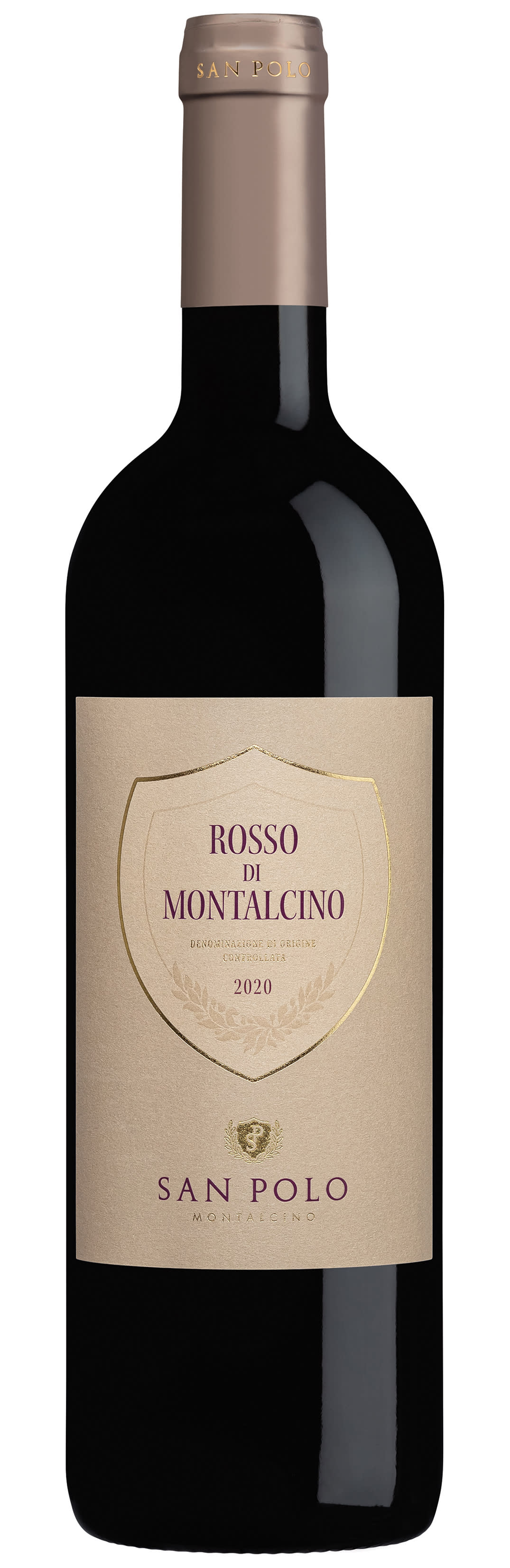
| Country: | Italy |
| Region: | Tuscany |
| Winery: | San Polo |
| Grape Type: | Sangiovese |
| Organic: | Yes |
| Vintage: | 2021 |
| Bottle Size: | 750 ml |
Bright and glossy ruby red in color. On the nose it reveals aromas of small fresh berries and a trace of sour cherry, melded with hints of blackberries and black cherries, followed by a hint of vanilla. A fragrant wine with satisfying intensity. On the palate it is warm, smooth and a medium-bodied with finely-balanced tannins. Dry and sinewy yet fresh with a persistent, aromatic finish.
It naturally accompanies dishes that are typical of Tuscan cuisine with its bold, authentic flavors, such as pasta and risottos made with mushrooms or truffles, pork, grilled meats and medium-matured cheeses.
Review:
Notes of ripe cherries, dried flowers and walnuts with hints of anisette and licorice. Medium- to full-bodied, compact and dense with creamy tannins and steady acidity. Weighty and structured. Drink or hold.
-James Suckling 91 Points
There are wine cellars constructed to tell stories of the men and women who have been carrying out their work with determination and resilience for years. Wine cellars that speak to us about blessed vintages and others that were less productive. Then there is San Polo’s wine cellar which is all of this and much more. A wine cellar created with the desire to keep the passion that has been handed down for generations, but with an eye always looking towards the future. Inspired entirely by the principles of eco-sustainability and sustainable architecture, it completely blends in with the surrounding landscape.
Visual aspect: Straw yellow color with persistent mousse.
Aromas: Fruity notes of delicious Golden apple and Kaiser pear with a pleasant citrus background.
Mouthfeel: The wine is well balanced with a nice acidity and minerality, combined with freshness and complexity.
The finish is long and very pleasant.
Area of origin: Valdobbiadene, Conegliano, Vittorio Veneto.
Soil: calcareous clayey
Varietal: Glera (known as Prosecco)
Harvest: manual harvest with grape selection
Winemaking: off skins by gentle pressing.
Primary fermentation with controlled temperature by selected yeats.
Refinement :Stainless Steel tanks
Foaming: secondary fermentation in "autoclave" (cuve close) at a controlled temperature with selected fermentation as long as a 5 bar pressure is reached.
Fining: 60 days
Training system: autochthonous called "capuccina modificata"
Bottling: isobaric bottling after sterile filtration.
It is ideal for important occasions and as an aperitif. It is also excellent with risotto and noble meat.
Livia Fontana Barbera d'Alba Superiore is made from 100 percent Barbera.
Organoleptic characteristics: intense ruby red color. Fresh and intense aromas with currants and berries notes. Warm, full, rich and persistent taste, full body. Suitable for long aging.
Excellent accompaniment to warm appetizers, rich first courses, red meat and the medium-seasoned cheeses.
Alain de la Treille Pinot Noir is beautifully balanced with an elegant ruby robe. The mouth is velvety with black cherry aromas.
Average age of the vines: 25 years.
Classic red vinification and Maturation in stainless steel vats.
Malolactic fermentation.
Wine is filtered before bottling.
It delights those who prefer drinking red wine with fish and is an ideal partner with charcuterie, white meats and mild cheeses.
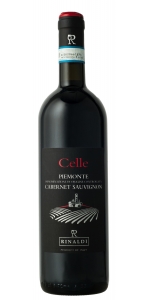
Rinaldi Celle Piemonte Cabernet Sauvignon is made from 100% Cabernet Sauvignon.
Intense red color with purple reflections. The characteristic aroma is pleasant and dominated by notes of blackberry, plum and black currant. A short passage in wood gives it elegance and complexity.
Livia Fontana Barbera d'Alba Superiore is made from 100 percent Barbera.
Organoleptic characteristics: intense ruby red color. Fresh and intense aromas with currants and berries notes. Warm, full, rich and persistent taste, full body. Suitable for long aging.
Excellent accompaniment to warm appetizers, rich first courses, red meat and the medium-seasoned cheeses.
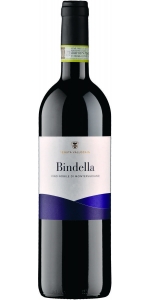
Bindella Vino Nobile di Montepulciano is made from 85% Sangiovese, 15% Colorino del Valdarno, Canaiolo nero and Mammolo.
Elegant, with typical hints of iris, rose and red berries together with balsamic notes after several years of ageing in the bottle. Balanced, pleasantly tannic and well-bodied on the palate.
A wine of great authenticity to accompany pasta with elaborate sauces, red meat, truffles and soft or mature cheeses.
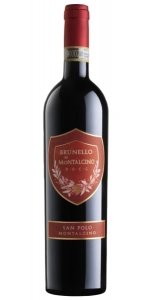
Poggio San Polo Podernovi Brunello di Montalcino is made from Sangiovese.
Intense ruby red in color with garnet hues, clear and glossy. The bouquet exhibits typical aromas of violets and small red berries. Subtle nuances of forest undergrowth, aromatic wood, a touch of vanilla and jammy mixed fruit then give way to subtle hints of coffee. This Brunello is intense, persistent, broad and heady. Full-bodied and warm on the palate, with a densely-woven texture and robust body, it has a persistent finish with well-rounded tannins. The particular features of the terroir at San Polo produce a Brunello with a capacity for lengthy aging, while patient cellaring enhances the wine during ageing in the bottle.
Review:
Lovely purity of fruit with ultra fine tannins and depth, finesse and complexity. Black cherries, cedar and some flowers. It’s full-bodied with very fine tannins that drive the finish. Give it a year or two to open more, but already so enticing. Drink or hold.
-James Suckling 96 Points
The San Polo 2015 Brunello di Montalcino Riserva (with 8,000 bottles produced) is a textured wine with hearty fruit and touches of smoked meat and spice. At its core, the wine offers dark fruit, blackberry and ripe plum. The rich fruitiness of the wine cedes to campfire ash, mahogany and furniture wax. These results are sultry and even a bit flashy, with distant background tones of teriyaki and plum sauce. The wine is fermented in cylindrical oak fermenters and aged in oak for three years. We'll see this bottle hitting the market sometime after February 2021.
-Wine Advocate 95 Points
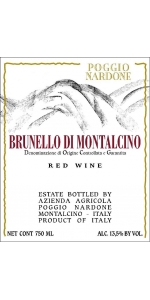
Poggio Nardone Brunello di Montalcino is made from 100 percent Sangiovese Grosso.
The rich nose displays scents of spices combined with aromas of small red ripe fruits, blackberry and blueberry.
Well structured, determined and elegant, with round and silky tannins. Very nice finish.
Alcoholic fermentation was done in tank, malolactic fermentation in oak barrels. Wine was then aged for 3 years in French oak barrels.
Review:
Powerful and classic, it alternates in the best way the floral features of magnolias, gardenias and hawthorn with fruity notes reminiscent of plums, pressed blueberries and lemon juice. Medium-full body, smooth and relaxed in the sip, it closes harmonious and balanced. How beautiful! Better from 2024.
Raffaele Vecchione - WinesCritic.com 94 Points
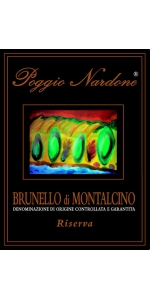
A ruby red garnet color, ripe fruit aromas, dried fruits, hints of licorice and scents of vanilla. Robust and harmonious in the mouth, a rich texture. The wine is only produced in the best vintages.
The grapes are coming from a vineyard planted at 400 meters above sea level. The soil is mainly marl and limestone.
The density of vines per hectare is 5,000 plants, which is equivalent to 2,000 vines per acre.
The pruning technique used is cordon
The grapes used are 100% Sangiovese grosso
Alcoholic fermentation was done in tank, while the Malo-Lactic fermentation was carried in oak barrels.
Wine was then aged for one year in big French oak barrels and 3 years in Slavonian oak barrels.
Review:
Rich and very slender in the sensory profile alternating notes of black prunes, blackberries, sandalwood, incense, camphor, withered white flowers and vetiver. Hints of woodland undergrowth animate the secondary scene giving it a dark character. Full bodied, soft tannins and a solidly performing finale. Better from 2024.
Raffaele Vecchione - WinesCritic.com 93 Points
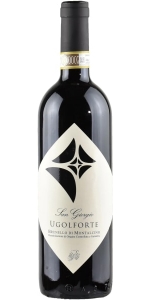
San Giorgio Ugolforte presents a dark core of red and black berry fruit layered with earth, leather, smoke, and herbs. Complex and elegant, the wine is full on the palate and firm in tannin structure. Refreshing acidity frames a graceful finish. Classic Brunello di Montalcino.
This red is marked by cherry, plum, thyme, sage and loam aromas and flavors. Lively and firmly structured, featuring a saline undercurrent. An open-knit version, with nice equilibrium, fine energy and a long, resonant finish.
-Jeb Dunnuck 94 Points
-Wine Spectator 94 Points
Poggio Nardone Brunello di Montalcino is made from 100 percent Sangiovese Grosso.
The rich nose displays scents of spices combined with aromas of small red ripe fruits, blackberry and blueberry.
Well structured, determined and elegant, with round and silky tannins. Very nice finish.
Alcoholic fermentation was done in tank, maloactic fermentation in oak barrels. Wine was then aged for 3 years in French oak barrels.
Review:
Noble and decidedly balsamic in the primary profile alternating notes of peppermint, eucalyptus, green tea leaves and guaranà. A lot of very delicate dried cherries are housed in the background giving brilliance and crunchiness. Medium bodied, well extracted mature tannins and a finale which squeezes from the centre palate onwards. Better from 2025.
- WinesCritic.com 93 Points
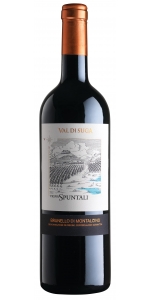
This is a 6 pack with 2 bottles each from vintages from 2013, 2015, and 2016.
***Tenimenti Angelini Val di Suga Vigna Spuntali Brunello di Montalcino 2016:
The 2016 Vigna Spuntali Brunello di Montalcino is the most brooding of the lineup from Val di Suga and is sourced from the southwest of the region on sandy soils. There are aromatics of black raspberry, licorice, menthol, sage, cinnamon, and iron-rich earth. Its Mediterranean influence is felt on the palate with ripe black cherry, dried herbs, and sun-baked earth. This is the fullest bodied and most savory of the Val di Suga lineup, with more roundness and grip. Its structure will benefit from cellaring for several years and will be great drinking over the next 20 years or more. 2026-2040.
-Jeb Dunnuck 96 Points
***Tenimenti Angelini Val di Suga Vigna Spuntali Brunello di Montalcino 2015:
The 2015 Vigna Spuntali Brunello di Montalcino is more introverted on first opening, with notes of black plum, licorice, dried Mediterranean herb, and sun-baked earth. On the palate, it offers a tart dried fruit character, with a building tannin structure that finishes with tomato leaf, and bitter herbs. The most rustic and burly of the wines in the lineup of the 2015 Val di Suga vintage, it will benefit from allowing some time in cellar to see how this matures and its tarriness develops. Drink 2026-2036
-Jeb Dunnuck 94 Points
***Tenimenti Angelini Val di Suga Vigna Spuntali Brunello di Montalcino 2013:
Plenty of spices and fresh herbs on the nose, such as dried rosemary and nutmeg, to match the underlying dried redcurrants and cranberries. Full-bodied with plenty of concentration, but still shows a very sturdy, tannin backbone and punchy acidity, to drive this through to a long finish. Drink in 2021.
-James Suckling 94 Points
G.D. Vajra Bricco Delle Viole Barolo is made from 100 percent Nebbiolo.
The Barolo Bricco delle Viole shows the signature verticality of its vineyard. The wine is beautifully layered and - while restrained as it’s always the case in the youth of Bricco delle Viole - it also shows a complexity of layers with purple flowers, sweet spices and mineral tones. The palate is noble, with a refined acid spine and profound tannins that promise a long aging potential.
Among the historical vineyards of Barolo, Bricco delle Viole is the highest and the closest to the Alps. It rises from 400 to 480 meters above sea level, on the Western ridge of the village. Its name, “Hill of Violets”, originates from the flowers that blossom early here due to the perfect south exposure. Up above the fogs, Bricco delle Viole enjoys the earliest sunrise and the last sunset every day. Thanks to its vines dating back to 1949 and -now- 1931, a dramatic diuturnal temperature range and this pure light, Bricco delle Viole generates a sophisticated and profound Barolo DOCG of bright aromatics, chiseled tannins and subtle minerality. 2018 is a vintage that shows many nuances of Bricco delle Viole: beyond the signature verticality of this site, the wine offers high tones laced with mineral nuances and plenty of energy and youth.
Review:
The 2018 Barolo Bricco delle Viole is not super intense, but it is balanced in its own way. The wine is subdued but complete with softly yielding tannins to support an elegantly streamlined mouthfeel. Bricco delle Viole is a high and cool growing site in Barolo at 400 to 480 meters in elevation with characteristic Sant'Agata marl soils with fossils. The wine represents a selection of fruit from over seven hectares. With fermentation in steel tank and aging in large Slavonian oak, you are invited to a silky, lifted and beautifully delicate experience with an accessible personality.
-Wine Advocate 95 Points
An elegant version, this red features rose, black currant, cherry, mineral and a hint of eucalyptus aromas and flavors. Linear in profile, this is solidly built on a graceful frame, with finely woven tannins and vibrant acidity.
- Wine Spectator 95 Points
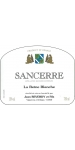
Jean Reverdy Sancerre Blanc is 100% Sauvignon Blanc
Single vineyard. Vinification: cold fermentation in stainless steel tank, no oak, no malolactic fermentation.
Sweet, fruity and clean. White flowers (acacia, jasmine) and citrus fruits aromas. Perfectly balanced.
A delicious wine, perfect with fish dishes, especially salmon, and a local goat cheese Crottin de Chavignol.



