
" We don't sell the wine without touching the vine "
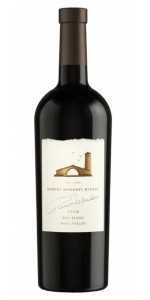
Robert Mondavi Winery Napa Red Blend is made from 74% Cabernet Sauvignon, 13% Cabernet Franc, 9% Merlot, 4% Petit Verdot.
Robert Mondavi’s vision was to elevate Napa to the world stage. In celebration of his achievement, our Napa Tier wines are sourced from distinctive vineyards throughout the Napa Valley and truly emulate a classic Napa Valley style.
Nearly half of this year’s blend is sourced from the deep, well-drained soils of Oakville, which provides gorgeously dark, supple wines with fine tannins. Stags Leap District, Oak Knoll, Yountville, and Rutherford also find their place in the bottle, with the varying mesoclimates and soils of these vineyards integrating seamlessly into a 100% Napa Valley blend.
Review:
"Dominated by 80% Cabernet Sauvignon with smaller percentages of the other Bordeaux red grapes, this wine speaks of heritage and prestige. Broad, silky, and powerful, the graceful liquid is enhanced by dark chocolate, white pepper, black plum, violets, and sweet earth."
-Meridith May, Tasting Panel, January/February 2023 Pts. Tasting Panel
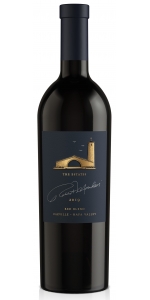
Robert Mondavi Winery The Estates Red Blend is made from 49% Cabernet Franc, 47% Cabernet Sauvignon, 4% Petit Verdot.
Robert Mondavi’s vision was to elevate Napa to the world stage. In celebration of his achievement, our Napa Tier wines are sourced from distinctive vineyards throughout the Napa Valley and truly emulate a classic Napa Valley style.
Aromas of blackberry, cherry, toasted almond, bay leaf and mocha. Luscious ripe cherry and cassis, with savory notes of dried herbs and toast. Rich, weighty, and mouth-coating, with classic fine To Kalon tannins.
Review:
This has a pretty fragrance of violets, green peppercorns, salted olives, blackcurrants and black raspberries. Creamy, salted dark chocolate and praline to follow. Medium-to full-bodied with fine-grained tannins. Delicious and superbly balanced. 50% cabernet franc, 47% cabernet sauvignon and 3% petit verdot.
-James Sucking 94 Points
The 2019 Red Blend Estate comes all from the To Kalon Vineyard and is close to an even split of Cabernet Franc and Cabernet Sauvignon. It's a clear step up over the base Red Blend and offers terrific, full-bodied aromas and flavors of darker fruits, dark chocolate, violets, and a kiss of spring flowers. With silky tannins, terrific balance, and outstanding length, it's going to evolve for 15 years or so.
-Jeb Dunnuck 94 Points
Sale price good on website only and wine must be shipped to your home.
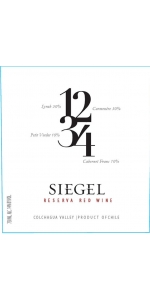
Siegel Reserve Red Blend 1234 is made from 50% Syrah, 30% Carmenère, 10% Cabernet Franc and 10% Petit Verdot.
Deep ruby color. Intense aromas of black fruits, white pepper, spices and a hint of clove. The blend of four varieties gives a complex, deep wine with juicy tannins, good volume and very balanced.
Pre-fermenting cold maceration for five days, alcoholic fermentation at 26-28 C to obtain color and structure. Post fermentation maceration of two to three weeks according wine tasting and then the wine is separated from the skins. The wine ends its malolactic fermentation in tank. Harvest: by hand (30 day harvest window)
Paella, Confit de Canard (duck confit) and pastas.
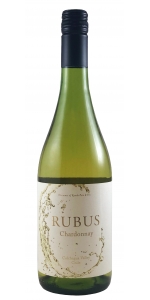
Rubus Chardonnay Colchagua Valley is made from 100 percent Chardonnay.
Attractive yellow color with some green tones. Its intense varietal character reminds one ripe fruits like pineapple, with notes of melon and honey well harmonized with oak. In the mouth it is full, rich and buttery.
Grapes are harvested in the morning in order to avoid high temperatures.
At the winery, the grapes are gently pressed.
Alcoholic fermentation is held between 15º and 16º Celsius.
Then, 25% of the wine goes into American Oak barrels for 3 months.
After this, the blend is made, clarified, cold stabilized and filtered. Right before bottling, the wine goes through an on-line filtration system (plate and sterile membrane) to ensure microbiological stability
As far as the food pairing, it is delicious with pasta, fish, seafood and mild cheeses. It is also delicious on its own as an aperitif.
SALE!
Lodi, American Viticulture Area (AVA) – The Lodi AVA is located in the northern end of the San Joaquin Valley, Central Valley California, east of the San Francisco Bay. Lodi has warm days and cool nights, similar to the Mediterranean climate. The lower temperatures that occur in Lodi result in fruit with good acidity. A wide range of soils are found in the Lodi AVA, but they generally are deep, loamy, sandy, rocky soils similar to that found in southern Rhone valley.
The Lodi appellation totals almost one half million acres, and the approximately eight hundred growers farm roughly 90,000 acres. Lodi produces more Cabernet Sauvignon, Chardonnay, Merlot, Sauvignon Blanc, and Zinfandel than any other wine region in California, but it is probably best known for its old vine Zinfandel. The vines are often head trained giving them a classic old world appearance.
Zinfandel – The Zinfandel grape is a hearty variety that produces grapes with high sugar levels, often resulting in wines with a high alcohol content. Thought to be a relative of Primitivo that is found in southeast of Italy (the boot heel), Zinfandel can be made into a wide range of wine styles, including White Zinfandel, light or full bodied red wines, and even late harvest desert style wine. However Zinfandel, especially Old Vine Zinfandel from Lodi, is usually made into a full bodied, spicy red wine with characteristics of red fruit, raspberry, and cherry.
Produced in the heart of Lodi AVA.
Rubus Zinfandel Lodi is made from 98% Zinfandel + 2% Cabernet Sauvignon
Bottled after aging in French and American oak for 9 months.
Rubus Zinfandel Lodi presents with ruby red in color, with red fruit, raspberry, and spice on the nose. This wine is medium in body, with notes of ripe cherry, cedar box, cinnamon, anise, black pepper, and hint of smoke on the palate. It has a long, silky finish.
Selected by Fran Kysela MS.
Laird Jillians Red Blend is made from 65% Cabernet Sauvignon, 18% Syrah, 10% Merlot, 5% Malbec and 2% Petit Verdot
21 months in 75% French Oak and 25% American Oak (40% new and 60% neutral)
Vineyard: Cabernet Sauvignon (60% Mast Ranch + 40% Linda Vista Ranch), Syrah (100% Eagle Vines Ranch), Merlot (100% Big Ranch), Malbec (100% Flat Rock Ranch) and Petit Verdot (100% Flat Rock Ranch).
Appellation: Napa Valley
Our family has been proudly growing grapes in Napa Valley for two generations; this unique fusion of four varietals honors the youngest member of the third generation in our farming family, our daughter Jillian. This Left Bank Bordeaux-style blend with a twist of Rhone is structured, but easy to drink. Jillian’s is the only blend we make and it’s our most popular red wine.
Tasting Notes: Complex and precocious just like the real Jillian. Its deep, ruby red appearance accompanied by viscous legs leads the way to a seductive bouquet of toasted oak, lavender and ripe strawberries. A medium bodied palate, with delicate tannins and acidity, leads the way to tart dusty cherries and boysenberries that dance across your palate, while flavors of clove, vanilla and blueberry custard unfold on the finish.
Rubus White Blend is made from 80% Colombard, 10% Ugni Blanc and 10 % Gros Manseng
Fresh, clean and lively with intense exotic fruit aromas. Crisp, clean and zesty in the mouth, it offers delicate flavors of citrus fruit and grapefruit, and a long lingering finish.
This is blend of three different grape varitals, all vinified separately.
Soil type is argilo-calcaire (limestone and clay)
Wine was aged on the lees for 3 months before bottling giving that extra boost of flavors..
A special bottle was used, darker, in order to protect the wine from the sunlight, gaining a few extra month of freshness, combined with the screwcap that also extands shelf life.
Enjoy as an aperitif or with grilled fish, shellfish and appetizers.
The Rubus Concept
Rubus wines are a private label created and used by Kysela Pere et Fils, LTD in order to buy, bottle and market wine found at incredible quality/price ratio. All Rubus wines are selected by Fran Kysela MS.
It was first used for a superb batch of 1,200 cases of Amador county Zinfandel back in 1997. The wine sold in a few days and the Rubus brand was not used since then.
During a trip in California in 2009, when Fran Kysela tasted some incredible wines (available in bottle but without label), he decided to help resurrect the brand creating an outstanding Cabernet Sauvignon from Stag's Leaps district in Napa Valley (California) , followed by an excellent Chardonnay from Russian River Valley (California)
We then developed the Rubus Zinfandel from Lodi (California).
In 2011, we added a Shiraz/Viognier blend from the Barossa in Australia.
For 2012, the newest addition to the Rubus line is a Chardonnay from Colchagua Valley in Chile.
Rubus is now its own brand representing quality for the consumer and an incredible price along the way.
Rubus Meaning
The name RUBUS means "raspberry" in Latin and it is the name given to the genus of flowering plants in the rose family. For instance, here are some famous fruit from the Rubus family with their latin names:
Rubus fruticosus agg. – Blackberry
Rubus idaeus – European Red Raspberry
Rubus occidentalis – Black Raspberry
Rubus pensilvanicus – Pennsylvania Blackberry
Rubus strigosus – American Red Raspberry
Palacio del Burgo Rioja Blanco is made from 100% Viura.
The wine shows a brilliant pale yellow color. The nose is elegant and very fruity, with straw and pineapple notes. The taste is intense, being extremely fruity with fresh balanced acidity.
Palacio del Burgo White Wine has been created to accompany all kinds of meals and be the perfect glass of wine to illuminate those memorable low light encounters. This wine is the product of the winemaker's efforts to highlight the fruit. The structure and mouth feel of the wine compliment and balance the fruit.
Enjoy it with white fish dishes and seafood.
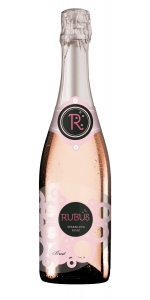
Rubus Brut Rose is made from 60% Tempranillo, 40% Bobal.
The Rubus Project was created by Fran Kysela as a way to source & sell incredible wines at value prices. All wines in this international project are hand-selected by Fran Kysela. Rubus wines are fruit driven, true-to-type values that over deliver - a true representation of quality for the consumer at an excellent price.
Stunning salmon-pink hues. The nose is intense and fine, dominated by notes of red berries. On the palate, the combination of fine bubbles and delicate aromas produces a delightfully light and silky rosé.
Machine harvest. The base wine is fermented at a low temperature. The second fermentation takes place at 14°C for 2 weeks, followed by dosing.
DuMOL 'Chloe' Chardonnay is made from 100 percent Chardonnay.
Our first vintage of Chloe was 2000, and although the vineyard mix has changed over the years, the wine has always focused on the central Russian River Valley district to represent the richest side of DuMOL Chardonnay. The wine has lower acidity than our coastal wines, making it more approachable in its youth, and the flavors focus more on orchard fruits than citrus. The neighboring El Diablo and Flora Marie vineyards sit overlooking the river on gravelly loam soils and provide the wine's deep fruit generosity. These are the first vineyards we harvest each year as the lean soils really advance their crop’s ripening. We offset this fruit richness with grapes from our Green Valley Bressay Estate, which overflow with tense structure and coastal acidity. It’s a seamless combination that produces a thrilling result, and Chloe is the first of our designate Chardonnays you should open each vintage.
The wine’s aromas and flavors are akin to peach, apricot, oatmeal and anise. Fresh thyme and honey notes combine with tangerine and lemon curd. It’s a deeply textural and expansive wine that gently glides along the palate. Lively acidity and spicy notes of ginger and white pepper provide lift and energy to the finish. A beautiful, layered, and richer style to enjoy soon after release. Drink between late-2024 and 2029 and serve no cooler than 55º F.
Review:
A Central Russian River Blend, the 2022 Chardonnay Chloe is a bright yellow hue and captures a wide spectrum of citrus with notes of orange, Meyer lemon, fresh pineapple, toasted spice, and a hint of almond through the mid-palate as well as a nice lift of citrus on the finish. It’s a beautiful wine offering a richer tone through the range. Drink 2024-2034.
-Jeb Dunnuck 96 Points
Weinkeller Erbach Riesling (liter) is 100 percent Riesling.
Round and refreshing wine with light touches of lemon and lime on the nose. Slightly sweet mouthfeel, with juicy and fruity flavors.



