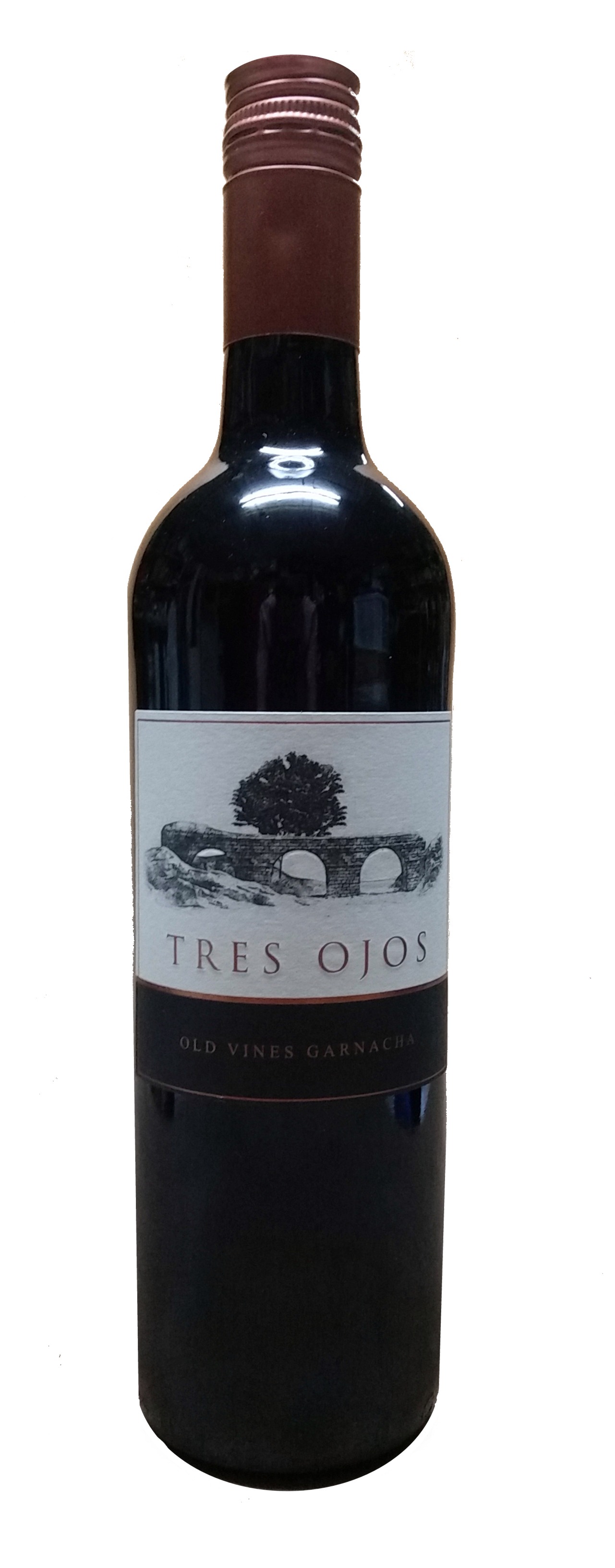
Tres Ojos Garnacha Calatayud is made from 100 percent 85% Old Vine Garnacha (40-50 year old vines) and 15% Tempranillo.
The wine has a brick red color with a bouquet of red raspberries, spice and white pepper. The palate is incredibly concentrated and rich. The modern styles of Garnacha in Spain are continuously being perceived worldwide as wines of extraordinarily good quality. This wine is fruity, juicy and shows a great depth, ripe tannins, length but yet with wonderful elegance and lightness.
The wine ferments for 7 days at 30ºC, followed by 14 days maceration on the skins. Aged 12 months in large stainless steel vats. Cold stabilized and lightly filtered before bottling
Enjoy with sausages, roasted meats, aged cheeses etc.
Tres Ojos Rosado Calatayud is fresh, crisp and juicy Rose made of 50% Garnacha and 50% Tempranillo displaying beautiful strawberry and raspberry fruits. Enjoy with salads, chicken or simply with a glass. Serve chilled.
Tres Ojos Rosado Calatayud is fresh, crisp and juicy Rose made of 50% Garnacha and 50% Tempranillo displaying beautiful strawberry and raspberry fruits.
Enjoy with salads, chicken or simply with a glass. Serve chilled.
Es Lo Que Hay Garnacha is made from 95% Garnacha, 5% Moristel, Miguel de Arco and Provechón (Bobal). 75 to 100 year old vines.
“ES LO QUE HAY - it is what it is. A common Spanish expression, but one I like to reserve for the few old high altitude Garnacha vineyards that survive in Aragon . What you taste in the bottle is a true expression of what there is in the vineyard. It´s as simple as that.”
High altitude ancient vineyards (75-100 years) at 1,000 to 1,100 meters above sea level with Pizarra slate and quartzite soils. Completely dry grown and unirrigated, this is an inhospitable continental climate with extreme changes of temperature where mountain herbs, almonds, cherry trees and Garnacha form a breathtaking patchwork. Low annual rainfall of 200-300mm and the remarkable soils produce fine and elegant Garnacha which is punctuated by intense black fruit flavors with complex mineral, smoke and garrigue notes.
Review:
"The red 2019 Es Lo Que Hay is mostly old-vine Garnacha with 5% other grapes, mostly Moristel with a little Miguel de Arco and some Provechón (Bobal), from very stony old vineyards in the village of Villarroya de la Sierra. The grapes fermented together with 20% full clusters in concrete and were destemmed after a five-day cold soak with the natural yeasts; then the wine matured mostly in concrete with some leftovers in Flextank egg for 15 months. It's ripe without excess (14.26% real alcohol), balanced by low pH and good acidity and has a powerful Mediterranean profile, round and full-bodied, with hints of dry hay and straw and a touch of dark chocolate. The 2019s are evolving nicely and should have a positive development in bottle, and this is a good example. 8,270 bottles produced. It was bottled in December 2020. - Luis Gutiérrez"
- Robert Parker's Wine Advocate (November 2021), 93 pts
"The 2019 Garnacha Vinas Viejas is just about all Grenache (there are small amounts of Moristel, Miguel de Arco, and Bobal) from ancient vines that saw a touch of stems and aging in concrete tanks. This plump, medium to full-bodied, round, downright sexy beauty gives up lots of ripe red and black fruits as well as peppery spice, herbes de Provence, and sandalwood. It's balanced, has supple, incredibly polished tannins, no hard edges, and is just a beautiful Garnacha that has so much to love. It will keep for 5-7 years, if not longer."
- Jeb Dunnuck (August 2022), 93 pts

G.D. Vajra Bricco Delle Viole Barolo is made from 100 percent Nebbiolo.
The Barolo Bricco delle Viole shows the signature verticality of its vineyard. The wine is beautifully layered and - while restrained as it’s always the case in the youth of Bricco delle Viole - it also shows a complexity of layers with purple flowers, sweet spices and mineral tones. The palate is noble, with a refined acid spine and profound tannins that promise a long aging potential.
Among the historical vineyards of Barolo, Bricco delle Viole is the highest and the closest to the Alps. It rises from 400 to 480 meters above sea level, on the Western ridge of the village. Its name, “Hill of Violets”, originates from the flowers that blossom early here due to the perfect south exposure. Up above the fogs, Bricco delle Viole enjoys the earliest sunrise and the last sunset every day. Thanks to its vines dating back to 1949 and -now- 1931, a dramatic diuturnal temperature range and this pure light, Bricco delle Viole generates a sophisticated and profound Barolo DOCG of bright aromatics, chiseled tannins and subtle minerality. 2018 is a vintage that shows many nuances of Bricco delle Viole: beyond the signature verticality of this site, the wine offers high tones laced with mineral nuances and plenty of energy and youth.
Review:
A juicy Barolo, with vibrant acidity and a fluid profile that exudes cherry, raspberry, mown hay, mineral and eucalyptus aromas and flavors. Tight yet long, with excellent potential.
#26 Wine Spectator Top 100 of 2023
The last wine poured at my tasting at the winery is the G.D. Vajra 2019 Barolo Bricco delle Viole. With its high vantage point in the hills west of Barolo, Bricco delle Viole is a world apart in terms of soils (with Sant'Agata marl and fossils) and even harvest times. Slow and careful ripening like the kind that characterizes fruit in 2019 renders a very delicate and ethereal expression with floral tones, wild mint and licorice. This organic wine is solid in build and structure. Indeed, Isidoro Vaira remarks that Nebbiolo tannins have changed since the 1970s and 1980s.
-Wine Advocate 97+ Points
Jeweled in appearance, the 2019 Barolo Bricco Delle Viole may be the best wine I have tried yet from Vajra. Its gorgeous and alluring perfume of fresh roses is followed by a Burgundian, elegant red with incredible length and no harsh edges, fine and present tannins, and beautiful, graceful concentration. It is drinking well now, and I will be trying to get my hands on as much of this as possible. Drink 2025-2045.
-Jeb Dunnuck 97 Points
Aalto P.S. Pagos Seleccionados Tinto is made from 100 percent Tempranillo.
Climatic conditions
The farming year began with a mild autumn and little precipitation. A very dry winter started with -9ºC reaching at the end higher temperatures than normal for that time of the year. Spring and summer characterized by little rain, only some rain showers in July and late August avoided the hydric stress of the vines. The vegetative cycle of the vine developed with big variations of temperatures, alternating warm and atypical low temperatures of 4ºC for mid-June. The ripening of the grapes happened under very good conditions and the harvest started on 24th September 2019.
100% Tinto Fino (Tempranillo) primarily from very old vines – 60 to 90 years old – from selected plots in La Horra and La Aguilera. The harvest was done by hand, in small boxes of 15 kilos that are thoroughly inspected, bunch by bunch, on the selection table.
Tasting notes
Review:
Color: dark cherry, Aroma: toasty, spicy, fine cocoa, black fruit, Mouth: tasty, toasty, fine bitterness, ripe tannins
Guia Penin 94 Points
Tres Ojos Garnacha Calatayud is made from 100 percent 85% Old Vine Garnacha (40-50 year old vines) and 15% Tempranillo.
The wine has a brick red color with a bouquet of red raspberries, spice and white pepper. The palate is incredibly concentrated and rich. The modern styles of Garnacha in Spain are continuously being perceived worldwide as wines of extraordinarily good quality. This wine is fruity, juicy and shows a great depth, ripe tannins, length but yet with wonderful elegance and lightness.
The wine ferments for 7 days at 30ºC, followed by 14 days maceration on the skins. Aged 12 months in large stainless steel vats. Cold stabilized and lightly filtered before bottling
Enjoy with sausages, roasted meats, aged cheeses etc.
Review:
The Tres Ojos Estate
Tres Ojos is made at the Bodega San Gregorio, a cave co-op founded in 1965 that counts 160 members. The president is Gregorio Abad Gil and the vice president is Jose Maria Hernandez.
They sell wine to nine different countries.
The winery is located in the Ribota River Valley, some 15 kilometers north of the city of Calatayud. Tres Ojos hails from the D.O. Calatayud, located in Aragon, a province unparalleled in Spain by its variety of landscapes (lush river valleys, mountainsides and semi-desert areas.) The name Calatayud derives from a Moorish governor named Ayud who built a castle (qalat) at the confluence of the Jalon and Jiloca rivers (qalat Ayud.) There has been thriving population here as far back as Roman times when the old city of Bilbilis was used as an important staging-post for the Roman legions on their way north to Gaul.
The Tres Ojos Vineyards
The coop cultivates 820 hectares (2,025.40 acres) of primarily Garnacha (62%), Tempranillo (22%), 7% white Macabeo and 9% Cabernet, Syrah & Merlot (a mix). Most of the vines are at least 40 years old and some are 50+. The vines, planted “en vaso”(head-trained) are not irrigated, offering very low production levels. Local soils are rich in limestone, marl and slate, providing plenty of opportunities to make good wine on a regular basis of which Tres Ojos is a perfect example.
Kinsella Estates Heirloom Cabernet Sauvignon is made from 100% Cabernet Sauvignon
20 months in French Oak (75% New)
Organic made.
Intense was the first word that came to mind. Purely focused tannin weaves its way through the core of this wine. Has a savory characteristic that we have found in past vintages (2014 to be specific) with a slight licorice note on the exceptionally long finish. While this vineyard has been described as “feminine” in the past, that is certainly not the case for this bigger, bolder vintage!
Luis Canas Rioja Reserva is made from 100 percent 95% Tempranillo and 5% Graciano
A classic style Rioja Reserva from one of the regions most enduring family run wineries. The hillside terraced vineyards are sheltered by the Sierra Cantabria Mountains to the north from harsh weather extremes. Small plot production is utilized in this region of infertile chalky clay soil to produce clusters of excellent quality. Almost 900 plots are needed to complete the approximately 400 hectares of estate-owned or cellar-controlled vineyards, some with vines more than 100 years in age.
Tasting notes
Rich color. Very pleasant on the nose, subtle and elegant, complex, with aromas of fine wood, ripe fruit, coffee. Thick, unctuous and round on the palate with solid structure and juicy tannins. The second nose shows spiced nuances and black ripe fruit aromas.
Winemaking and aging
Upon entering the bodega, bunches undergo a manual selection and then individual grapes are sorted based on their weight. Following this double selection process, they are de-stemmed and crushed before undergoing fermentation and then aceration in stainless steel tanks for a total of 8 days, obtaining better color extraction as well as much more complex and tannic wines, suitable for prolonged aging.
After its primary fermentation, the wine is placed in barrels where it undergoes malolactic fermentation and is aged for 18 months in French (70%) and American (30%) oak barrels, then aged minimum 18 months in bottle before release.
Total acidity: 5 g./l. Volatile acidity: 0,6 g./l. PH: 3,59 Free SO2: 25 mg./l. Residual sugar: 1,9 g./l.
Excellent with red or white meats, all types of game, roasts, oily fish, rice with meat and cheese. Within Rioja cuisine it is perfection accompanying peppers stuffed with cod, artichokes with ham, migas pastoriles and trotters
Review:
Elegant and driven, pairing muscularity with drive and nuance. Fresh pink citrus, pomegranate and cranberry dominate the palate, with energy and detail. The tannins are at once savoury and zesty and the wine lingers forever with detailed notes of oregano, thyme, tarragon and curry leaf.
-Decanter 95 Points