
" We don't sell the wine without touching the vine "
| Country: | Germany |
| Region: | Mosel |
| Winery: | Winzer Von Erbach |
| Grape Type: | Riesling |
| Vintage: | 2018 |
| Bottle Size: | 1000 ml |

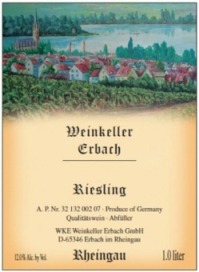
Weinkeller Erbach Riesling (liter) is 100 percent Riesling.
Round and refreshing wine with light touches of lemon and lime on the nose. Slightly sweet mouthfeel, with juicy and fruity flavors.

Weinkeller Erbach Pinot Noir is made out of 100% Pinot Noir.
Hand picked selected grapes of our best Pinot Noir vineyards.
Delicate flavor and taste of prune, pepper, roasted coffee and vanilla. Perfectly balanced, ripe tannin structure with a long finish on the palate.
Hand Harvest.
Aged in oak barrels for 24 months.
Slightly filtered before bottling.
Pair with Steak, Prime Rib, Salsiccia.

Winzer Von Erbach Goldmuskateller Rheingau Feinherb is 100% Goldmuskateller.
The old name for the Erbacher Honigberg was Wachholderwiesen-juniper meadows.
At the Wachholderwiesen there was an uprising of the peasants in the 16th century, all of the ringleaders were hanged.
The muskateller has a smell of elder-berries, apricots and quince, aftertaste of nutmeg.

Winzer von Erbach Riesling Eiswein is made from 100 percent Riesling.
The Eiswein has aromas of concentrated yellow fruit and a fruity sweetness. It's a high end product with a very long aging potential.
The grapes were picked frozen which resulted in a concentration of sugar, acidity and aromas and a low yield.
Pairs with blue cheese, fois gras, French apple cake.

Winzer Von Erbach Riesling Rheingau Erbacher Honigberg Kabinett is 100% Riesling.
This Riesling Kabinett shows hints of apple, citrus and peach and is mineral - scented.
The purity of fruit aroma combined with a unique and delicate fruit acidity makes this Riesling to a typical ambassador of one of the greatest grape varieties in the world.
Pairs well with gorgonzola, blue cheeses and pastas in a creamy sauce.
SALE!
Weinkeller Erbach Riesling (liter) is 100 percent Riesling.
Round and refreshing wine with light touches of lemon and lime on the nose. Slightly sweet mouthfeel, with juicy and fruity flavors.
The Winzer Von Erbach Estate
The wine-growers association was founded in 1897. Today 45 vintners deliver grapes from the Erbach and Kiedrich vineyards to the cellar. There is close a relationship with the vintners, who are all part owners of their winery, all of whom have access to highly skilled and experienced viticultural advice. The cellar was built in 1903 in the "Art Nouveau" style. Today they are the most highly rated Wine cooperation in the Rheingau region, well known for producing high quality Riesling wines with a strong price-value relationship.
The Winzer Von Erbach Vineyard
Together with the Mosel region, Rheingau is famous for growing top quality grapes of the best German white wine varietal, the Riesling. With 3,200 hectares (7,904 acres) in a 45 kilometer stretch from Wiesbaden to Lorchhausen, it is one of the smaller wine regions in Germany.
More than 30% of their vineyards are located in the top spots of the Rheingau called "erstes Gewächs" (first growth). 50 hectares are cultivated in the following locations in Erbach and Kiedrich: Erbacher Michelmark: (12 hectares), Erbacher Steinmorgen: (8 hectares), Erbacher Honigberg: (20 hectares), Kiedricher Sandgrub: (10 hectares).

Honeyed style, rich minerality and luscious creaminess. Flavors of baked pineapple and pear. Fresh and juicy on the finish.
From the famous Erbacher Honigberg vineyard. Average of the vines is 20 years old.
Cool fermentation, matured on the lees for 2 months before bottling, with a slight filtration.
Riesling Rheingau Erbacher Honigberg Spatlese goes well with Indian Curry and blue Cheese

Long Shadows Pirouette Meritage is made from 68% Cabernet Sauvignon 15% Merlot 8% Petit Verdot 6% Cabernet Franc 3% Malbec
Philippe Melka, named one of the top nine winemakers in the world by Robert Parker, used small lots from Washington State's finest vineyards to craft this enticing red blend.
Like the last several growing seasons, 2016 was another hot year that required extra care in the vineyards. Building on the success of our canopy managment program over the last few vintages, we worked with growers throughout the season to encourage growth of the canes and outside foliage to protect against the sun while opening up the fruit zone for even maturation. Warm temperatures in the fall hastened ripening, but the Columbia Valley's cool autumn nights protected the grapes' acidity, yielding bright, vibrant wines that will drink well in their youth but also promise to bring enjoyement to those who cellar.
A variety of fermentation methods were used to enhance complexity and richness in this classic Bordeaux blend. Hand-harvested Cabernet was fermented in 400L French oak barrels that were gently rolled throughout fermentation to integrate the oak with refined, dark fruit flavors and give the wine its silky mouthfeel. All other varieties were fermented in traditional stainless steel tanks, with select lots enjoying longer skin contact to enhance the wine's dark color and mid-palate. The finished wine was aged 22 months in French oak barrels (75% new) before bottling unfiltered and unfined.
Review:
"The 2016 Pirouette is made by Philippe Melka and it's a total blockbuster based on 68% Cabernet Sauvignon, 15% Merlot, and the palate Petit Verdot, Cabernet Franc, and Malbec that was fermented in barrel and aged 22 months in 75% new oak. Crème de cassis, blackberries, toasted spices, cedar, and forest floor notes all emerge from this deep, rich, opulent red that has sweet tannins, a thrilling texture, no hard edges, and a monster finish. This is another best-to-date from this estate and it's an awesome wine." -Jeb Dunnuck 97 Points

Mortet Bourgogne Cote d'Or Rouge is made from 100 percent Pinot Noir.
A parcel of 90 ares, one part is 20 years old and the other part is 55 years old. Its is called Les Pressonniers, in Gevrey-Chambertin.
Bourgogne Rouge Côte d’Or comes from a plot of Gevrey-Chambertin vines, giving delicate fruit and body, as well as the character and complexity of the Gevrey-Chambertin terro




