
" We don't sell the wine without touching the vine "
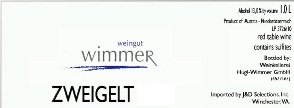

Wimmer Zweigelt Classic is made from 100 percent Zweigelt.
This variety was created in 1922, when Dr. Fritz Zweigelt crossed two grapes - St Laurent and Blaufrankisch.
The wine boasts a deep and concentrated red color. It offers fruity, fresh and spicy aromas, cherry flavors. In the mouth it is smooth, medium-bodied, round and lively.
Malolactic fermentation. Aged 50% stainless steel, 50% oak barrels just for maturation (size 3000 liters).
Full-bodied, smooth and round, the wine is an ideal food companion.
Wimmer Zweigelt Classic is made from 100 percent Zweigelt.
This variety was created in 1922, when Dr. Fritz Zweigelt crossed two grapes - St Laurent and Blaufrankisch.
The wine boasts a deep and concentrated red color. It offers fruity, fresh and spicy aromas, cherry flavors. In the mouth it is smooth, medium-bodied, round and lively.
Malolactic fermentation. Aged 50% stainless steel, 50% oak barrels just for maturation (size 3000 liters).
Full-bodied, smooth and round, the wine is an ideal food companion.

Wimmer Gruner Veltliner is made from 100 percent Gruner Veltliner.
Crisp lime flavors, white pepper and lentils, followed by a mouthful of mineral notes and gooseberry. A long lingering finish

Despite its relative youth, Zweigelt is actually an Austrian classic. This variety was created in 1922, when Dr. Fritz Zweigelt crossed two grapes - St Laurent and Blaufränkisch. Originally, it was intended for the new variety to be called Rotburger, referring to the place where it was born, Klosterneuburg. But this name never took hold, and instead, Zweigelt was named after the man who was the key in its development.
Today, Zweigelt is the most widely planted red variety in Austria, growing in nearly 9% of this country's vineyards. It is a robust grape, highly resistant to dryness, frost and various diseases.
The wine boasts a pale rosé color, it has plenty of fruity aromas, with red cherry and wild strawberry flavors. It is medium-bodied, but it still have a nice long and pleasant finish with a light cinnamon type of spice to it.
Only the best grapes are harvested with a lot of experience and know-how and further processed. The grapes are fermented directly gently pressed and cooled. The fermentation takes place exclusively in stainless steel tanks.
Perfectly at home on any picnic, delicious with fried chicken, and tames the heat when paired with spicy dishes. There is also a slight watermelon note that makes it perfect for spring and summer. A great pairing with barbecued shrimp.

Avennia Justine Red Blend 56% Grenache, 31% Mourvèdre, 13% Syrah
Justine reflects our belief that Washington is capable of producing world class blends of grape varieties traditional to the Southern Rhone region of France. The name is inspired by one of the great heroines of recent literature, who also sprung from the imagination of the Mediterranean. Dark, seductive, complex, with a chasm of depth: The Justine is a great reflection of Avennia's mission of expression, and Washington's generous terroir.
Tasting Note: Big black cherry, blackberry, hints of orange peel, fresh herbs and loam on the nose. Plush and round on the palate. Dark earthy fruits from the Mourvedre, along with citrus high notes, mountain flowers, jasmine, and savory herbs. Balanced and complex without forgetting its hedonistic roots in the Southern Rhone.
Review:
A blend of 56% Grenache, 31% Mourvèdre, 13% Syrah brought up all in older oak, the 2016 Justine offers a great core of black fruits as well as lots of peppery herbs, earth, and classic meatiness. It looks to be a great vintage for this cuvée."
- Jeb Dunnuck (April 2018), 92-94 pts

Ruffino Romitorio di Santedame Chianti Classico Gran Selezione DOCG is made from 90% Sangiovese, 10% Colorino.
Romitorio di Santedame, a limited-production Gran Selezione from Castellina in Chianti, pays homage to a rich history while embracing a bright future. It originates from a single vineyard within the Chianti Classico's "golden basin" (Conca d'Oro) and is crafted from an exclusive blend of Sangiovese and Colorino. The latter is a native Tuscan grape variety that was nearly extinct but has experienced a revival through dedicated research and promotion efforts.
Fruity aromas typical of Sangiovese, including black cherry and ripe plum, with violet and complex chocolate and black pepper notes. The palate offers sweet tobacco and balsamic hints, while its balanced structure with refined tannins and lively acidity makes it suitable for extended aging.
Review:
You feel the oak here, suggesting vanilla and clove character, but it’s very well complemented by the dark fruit, ranging from blackberries to mulberries to dark cherries. Full-bodied, dense and decadent with a regal structure and muscular tannin backbone. The acidity cuts nicely through on the long finish and provides freshness. Drink from 2024.
-James Suckling 94 Points
Complex red wine with cherry aromas, great body and structure, pleasant tannins and a long finish.
The Wimmer Estate
The young family owned and run winery is situated in the northern part of Austria known as the Weinviertel, in the wine city of Poysdorf. The wine-growing tradition goes back to 1724.
Their aim is to produce fruity, elegant wines, rich in finesse, that reflect and express the terroir of the Weinviertel area. They take pride in using only the best grapes combined with experience, know-how and dedication.
The Wimmer Vineyard
Deep loess and clayey soil, carefully chosen areas, plenty of sunshine and a sustainable viticulture are the ingredients of their fruity, lively white wines. The vineyards cover an area of about 20 hectares. They further work with carefully selected vintners who produce another 15 hectares of grapes for them.

Corne Loup Lirac Rouge is made from 50% Grenache, 40% Syrah and 10% Mourvedre
Dry - less than 4 grams/liter
Color: dark red ruby.
Aromas: red berries, truffles and spices.
Flavors: complex and rich. It shows red and black fruits, with an herbal spice type of aromas coming from the surrounding vegetation (Garrigue).
The average age of the vines is 40 years. (The oldest vines are 80 years old).
The soil is mainly sandy marl and small pebble stones.
Pairs with lamb, duck, turkey, red meat, game and cheese.

Mordoree Cotes du Rhone Dame Rousse Rose is made from 40% Grenache, 35% Syrah, 15% Cinsault, 5% Carignan, 5% Mourvèdre
Color : rosé, slightly orange (mordorée colour).
Aromas : crystallized oranges and cherries, slightly aniseed.
Palate : very rounded, fresh and long finish.
Ageing potential : 2 to 3 years
Surface : 14 Ha. Yield : 45 Hl./Ha. Vineyard age : 20 years Terroir : clay / chalk,clay / limestone and sandy with pebble stones. Harvest : by hand. Vinification : vat bleeding, temperature control. Estate bottled.
Food pairing: cold meats and delicatessen, fowl, white meats, grilled lamb with Provence herbs, fish soup, fried fish, pastas, pizzas and all Asian dishes.
Review:
"This rosé appears so pretty in the glass with its watermelon hue and presents a refreshing summery nose. Find notes of watermelon slices and yellow peaches sprinkled with sea salt. Think of pairings similar to prosciutto-wrapped melon. This is a solid rosé to enjoy all summer long."
- Wine Enthusiast (May 2023), 91 pts

Vinsacro Dioro Seleccion is made from 100% Vidau (Blend of the de varietals Tempranillo, Graciano and Mazuelo with predominance of 70+ years old Garnacha).
A wine to enjoy.Vinsacro Dioro, a wine inspired by the Egyptian, Greek and Roman cultures that worshipped wine and gave it a sacred meaning associated with joy and festivity. It is the fruit of our best vineyards, living witnesses to the work and passion of the four generations that preceded us.
Pair with Roast lamb or pork, game, beef steaks, stewed meats. During the aperitive, it will accompany as well with aged and blue cheese.
14% Vol.
Grapes selected manually from our vineyards located on the southern slopes of Monte Yerga in the “Cuesta la Reina” estate. Grapes that are harvested with the utmost care, transported at low temperature in fruit boxes to the winery to avoid any damage to the fruit.
Fermentation is carried out with indigenous yeasts and the wine is kept in maceration for 30 days while breaking the cap daily. Afterwards, the wine is transferred to oak barrels where it remains for 17 months before bottling.
"Really sophisticated and polished with vanilla, coffee, earth and spice scents and oaky flavours. Long, brooding finish."
- Decanter World Wine Award (April 2022), 94 pts
"The 2019 Vinsacro Dioro Selección is a Vidau field blend sourced from Monte Yerga in Rioja Oriental. Aged for 18 months in French and Eastern European oak barrels, it is only released after five years in the cellar. Dark garnet in color, time in the glass reveals soy sauce, bay leaf and thyme notes, along with black fruit and chutney-like undertones. Dry and rich on the palate, it flows with softened tannins and a clingy mouthfeel, lingering long with an impression of tomato leaf. This is a complex, nuanced and solar red that will warmly captivate your palate. - Joaquin HIDALGO"
- Antonio Galloni's Vinous (April 2024), 94 pts



