" We don't sell the wine without touching the vine "
| Country: | France |
| Region: | Loire |
| Winery: | Ecu (Guy Bossard) |
| Grape Types: | Chardonnay Melon de Bourgogne Folle Blanche |
| Vintage: | NV |
| Bottle Size: | 750 ml |

Domaine de la Janasse Chateauneuf-du-Pape Cuvee Vieilles Vignes is made from 65% Grenache, 20% Mourvèdre, 10% Syrah, 5% divers.
In contrast to Chaupin, which is made from old-vine Grenache on sandy soils, the cuvée Vieilles Vignes is from old vines of Grenache, Mourvedre, Syrah along with smaller percentages of other permitted varieties that are grown in these old vineyards. The wine is sourced from 4 terroirs: pebbly clay, sand, gravelly red clay and sandy limestone. Vieilles Vignes is always the most powerful and concentrated Châteauneuf-du-Pape cuvée made at Domaine de la Janasse.
Review:
The 2020 Châteauneuf Du Pape Vieilles Vignes also saw some stems (the estate started keeping some stems with the 2016 vintage) and was 75% destemmed, with the blend being 70% Grenache, 20% Mourvèdre, and the rest Syrah, Cinsault, and Terret Noir. As usual, it’s a more powerful, black-fruited wine comparted to the Cuvée Chaupin and has lots of crème de cassis, liquid violet, crushed stone, woodsmoke, and peppery herbs. It displays the vintage’s purity and freshness yet brings the concentration as well as the structure. I’ll be shocked if it’s not in the handful of top wines in the vintage.
-Jeb Dunnuck 96-98 Points
Domaine de la Janasse Chateauneuf-du-Pape Cuvee Vieilles Vignes is made from 65% Grenache, 20% Mourvèdre, 10% Syrah, 5% divers.
In contrast to Chaupin, which is made from old-vine Grenache on sandy soils, the cuvée Vieilles Vignes is from old vines of Grenache, Mourvedre, Syrah along with smaller percentages of other permitted varieties that are grown in these old vineyards. The wine is sourced from 4 terroirs: pebbly clay, sand, gravelly red clay and sandy limestone. Vieilles Vignes is always the most powerful and concentrated Châteauneuf-du-Pape cuvée made at Domaine de la Janasse.
Review:
The advantages of old vines are perhaps most evident in the more difficult vintages (whether hot and dry or cool and rainy). The 2021 Chateauneuf du Pape Vieilles Vignes is a strong effort, delivering supple, velvety waves of ripe black cherries and black raspberries. Medium to full-bodied, it's rich and concentrated without seeming at all heavy or unbalanced, finishing long and juicy. It's approximately 75% Grenache, 15% Mourvèdre, 5% Syrah and 5% other varieties, keeping in mind that up to 15% of the old Grenache vines are actually Clairette Rose.
-Wine Advocate 96 Points

Domaine de Beaurenard Chateauneuf-du-Pape Blanc is made from Clairette blanche & Rose, Grenache Blanc & Gris, Bourboulenc, Roussanne, Picpoul and Picardan.
Gold bright green color. Expressive nose with pear and stone fruits aromas (peach, apricot) with jasmine and roasted almonds notes. The mouth is smooth and fleshy like stone fruit we can smell, with a long a nice finish.
Review:
Bright golden yellow, silver reflections. Delicate herbal spices, a hint of chamomile and mandarin zest, pears and blossom honey are underneath. Juicy, elegant, white peach, delicate honeydew melon, mineral and harmonious, fine fruit sweetness, good ripening potential.
-Falstaff 92 Points

Terre dei Buth Frizzante Rose Special Cuvee NV is made from 90% Glera and 10% Raboso.
Fresh, fruity with hints of gooseberry and redcurrant.
On top of being "Certified Organic", this is also "Vegan Approved".
Glera and Raboso are blended before foaming process into what we call "Special Cuvée", for its outstanding drinkability and delicate scents. Glera, which is the variety used to make Prosecco, brings the liveliness of the most famous Italian sparkling wine to this cuvée, which reaches perfection thanks to Raboso, which is an indigenous red grape of the Venetian region, well-known for its hints of red berries and smooth taste.
The grapes are coming from vines planted on gravelly soils.
Average age of the vines is about 10 years old.
Grapes are machine-harvested, so that the grapes are pressed about 10 minutes after picking,allowing to preserve the freshness of the fruit, and avoiding micro-fermentation that would take place by leaving the grapes for too much time in the vineyard after picking.
Each grape variety is harvested and vinified individually.
After picking, grapes are soft-pressed, and the primary fermentation is completed in about 10 days. Then fermentation takes place for 5-6 months, where the cuvée reaches the appropriate level of acidity for foaming, which is performed in stainless steel tanks, thermo-conditioned, for about 20-25 days.
Pasta, pizza and summer salads.
Review:
medium-length finish displaying accents of peach gummi bear, edible flowers, dole fruit cup juice, and gooseberry. A more serious take on Glera with the body and richness to pair with diverse cuisines."
- Beverage Testing Institute 90 pts - Gold Medal - Best Buy

Betz Family Domaine de Pierres Syrah is made from 100% Syrah.
With our long history of making single site syrah's in Washington, it made sense for us to venture into the Rocks District of Milton Freewater in the Walla Walla Valley to bring you our newest syrah, "Domaine de Pierres."
The Rocks AVA produces syrah that shows a distinct character, separating it from any other site in Washington State. One thing in particular that has drawn people here is the gallet stones present throughout the valley. They are very similar to the pudding stones that are found in Châteauneuf-du-Pape, and can be anywhere from golf ball size, to softball size or larger. Since we purchased the vineyard in 2014 we have been tilling the earth multiple times every season to expose these rocks. The gallet stones act like a heat sink, giving a little extra push to help ripen syrah in an area with marginal heat accumulation.
In the glass, Domaine de Pierres stands out from our other syrah's because of its incredibly savory profile. Notes of roasted meat, fresh herbs, olive tapenade, tobacco and graphite are supported by dark fruit, espresso, and lavendar. The wine has a lower acidity and higher PH than our other wines, which contributes to a velvety, full bodied mouthfeel. Even in the cellar, we immediately noticed a difference in the color, aromatics and flavor that these syrah grapes were able to express.
The other big reason that we are so excited about the wine from this particular AVA, is that the history of the Rocks is happening right now! Our vineyard, “Ancient Stones,” has only been planted there since 2007, and the beginning of the Rocks as a wine growing region only really started in the 1990's. There is a lot of energy and exploration going on, and it has been a fun experience for our team to be a part of it. We still have so much to learn about this region and it is very exciting to feel like we are on the upward swing!
Review:
"This red offers a steely core of crushed rock and vibrant acidity framed by handsome blackberry, cherry, green olive and licorice flavors that build tension toward medium-grained tannins. The name of this wine—French for "Field of Stones"—is apt. Drink now through 2032. - Tim FISH."
- Wine Spectator's Insider (July 6th 2022), 94 pts

All older vintage wines have been purchased from a single collectors cellar. Pictures can be requested before shipment.
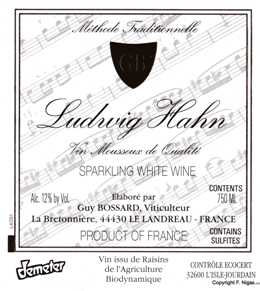
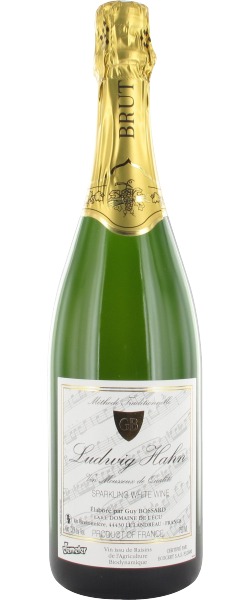
Bossard Ludwig Hahn Cremant Loire is made with 45% Folle Blanche (Gros-Plant), 25% Chardonnay, 20% Melon de Bourgogne (Muscadet), 10% Cabernet Sauvignon.
Soil: clayey, silicious / Sub-Soil: gneiss & orthogneiss Grapes for this sparkling cuvee are hand harvested, pressed lightly for first run juice and fermented "sur lie" at low temperature using indigenous yeasts. The finished still wine is fermented in the bottle for a second time with champagne yeasts. It is then left to age on the lees, or dead yeast, for at least a year before shipping as finished sparkling wine. Its long lasting bubbles are the result of this second fermentation. Complex, round, fruity and refreshing sparkling with citrus-like flavors and a full, fresh finish that lingers. It is an excellent wine for celebrations and festive meals.
To be consumed over the 2 next years.
The Domaine de l'Ecu Guy Bossard Estate
The domaine is located in the hamlet of Le Landreau in Sevre et Maine, Muscadet's best region of production. The family has been producing wine there for 5 generations, but current owner Guy Bossard defies the prevailing view that organic producers can't make great wine. The estate became organic in 1975, and biodynamic in 1986. Guy Bossard makes his own compost using algae, forest brush and basalt. He produces 3 different cuvees, each masterfully crafted to highlight the expression of the specific soil types.
The Hermine d'Or designation is given to specially selected Cuvees of Muscadet, (tasted blind) that score highly. Hermine d'Or wines are picked for:
1. Typicity - Trueness to type (no oak here).
2. Ageability - The ability to improve in the bottle.
3. Minerality - Classic feature of wines of this region.
This insignia, Hermine d'Or, is as near a guarantee of quality as can be found in the region.
Matt Kramer, the Wine Spectator - My Wines of the Year -
"Ah, my beloved Muscadet always pops up on this list, as I like to buy'em and age'em for upward of a decade. Guy Bossard, the owner-winemaker of Domaine de l'Ecu, is obsessed with Muscadet. His vines and winemaking are fully biodynamic. If Burgundy's Domaine Leroy made Muscadet, it would be Domaine de l'Ecu. In the classic 2002 vintage, Bossard offered multiple bottlings based on soil types. His Expression de Granit is all about intense minerality; Expression d'Orthogneiss is spicier, richer and denser. Both need 10 years of age. The prices are absurdly low."
"The gifted, highly regarded Guy Bossard produces serious Muscadets, built to age; fully biodynamic since 1986." - Anthony Dias Blue's pocket guide to wine 2006
The Domaine de l'Ecu Guy Bossard Vineyard
Guy Bossard farms 17 hectares (42 acres) entirely using biodynamic methods. The average age of the vines is 45 years.
The wines are fermented "sur lie", on the yeast, to prevent oxidation and impart full flavor and a slight spritz to the finished product.

Clos du Val Estate Cabernet Sauvignon is made from 6% Cabernet Sauvignon, 7% Merlot, 5% Malbec and 1% each Cabernet Franc and Petit Verdot.
This fresh and vibrant Napa Valley Cabernet Sauvignon is brimming with aromas of blackberry, mulberry, cassis, and violet. On the palate, bright flavors of cranberry, red plum, cherry, and lavender are intertwined with supple tannins, balanced acidity, and a long, smooth finish.
Review:
"Sleek tannins, guided by sweet earth, slate, purple plum and black olive. Savory notes of fig, toasted cedar, and black tea meld with blackberries. Well structured and impeccably balanced."
-Tasting Panel 96 Points

Schwarz Thiele Road Grenache is made from 80 year old 100% Grenache vines.
Thiele Road is a dusty track that crosses Bethany Creek at the foot of the Barossa Ranges. It is home to Jason Schwarz's family's 70 year old, deep rooted Grenache vines that produce wines with complex flavours and plenty of character.
Bouquet: The nose is floral and expressive with raspberry and pepper.
Palate: Red fruits, spice and earth with beautiful balance and structure. Medium weighted with fine acidity. A wine built on complexity and packed with interest.
Planted in 1941. The gnarled, old vines continue to produce fantastic fruit and the quality out of the 2014 vintage was evident. The vines are handpicked, 10% whole bunch and the remainder de-stemmed and into an open fermenter. Before too long the wild yeast population on the grapes kicks off fermentation and that continues with daily gentle pump overs and hand plunging until fermentation is complete and the flavour profile is just right. The wine is then basket pressed and matured in seasoned French oak for 18 months before bottling. Not filtered or fined.